A vehicle is a source, not a complete explanation
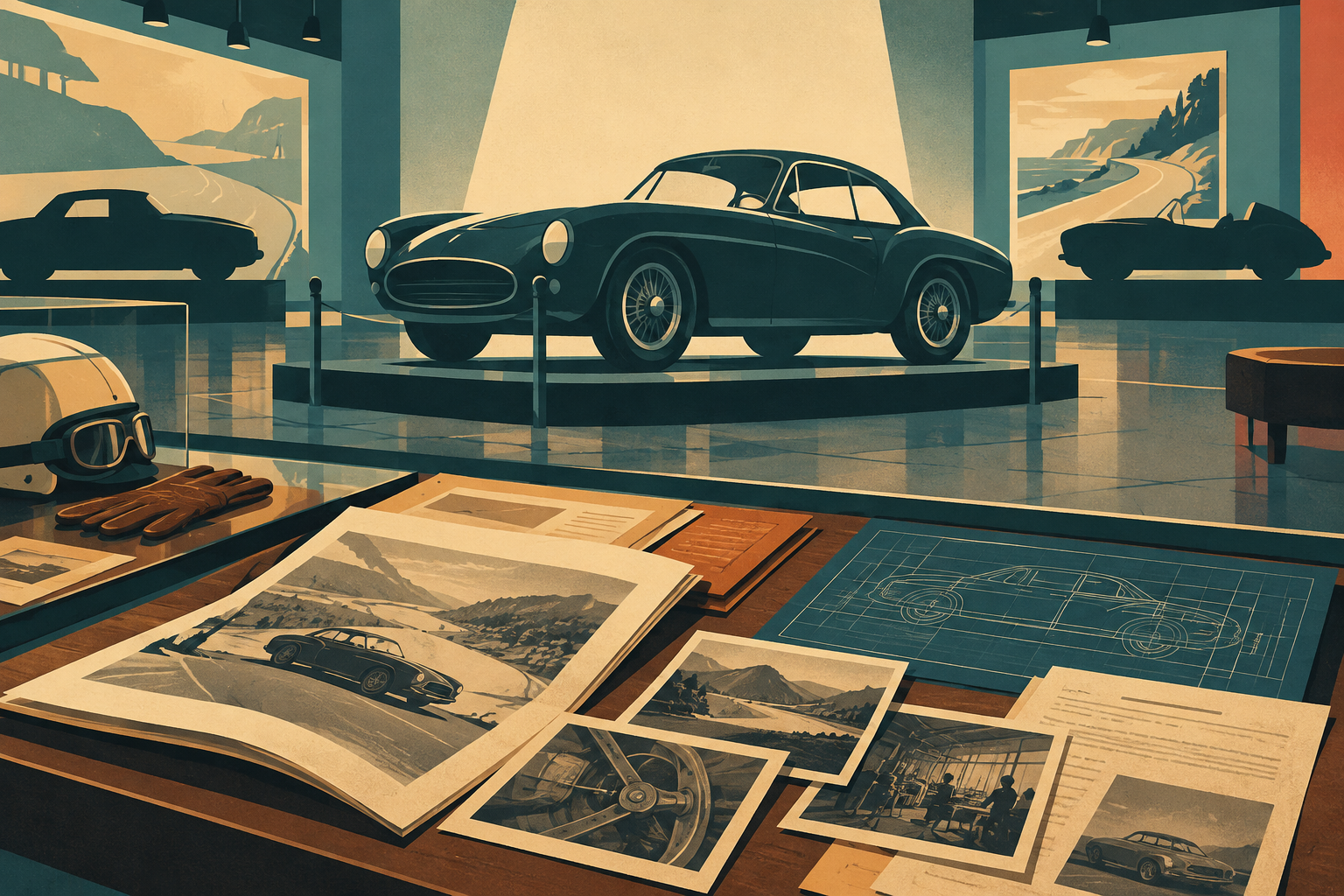
An exhibited car or motorcycle lets visitors observe shapes and components, but it cannot by itself explain how its performance was described, what uses it was intended for, or what role its era assigned to it. Those questions require reading the object alongside catalogues, magazines and other documents. According to information published by the Museo de Historia de la Automoción in Salamanca, its documentation centre holds more than 8,000 magazine issues and nearly 400 titles. This description attests to a substantial documentary collection; without consulting its records, it does not establish which specific models appear in each publication.
That distinction matters because a vehicle’s reputation and its documented characteristics are not the same thing. A museum that exhibits vehicles and a centre that preserves publications offer complementary avenues of enquiry, but the evidence available here does not provide technical specifications, performance figures for particular models, or research findings about them.
What museum context contributes
Castile and León’s tourism information describes the permanent exhibition at the Museo de Historia de la Automoción as a survey of the automobile’s development through around ninety vehicles. This is useful as a general account of the exhibition’s scope, not as a complete catalogue of each object. Selection and display turn individual objects into a historical narrative; that narrative is a curatorial interpretation and should be distinguished from what can be checked directly against a vehicle or its documentation.
The website of MAHI, the Museo de Automoción e Historia, states a comparable broad aim: to present motoring and history, particularly that of the twentieth century, through historical, cultural and economic milestones. A shared interest in linking vehicles to wider processes does not mean the two museums use the same criteria or have equivalent collections. The evidence provided does not describe their methods in greater detail.
Archives open different questions
Magazines and catalogues can document how a model was presented, what technical information was communicated, and which uses a particular publication emphasised. To turn such clues into conclusions, a researcher would need to identify the document, its date, its authorship and its publication context. The published count of the Salamanca documentation centre confirms that it holds material, but does not replace consulting individual issues or, by itself, prove what they said about a particular vehicle.
An article about MAUTO among the supplied sources links the oldest core of its holdings to Carlo Biscaretti di Ruffia and states that he began collecting cars, chassis and engines in 1933. This is a fact about that collection’s history, not evidence that all automotive museums were formed in the same way. The source also reminds us that an institution may preserve different kinds of objects: not only complete vehicles, but also parts and components, according to its description.
Read characteristics and reputations separately
A performance figure should be attributed to a vehicle only when an identifiable source documents it and clarifies the version, conditions and period to which it applies. The supplied sources contain no such figures, so they cannot support comparisons between particular cars or motorcycles or verification of technical claims attached to specific models. They do support a useful editorial question: which documents accompany an object, and what kind of claim can each one substantiate?
A model’s reputation can be part of its cultural history, but it should not stand in for technical verification. A catalogue lets researchers study what a publication claimed; a magazine may help place that claim in its editorial context; an exhibited vehicle allows visitors to observe the surviving object. None of these, on its own, automatically reconstructs users’ experiences or the full range of a vehicle’s uses.
What contextual conservation can and cannot establish
One academic work among the sources concerns archives in science and technology museums and mentions records management and cultural and exhibition activities. The available excerpt connects these practices with the transformation of vehicles into heritage, but it does not provide enough detail to attribute a specific conservation protocol to the museums discussed here. It is reasonable to propose that documentation can help contextualise an object; it would not be justified to present a method of conservation as fact when the sources do not describe it.
Museums and their archives make a richer interpretation possible when vehicles, publications and institutional information are consulted together. Conclusions should keep the limits of each kind of evidence visible: an exhibition tells us about the selection it presents; a catalogue, what it records; a magazine, what it published; and an institutional summary, what the institution states. Keeping those strands separate does not diminish motoring history. It prevents inherited reputation from being mistaken for verified performance and makes clear which questions still require research.
Evidence used
https://publicaciones.acal.es/tabula/article/view/1097 https://www.turismocastillayleon.com/es/patrimonio-cultura/museo-historia-automocion https://www.retropause.com/es/archivo/como-leer-un-museo-del-automovil-el-mauto-y-la-conservacion-con-contexto https://museoautomocion.com/centro-de-documentacion/ https://museo-mahi.com/ https://turismoambrozcaparra.es/museos-y-salas-museo-de-la-moto-y-el-coche-clasico/
- Decade
- Contemporary
- Region
- Spain
- Level
- Enthusiast
- Entities
- Museum, Museo de Historia de la Automoción de Salamanca, Museo de Historia de la Automoción
Sources and references
- El archivo en los museos de ciencias y tecnologías | Tábulapublicaciones.acal.es · 2026-10-10
- Museo de Historia de la Automociónwww.turismocastillayleon.com · 2026-10-10
- Cómo interpretar un museo del automóvil a través del MAUTO ...www.retropause.com · 2026-10-10
- MAHI Museo de Automoción e Historiamuseo-mahi.com · 2026-10-10
- Centro de documentaciónmuseoautomocion.com · 2026-10-10
- Museo de la Moto y el Coche Clásico - Turismo Ambroz-Cáparraturismoambrozcaparra.es · 2026-10-10