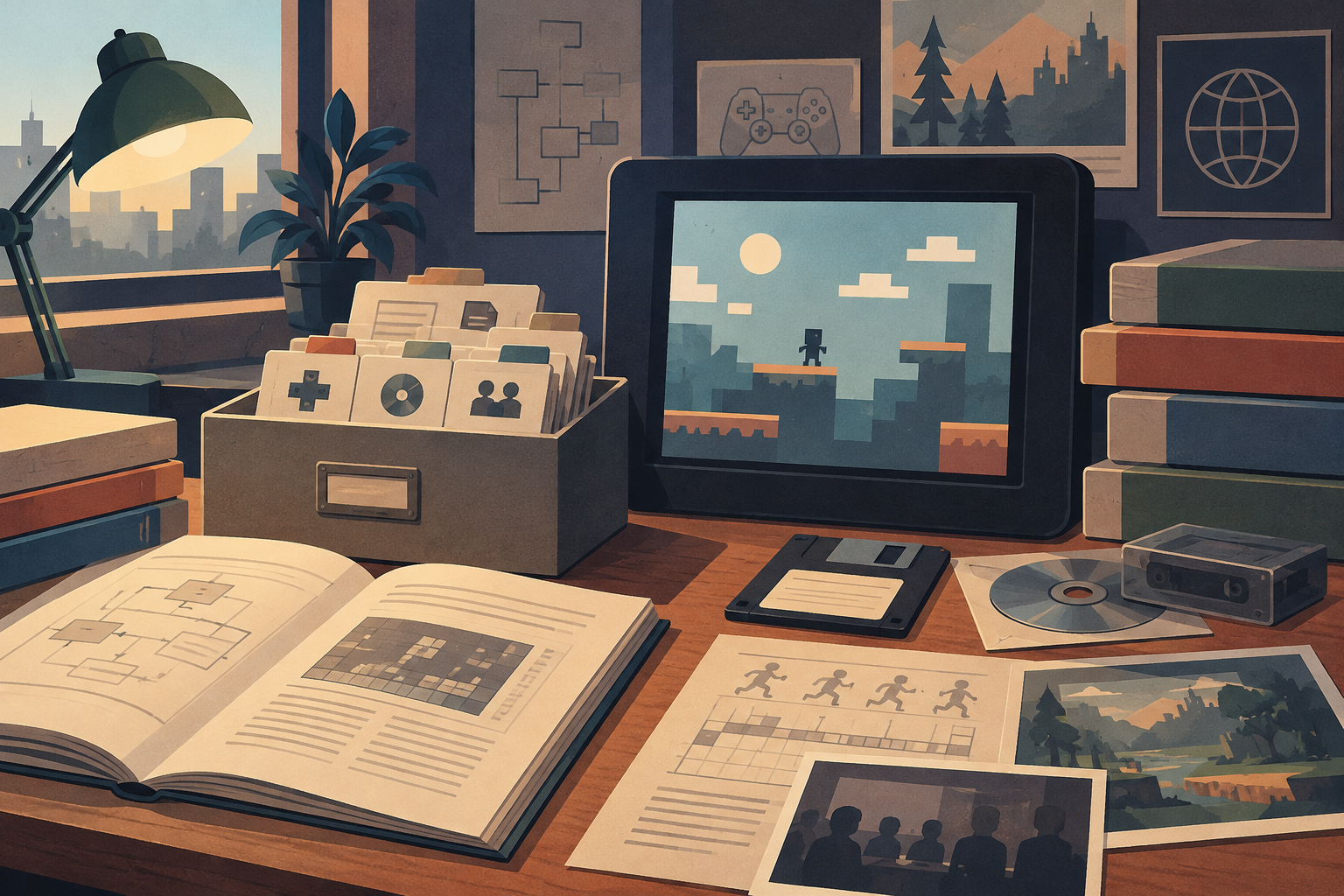
A device tells one story through its shape, materials and mechanisms. The documents around it tell another: how an institution recorded it, what information it chose to preserve, and how the object was presented or described. None of these traces automatically amounts to an account of actual use. Read together, they can raise useful questions; mistaken for direct testimony, they can bring an inquiry to a premature close.
The archive is not the device
The article on archives in science and technology museums published in Tábula highlights their role in preservation and dissemination. MUNCYT’s archive describes its work in terms of organising, processing and storing historical and administrative documentation. These functions make materials accessible, but they do not turn every document into a complete explanation of the object it concerns.
A record may document an administrative act; by itself, it cannot show what someone did with a device, how often they used it or what difficulties they encountered. First ask who produced the document, for what purpose and in what institutional context it was kept.
Promises and instructions
An advertisement can be studied as a statement about how a product was communicated, while a manual may record instructions, functions or warnings. The distinction helps frame questions about design promises and the limits a manufacturer considered important enough to explain. But an advertising claim does not prove that a device always performed as promised, and instructions do not establish that every user followed them.
Claims about actual use require additional, relevant traces: for example, documents from another source that record practices, problems or adaptations. The supplied evidence identifies no particular device and provides no user testimony; it therefore cannot support specific claims about the habits of an era or group.
Provenance changes the reading
The Historical Archive of the National Archaeological Museum describes its purpose as facilitating public access and providing information tools. According to Spain’s Ministry of Culture, documentation in state museums relates to objects from the moment they are deposited. These details are a reminder that archives also record an object’s institutional life: its entry, description and custody, where surviving documents cover those matters.
That administrative history is valuable, but it is not the same as a history of use. For instance, an accession date should not be treated as a manufacturing date or the date of first use unless evidence supports that interpretation. The provenance of each document—its authorship, function and connection to the object—sets the boundaries of what can responsibly be claimed.
Recording is not reconstructing
Research on 3D digitisation of cultural heritage in museums offers another perspective: digital technologies can support documentation, conservation and dissemination. A digital record may describe aspects of an object, but it is not the same as observing it in operation in context. On its own, it provides no information about who used the object or the routines around it.
Similarly, the book on preventive conservation of documents in archives and libraries focuses on preserving documentary materials themselves. This matters because research depends on which documents survive, how they are described and what access is possible. The absence of a record does not necessarily prove that a practice never occurred; it marks a limit on what can be supported by the evidence located.
A reading with clear limits
When studying a device, separate three questions: what survives, what each document explicitly says, and what comparing sources allows us to infer. A manual may show instructions; a catalogue record, a cataloguing decision; an advertisement, a message intended for the public. Only by comparing them—and bringing in other evidence when available—can a broader interpretation be built.
Technology archives do not replace the experience of use or manufacture it retrospectively. Their contribution is more precise: they make the documentary layers around objects visible and help distinguish what is known, what is interpreted and what remains unproven. That distinction does not diminish an object’s history; it makes it more reliable.
- Decade
- Contemporary
- Region
- Spain
- Level
- Enthusiast
- Entities
- Museum, Museo Arqueológico Nacional
Sources and references
- Conservación preventiva de documentos en archivos y bibliotecas. Experiencias, metodologías y políticasopenalex.org · 2026-10-10
- El archivo en los museos de ciencias y tecnologías | Tábulapublicaciones.acal.es · 2026-10-10
- Archivo histórico - | Ministerio de Culturawww.man.es · 2026-10-10
- Archivomuncyt.es · 2026-10-10
- ARCHIVOS DE LOS MUSEOS ESTATALESwww.cultura.gob.es · 2026-10-10
- La digitalización 3D del patrimonio cultural en museosrevistaseug.ugr.es · 2026-10-10