Graphic magazines in a combative press
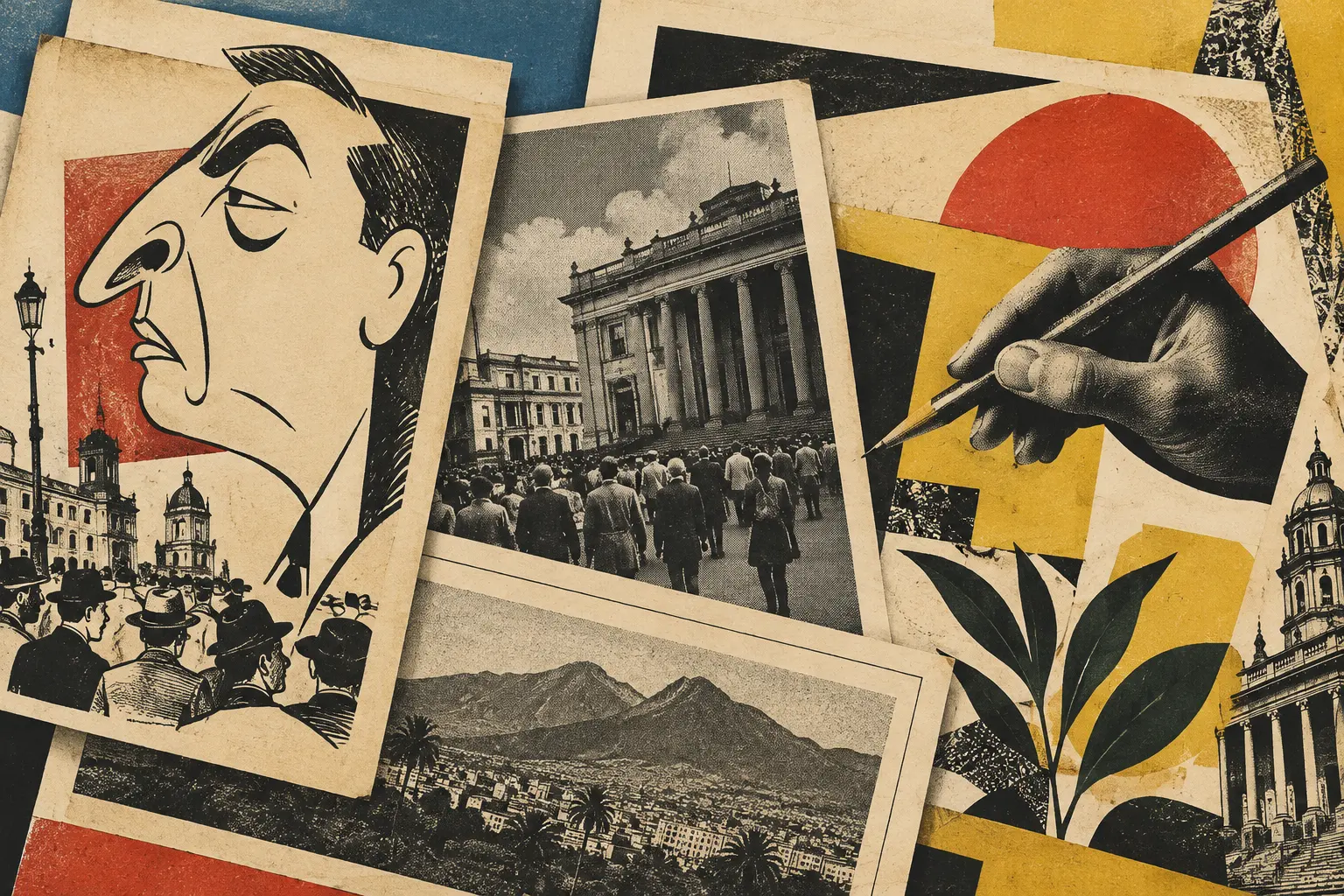
Between 1910 and 1931, El Gráfico, Cromos and Universidad made room in Colombia for draftsmen, cartoonists, photographers, painters and poets. Their pages combined images and writing at a time when the press was also a stage for intense partisan disputes. In his study, historian César Ayala Diago reads these magazines as a strand of periodical publishing that offered a graphic alternative to political confrontation: a window onto art, social life and other ways of imagining the country.
That argument does not mean the publications were apolitical or that their images represented the whole population. Editors and contributors had positions and interests, and their selection of people, places and events constructed a particular view. Their historical importance lies in this dual role: they offered artists a place to publish and gain recognition, while also acting as editorial objects that helped shape a public image of Colombia.
Three magazines, three ways of organizing the page
El Gráfico began publication in 1910 and, according to Ayala Diago, was Colombia’s first modern magazine with national reach. Its pages brought together news, photography, caricature, poetry, painting and reportage. Photographs documented ceremonies, gatherings, public events and recognizable places; images of groups and associations gave visible form to social life. The magazine conveyed an image of a cultured and harmonious Colombia, though that image was not a complete portrait of the country. The prominence of Bogotá and its elites reveals both what appeared in print and what remained outside the frame.
Founded in 1916, Cromos shared El Gráfico’s interest in images but developed its own profile. Ayala Diago describes it as more focused on social life and national and international events. Political caricature had a notable place alongside painting, poetry and portraits. Coriolano Leudo, who produced covers and caricatures, and Ricardo Rendón, a contributor to several publications, illustrate how artists moved between magazines. Their mobility points to a connected graphic field in which publications competed and influenced one another while also sharing contributors and advertisers.
Universidad emerged in 1921, directed by the young Germán Arciniegas and linked to the student movement. It became a meeting place for younger contributors and established figures, as well as a platform for promoting artists and new generations. Its publication schedule and political orientation changed over time. Ayala Diago notes that in a later phase the magazine adopted a more decisively liberal profile and addressed national issues more directly. These were not merely formal changes: frequency, sections and editorial stance reshaped the publication’s tone and its way of intervening in public life.
Artists, editors and the conditions of publication
The appearance of a printed work depended on specific editorial decisions. A cover, a page devoted to caricature or the reproduction of a photograph determined which images could circulate and how readers encountered them. Format, page count, frequency and the balance of text and image allocated the available space—and with it, artists’ opportunities for work and visibility.
The study notes, for instance, that El Gráfico announced changes on its fifteenth anniversary, including more pages and new sections. In Cromos, the space given to images lent prominence to caricatures and illustrated covers. Such details help us understand magazines not as neutral containers but as visual and editorial objects: sequence, scale and the juxtaposition of materials also contributed to meaning.
This work took place in a commercial environment. Advertising was part of the press, and the magazines shared advertisers of products such as beer, cigarettes and medicines. Printed images circulated within, not apart from, the economic conditions that sustained their publications. Ayala Diago argues that privately run magazines gave many artists a place to be published and recognized at a time when state support for the arts was limited. Yet the relationship between editors and artists should not be reduced to patronage: it also involved commissions, editorial interests and social networks.
A graphic alternative, not an escape from politics
Ayala Diago argues that these magazines offered an alternative to the confrontational tone of much partisan journalism. Graphic culture could provide a visual pause from political polemic, but it did not place the magazines outside politics. Contributors held positions of their own, and Universidad shifted its tone amid the changes of the period. The tension between graphic culture and political commitment is central: magazines could move away from the harsher rhetoric of party conflict and still participate in public debate.
It also matters who appeared on their pages. Portraits of prominent people, social gatherings and urban scenes made part of society visible, but did not represent everyone on equal terms. In El Gráfico, the author observes, Bogotá and its elites were particularly prominent, projected through an image of harmony and modernity. The study also records social initiatives and women creators, though within the limits of their time. The choice of images therefore offers evidence both of the visual culture being published and of the hierarchies that shaped visibility.
Why read magazines as objects
The histories of El Gráfico, Cromos and Universidad broaden our understanding of Colombian graphic art. They make it possible not only to identify artists and works but also to trace the material and editorial conditions that allowed them to circulate. The publications provided pages, commissions and audiences; changes in format or orientation reorganized the possibilities of publication and altered the reading experience.
Ayala Diago’s argument also encourages us to distinguish the printed image of the country from society in all its diversity. A magazine could present a cultured, modern and cohesive Colombia without encompassing social deprivation or the voices of every group. Reading photographs, caricatures, writing and editorial decisions together helps us consider both what the pages showed and the perspective from which they showed it. The interplay of art, publishing enterprise and politics is what makes these magazines significant for understanding how graphic work found an audience and helped imagine national life.
- Decade
- Contemporary
- Region
- Latin America
- Level
- Introduction
- Entities
- Cromos
Sources and references 7
- una fuente para el estudio de los conflictos agrarios ...revistas.utp.edu.co · 2026-11-17
- Presentación del Númerodoi.org · 2026-11-17
- Presentación del Númerodoi.org · 2026-11-17
- Presentación del Dossierdoi.org · 2026-11-17
- Hemerografía, gráfica y paz en los comienzos del siglo XX ...www.redalyc.org · 2026-11-17
- Visor Redalyc - Indagar el archivo, divulgar en la webportal.amelica.org · 2026-11-17
- Acerca del oficio del historiador o de un diálogo y examen ...portal.amelica.org · 2026-11-17