An image is not a whole room
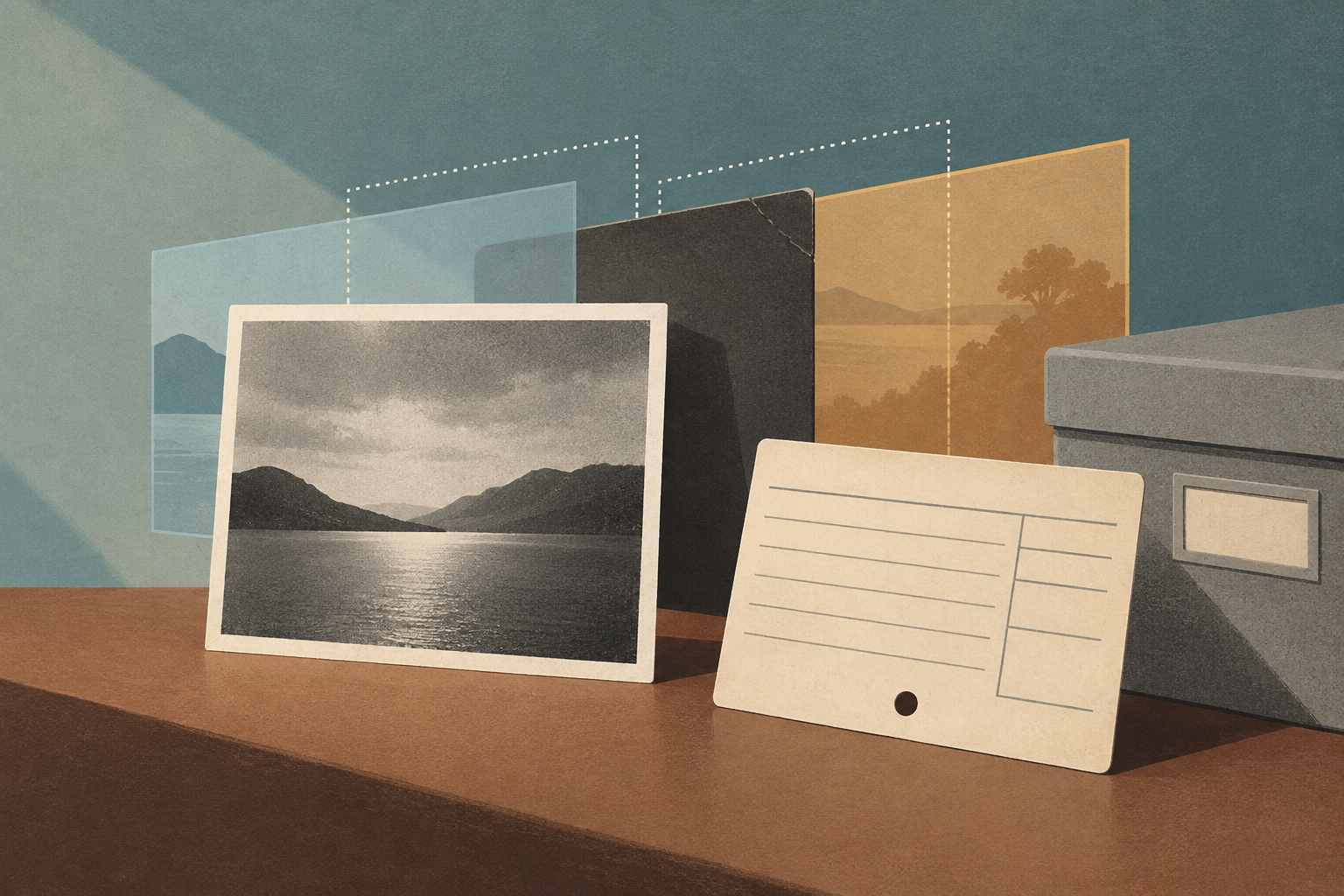
Reconstructing an interior from surviving sources begins with a caution: a photograph shows a frame, not the whole life that took place in a space. It may record objects and visible relationships between them; by itself, it does not establish who arranged them, how long they remained there, or what happened outside the frame. The useful question is not only “What do we see?” but also “What kind of document is this, and what can it support?” That distinction prevents a suggestive image from becoming an unsupported reconstructed scene.
Archives and visual documentation
Institutional archives offer a verifiable starting point, though they are not the same as household archives. The National Archaeological Museum describes its Historical Archive as a research source for its departments and for outside researchers. The Prado Museum Archive, in turn, says it preserves documentary holdings, including records produced and received by the museum itself. These descriptions establish that document repositories exist and can be consulted; they do not prove that they contain photographs or plans of private homes.
An Ibermuseos visual-documentation protocol treats improvements to collection inventory and documentation methods as specialist work. This reference helps frame the systematic description of images and objects, but it should not be presented as a manual for reconstructing homes. Precision matters: guidance on documenting collections may offer record-keeping principles, while identifying how a room was used requires sources directly connected to that space.
Plans, photographs and context
Material shared by the Museo Moderno mentions a documentary group that may include brochures, letters, invitations, photographs of gallery views, posters and plans. It is a concrete example of the range of records that can gather around an institution and its spaces. It also sets an important limit for this article: the reference concerns gallery views and plans in a museum context, not domestic interiors. It can help frame questions and sort source types, but it cannot support conclusions about a home.
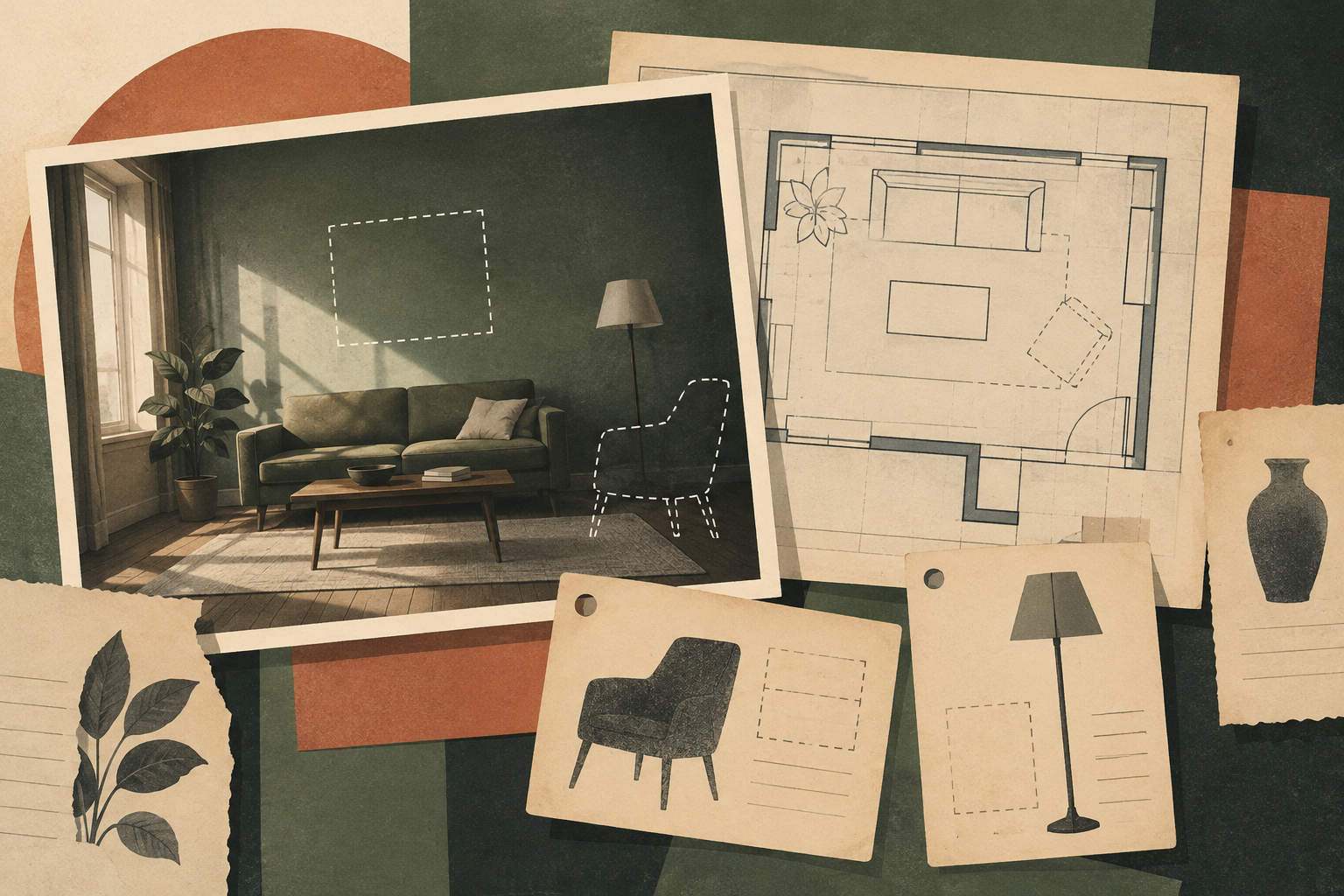
When studying a dwelling, researchers would need to establish that documents really relate to it, that they are dated and described, and that their connection with other records can be demonstrated. An unidentified photograph does not become evidence of a particular household merely because it looks old or familiar. Even when a plan is found, it records a represented spatial arrangement; it does not automatically prove that the layout was built or used as shown.
From visible objects to everyday practice
Photographed objects may suggest functions, but function is an interpretation that needs support. A visible table does not, on its own, tell us who used it or how often. A piece of furniture’s position in an image may result from the framing, a temporary arrangement or a lasting layout; without further documentation, it is not possible to choose confidently among these possibilities.
It is therefore useful to separate research notes into three levels: what the source directly shows, what other sources corroborate, and what is proposed as a hypothesis. Archives and documentation systems help preserve provenance and descriptions, but the information available here does not provide a specific domestic case that would demonstrate how such clues combine into a full reconstruction. Recognizing that absence is part of the work, not a flaw to be covered with invented details.
What the available sources can establish
The cited sources support a modest conclusion: archives and visual documentation can organize materials relevant to studying spaces, and those materials need careful description. They do not, however, provide specific evidence about a domestic interior from 1900 to 2009, its occupants or its uses. Nor do they establish a characteristic period style. Progress would require documents identified as belonging to a particular home, together with sufficient information about their provenance and context.
The most responsible reconstruction is not the one that fills every gap, but the one that shows where the evidence ends. Photographs and plans can help develop an interpretation of space; archives can preserve and contextualize documents. But describing who used a room requires evidence about those people and practices. Until such evidence appears, the interior remains a documented question, not a scene we can complete at will.
- Decade
- Contemporary
- Region
- Spain
- Level
- Introduction
- Entities
- Museum, Museo Arqueológico Nacional
Sources and references
- Archivo histórico - | Ministerio de Culturawww.man.es · 2026-10-12
- Archivo del Museo Arqueológico Nacional (Madrid, España)censoarchivos.cultura.gob.es · 2026-10-12
- Archivo - Museo Nacional del Pradowww.museodelprado.es · 2026-10-12
- ¿Sabías que en el Museo Moderno se realizan procesos de ...www.instagram.com · 2026-10-12
- protocolo-documentacion-visual.pdfwww.ibermuseos.org · 2026-10-12