From the instant to an artistic practice
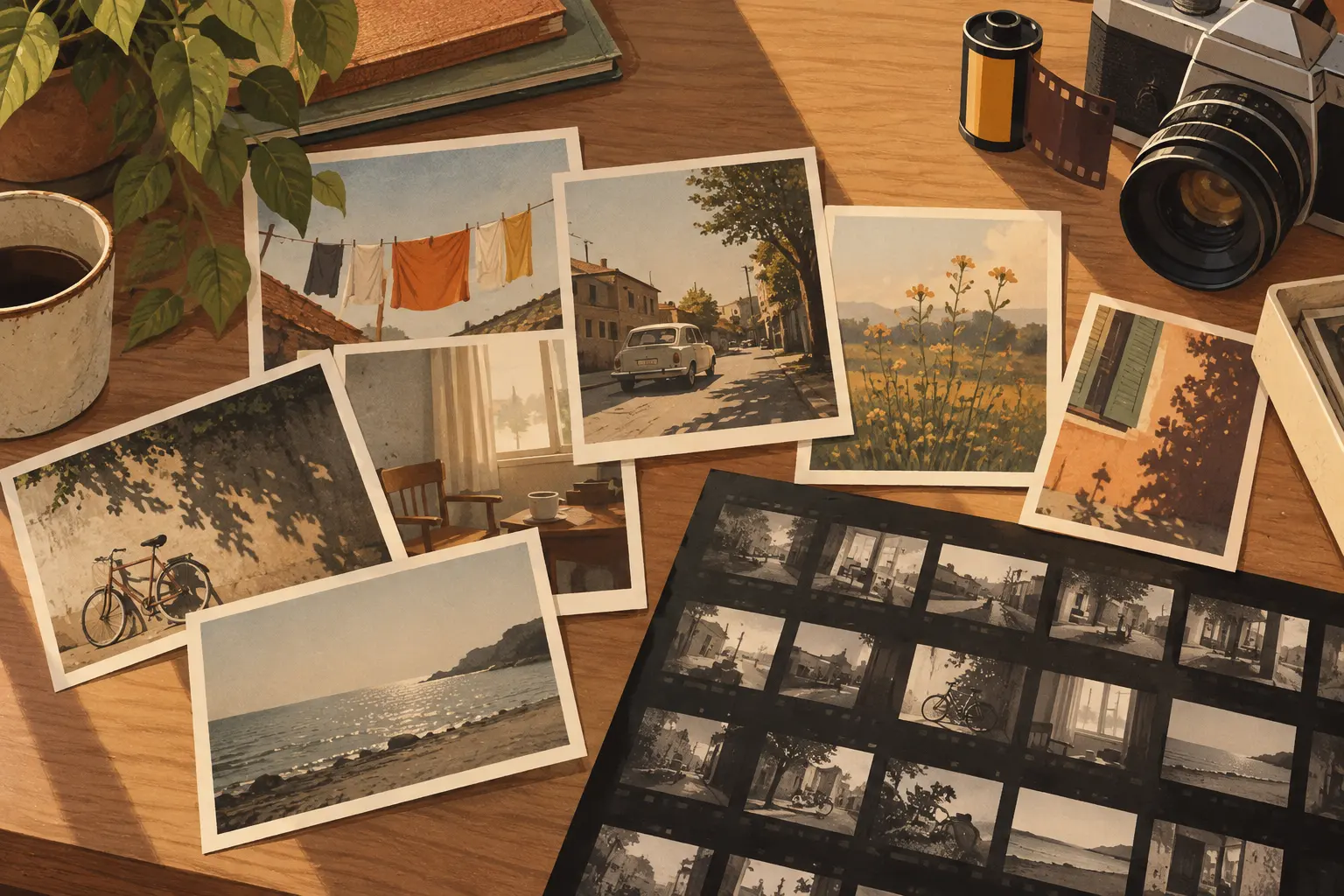
In the 1970s, photography took on a different place in contemporary art. It no longer had to justify itself solely through formal beauty or function as a self-contained scene. Artists and photographers used it to observe daily life, record actions, construct personal narratives and explore identity. The Madrid exhibition Años 70. Fotografía y vida cotidiana, held in 2009, presented the decade as a decisive period in the relationship between art and photography: a time of closer ties between art and life, marked by attention to the everyday, the intimate and less conventional documentary approaches.
The shift did not produce a single style. A photograph might record a found situation, accompany a staged action or form part of a conceptual inquiry. Rather than a rigid boundary between document and fiction, different practices made clear that images are constructed and that their meaning depends in part on how they are produced and presented. The camera was a way to look at the world, but also a means of questioning the act of looking.
Everyday life as subject and method
Interest in the ordinary led many artists to photograph spaces and relationships beyond traditional spectacle. Home, street, leisure, work and personal ties could all become visual material. The Madrid exhibition brought together 24 figures from the visual arts, including David Goldblatt, Anders Petersen, Cindy Sherman, Malick Sidibé and Eugene Richards. Its approach emphasized the period’s varied aesthetic attitudes and methods, rather than presenting it as a unified movement.
Everyday life here is more than a recognizable subject. Framing, distance from the subject and the repetition of motifs shape what viewers can read in an image. A photograph may seem immediate while belonging to sustained observation or a carefully organized sequence. The way it is presented helps distinguish an isolated frame from the larger project of which it is a part.
Intimacy, identity and staging
The camera also became a tool for exploring private life and identity. Some practices began with personal experience; others used representation and staging to examine how social roles are constructed. Juan Albarrán Diego’s thesis on photography, performance and staging in Spain places performative uses of the medium in the context of the magazine Nueva Lente and 1970s conceptualism. It also examines the continuation of some practices in the 1980s and the process through which photography became established in Spain during the 1980s and 1990s.
A staged image is not false by definition: it may document an action conceived for the camera. In that case, both the photographed event and the resulting image reflect choices about representation, framing and arrangement. A photograph alone cannot prove that a scene happened spontaneously; it can, however, be examined for how it was presented and for the meanings built around it.
The individual image and the meaning of a series
Photography often circulates as an individual image, but many projects gain meaning through series, books or exhibitions. Repetition, order and relationships between frames can alter how they are read: an image that seems descriptive on its own may belong to a pattern, comparison or narrative. When studying a photographic work, it is therefore useful to ask not only what each photograph shows, but how it relates to the others.
The contrast with video helps clarify the distinction. Antoni Marín Amatller notes that photography and audiovisual media share resources such as composition, shot planning and lighting, but that these work differently when they unfold over time. In a photograph, composition is fixed at the moment of capture or through later processing. In video, it can change within a shot and contribute to rhythm. The unit of work also differs: photography tends to give prominence to the individual image, even when a series forms a larger whole; video generally organizes shots into sequences and builds meaning through duration and editing.
A cultural transformation
The shift of the 1970s cannot be reduced to a list of artists or a story of technical change. It affected photography’s cultural role: the medium could serve as document, artwork, trace of an action or material for reflecting on representation. The Madrid exhibition brought together varied approaches to show this breadth, while research on Spain makes it possible to follow some of these practices in a specific context across several decades.
To read these photographs, it helps to consider how they were made and used: who appears, what relationship the photographer establishes with the subject, whether the scene was found or prepared, how the images are ordered and where they are shown. This avoids claiming more than a photograph demonstrates and helps explain why, in the 1970s, the camera became a tool for recording life while also questioning its images.
- Decade
- 1970s
- Region
- Global
- Level
- Enthusiast
- Entities
- Antoni Marín Amatller
Sources and references 5
- 400 hitos en la historia de la fotografíaoscarenfotos.com · 2026-11-22
- Años 70. Fotografía y vida cotidianawww.teatrofernangomez.es · 2026-11-22
- Mosaic | El factor temporal y el ritmo como distintivo entre fotografía y vídeodoi.org · 2026-11-22
- Del fotoconceptualismo al fototableau. Fotografía, performance y escenificación en España (1970-2000)openalex.org · 2026-11-22
- La historia de la fotografía | WhiteWall Magazinewww.whitewall.com · 2026-11-22