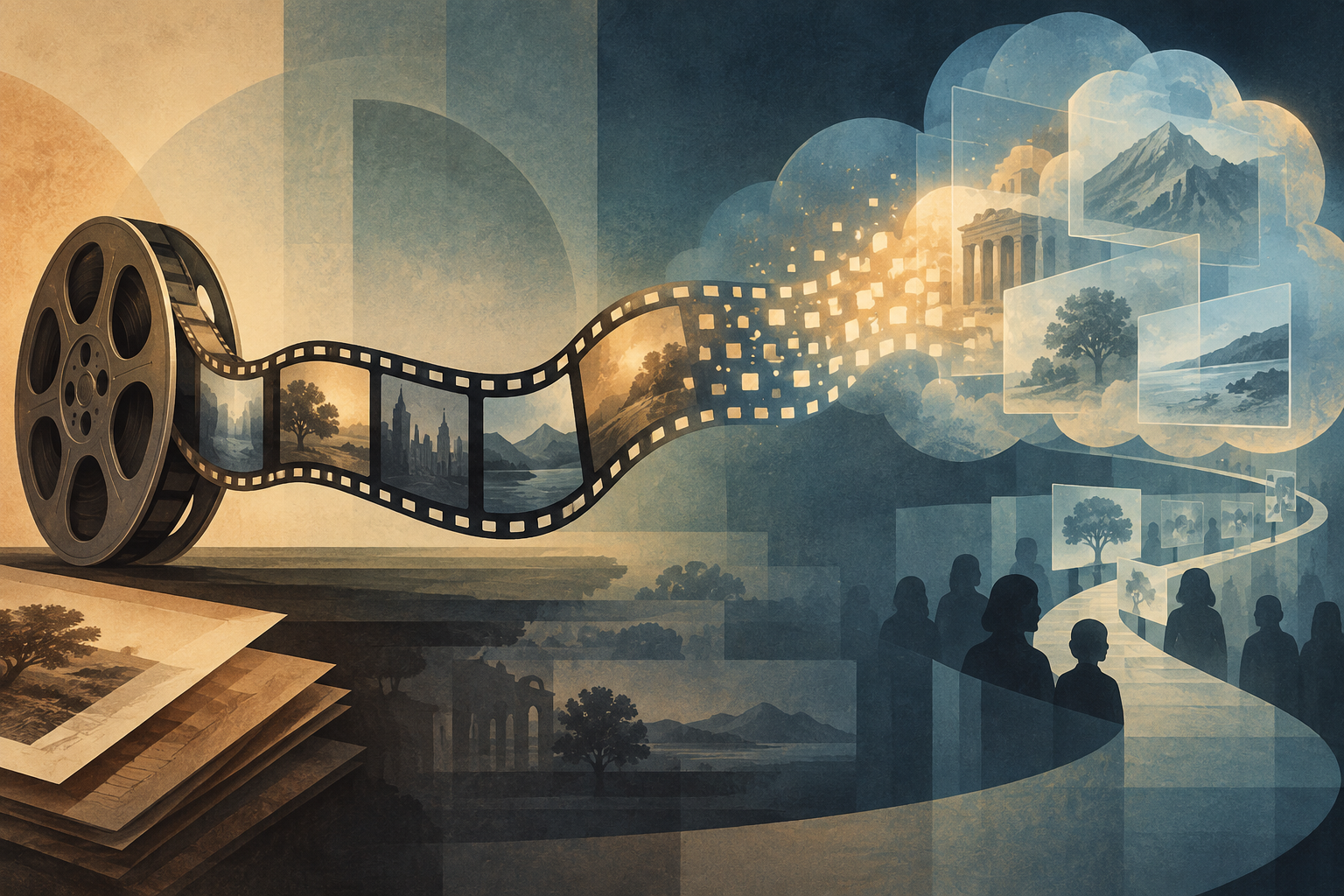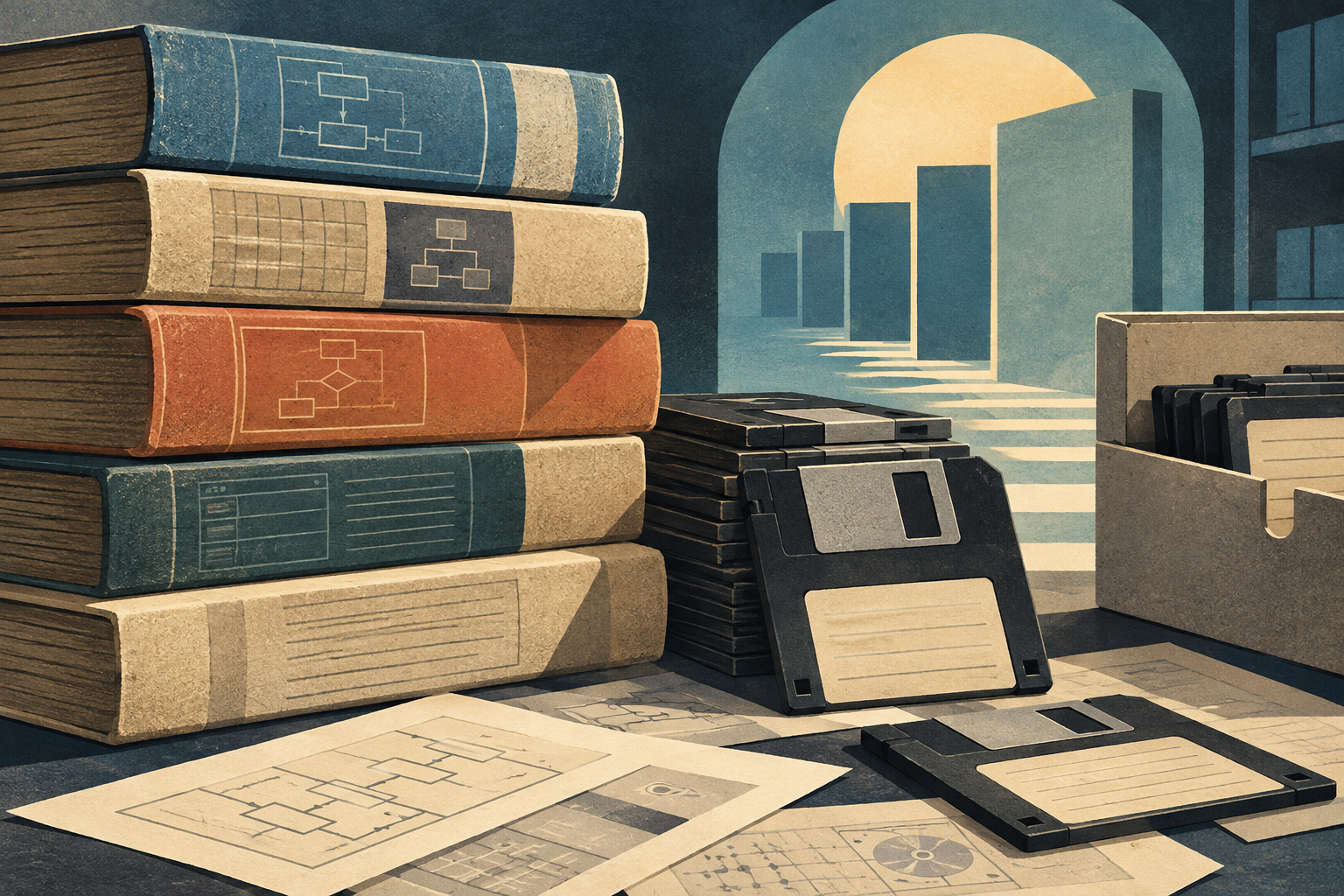
Digital preservation is commonly defined as the set of methods and techniques aimed at ensuring that stored information remains legible and functional despite technological changes. However, this technical definition clashes with the reality of old software, which is not just a set of data but an experience conditioned by specific hardware and usage norms that have disappeared. The current challenge is not merely to keep executable files alive, but to understand the ecosystem that made them possible. This analysis examines how documenting the context of creation and use has become a fundamental pillar for ensuring that historical software does not degrade into an inert object, unable to transmit the ideas that influenced current applications.
The Limitation of Faithful Copying
Copying a binary file is a mechanical act that preserves data integrity, but not necessarily its meaning. In the era of personal computers in the 1980s and 1990s, interaction with the machine was mediated by memory limitations and proprietary file formats. A program designed for a specific architecture depended on system routines that are now obsolete. Digital preservation, as understood in conservation plans for museums and archives, underscores that functionality is not an intrinsic attribute of code, but the result of a symbiotic relationship between software, hardware, and the user. Without this relationship, the file is merely a sequence of bits with no capacity for action.
The Role of Manuals and Technical Documentation
User manuals and technical documentation constitute the most immediate layer of context. These documents did not only explain how to install or run a program but established performance expectations and operational limitations. In an environment where remote technical support was non-existent, the manual was the primary interface for problem-solving. Analyzing these texts allows for the reconstruction of the average user's learning curve and the technical frustrations that shaped the computing culture of the time. The absence of this documentation in current digital archives leaves an interpretive gap that hinders the understanding of the historical value of applications.
Hardware as a Cultural Conditioner
Hardware was not a simple passive container but an active participant in the user experience. RAM memory restrictions, processor speeds, and graphics card capabilities defined what was possible and what was impossible in software design. These limitations forced developers to optimize code in ways that seem inefficient today but were necessary for product viability. Preserving this technical context is crucial for understanding why certain design decisions were made. Ignoring the underlying hardware leads to an anachronistic reading of software, evaluating old applications with current performance standards that were not applicable at the time.
The Material Culture of Software
Beyond code and hardware, there is a material culture associated with software that includes everything from storage media to interface aesthetics. Floppy disks, magnetic tapes, and CD-ROMs were not just transport media but objects with a limited lifespan and physical fragility that conditioned their use. The way users managed these media, backup practices, and file organization reflect specific cultural habits. Documenting this materiality allows historians and conservators to understand not only what was used but how technology was lived in the domestic and professional spheres.
Challenges of Technological Obsolescence
Technological obsolescence accelerates the loss of context. As original platforms become incompatible with modern operating systems, emulation becomes the main tool for access. However, emulation reproduces hardware behavior, not necessarily the context of use. For emulation to be historically valid, it must be accompanied by metadata describing the original configuration, peripherals used, and network conditions. Digital conservation plans emphasize that documenting the creation process is as important as the code itself, as without it, emulation is merely a technical recreation without historical depth.
Differentiating Facts from Interpretations
It is fundamental to distinguish between documented facts and interpretations regarding the cultural value of software. Facts include technical specifications, release dates, and verifiable functional features. Interpretations, on the other hand, involve judgments on historical relevance, influence on modern design, and social impact. Digital preservation must be based on solid facts to avoid the distortion of historical memory. At the same time, interpretations must be clearly signaled as such, allowing researchers and the general public a nuanced understanding of software evolution.
Towards Contextualized Preservation
The future of digital preservation of software requires a holistic approach that integrates technical documentation, material culture, and social context. Museums and archives must develop protocols that not only copy files but capture the user experience. This involves the digitization of manuals, documentation of hardware configurations, and the creation of narratives that connect software with its era. Only through this contextualized approach can we prevent old software from becoming an inert artifact, ensuring that the ideas and innovations it contains remain accessible and understandable for future generations.
- Decade
- 2000s
- Region
- Global
- Level
- Enthusiast
- Entities
- No linked entities
Sources and references
- Desarrollo y conservación del patrimonio cultural-natural en el contexto neoliberal y nuevas tecnologíasdoi.org · 2026-10-19
- Durante tres jornadas realizamos “Escuela Museowww.instagram.com · 2026-10-19
- Plan de Conservación Digital para Museosevemuseografia.com · 2026-10-19
- Proprietary softwaredbpedia.org · 2026-10-19
- Preservación digitales.wikipedia.org · 2026-10-19