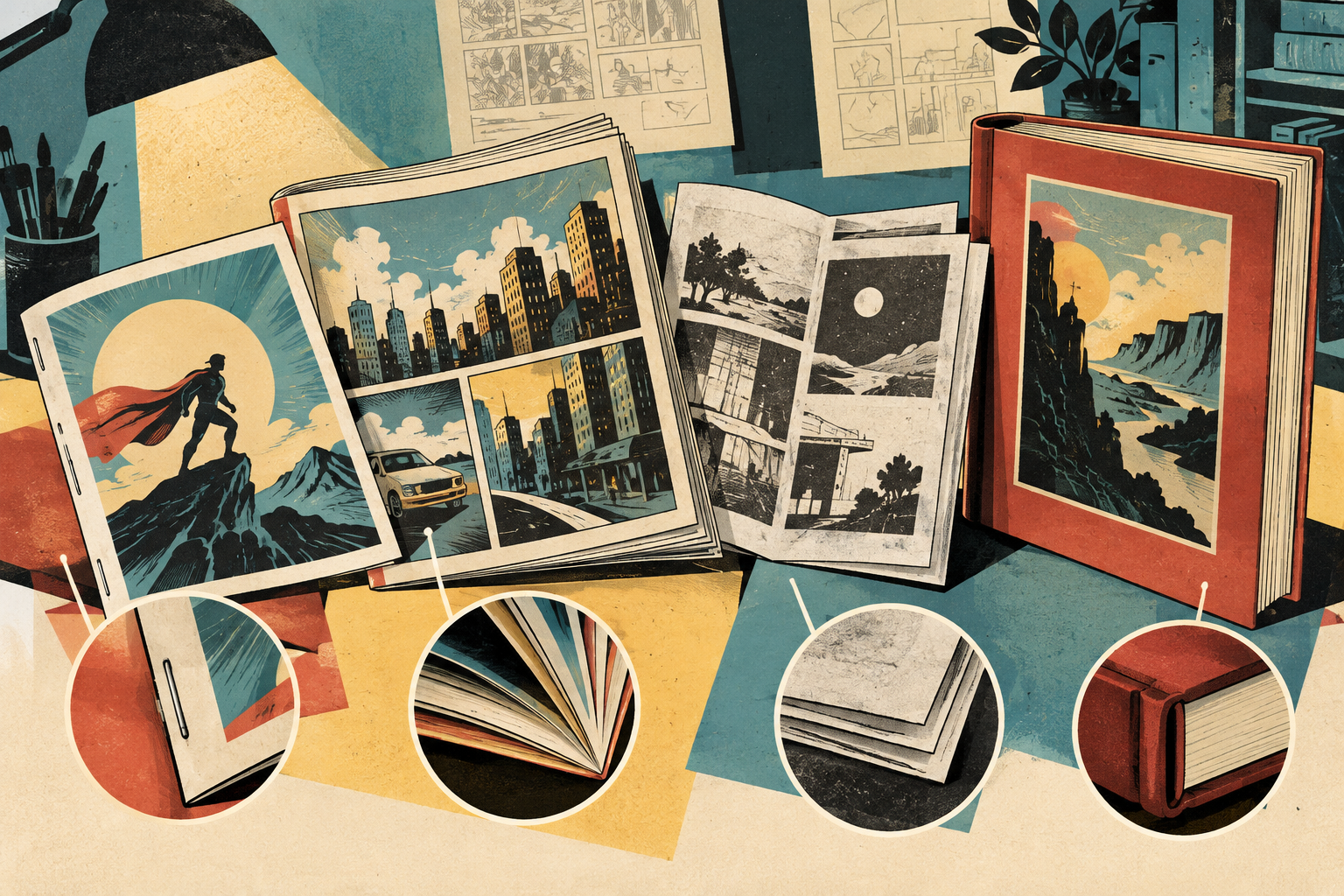
Reducing comics to a staple-bound object ignores the complexity of its material history. For decades, the North American industry imposed a cover aesthetic and a series structure that seemed immutable. However, the period between 1970 and 2009 reveals a profound transformation in how the medium is produced, distributed, and consumed. It is not just about changes in content, but a reconfiguration of physical supports that allow for different reading experiences and economic models. This formal diversity is not an accident, but a response to the narrative needs and market conditions of each era.
The Staple as Norm and Exception
In the North American context, the staple format consolidated itself as the standard for regular series. This model allowed for rapid production and distribution through specialty stores. However, this norm had limits. The series structure, with its story arcs that often extended over years, required a reader loyalty that was not always sustainable. Furthermore, the staple format, being an ephemeral object, made long-term preservation of works difficult. This created a tension between the immediacy of consumption and the aspiration to cultural permanence.
The Space of Magazines in Spain
Meanwhile, in Spain, comic magazines occupied a distinct place. Publications such as Bang!, Totem, El Papus, Bumerang, and Extra did not follow the US staple model. These magazines offered space for social criticism and artistic experimentation that the North American series format did not always allow. The magazine structure, with its periodicity and capacity to host stories of varying lengths and authors, fostered thematic and stylistic diversity. This model allowed Spanish authors to explore local and universal themes with a freedom that contrasted with the constraints of the Anglo-Saxon market.
The Rise of Fanzines and Mini-Comics
In parallel, the fanzine and mini-comic movement emerged as a radical alternative to the traditional editorial system. These formats, often self-published and distributed independently, allowed creators to maintain total control over their work. Fanzines became a laboratory for new ideas, techniques, and voices. Being on the margins of major publishers, these formats could experiment with form and content without the commercial pressures that limited mainstream publications. This independence was crucial for the development of an alternative scene that challenged the conventions of the medium.
The Transition to the Album
As the 20th century progressed, the album began to gain ground as a preferred format for many works. Unlike the staple, the album offered greater durability and a more refined presentation. It allowed for the collection of stories in a single volume, facilitating the reading of complete story arcs. This transition was not only commercial but also narrative. The album allowed for greater visual density and more careful planning of stories. For many readers, the album became the ideal format to enjoy comics as a form of literary and visual art.
The 2009 Turning Point
The year 2009 marked a significant milestone in the history of North American comics. For the first time, no staple comic exceeded 100,000 monthly copies in sales. This phenomenon was not an accident, but the result of a series of factors including changes in consumption habits, competition from other media, and the growing popularity of other formats. The decline in staple sales underscored the need to diversify business models and explore new ways to reach the audience. This turning point accelerated the transition to more sustainable and versatile formats.
Narrative and Economic Implications
Format diversity is not just a matter of aesthetic preference, but has deep implications for the narrative and economics of comics. Each format offers distinct possibilities for storytelling. The staple allows for immediacy and continuity that the album cannot always offer. The album, on the other hand, allows for greater depth and a more refined presentation. Fanzines and mini-comics, for their part, offer space for experimentation and independent voice. Understanding these differences is key to appreciating the richness of the medium and understanding how authors choose the most suitable format for their stories.
Beyond the Cover
Ultimately, the history of comics is a history of formats. The obsession with covers and iconic characters has often obscured the importance of physical supports in the evolution of the medium. By examining the diversity of formats between 1970 and 2009, a much more complex and nuanced picture emerges. Comics are not a static object, but a medium in constant transformation, adapting to the needs of its creators and readers. Recognizing this diversity is essential to understanding the past, present, and future of comics as a form of cultural and artistic expression.
- Decade
- 2000s
- Region
- Global
- Level
- Enthusiast
- Entities
- No linked entities
Sources and references
- El cómic, una cuestión de formatos (2): revistas de cómics, fanzines, mini-cómics, álbumes y novelas gráficasdoi.org · 2026-10-15
- Marvel: La historia visual 1970-1979 Este tomo recorre de ...www.instagram.com · 2026-10-15
- LAS 20 MEJORES HISTORIAS DE CÓMICS DE LA ...translate.google.com · 2026-10-15
- EiSNer Hall of Fame Q-Uwww.comic-con.org · 2026-10-15
- Ibéroes: Racismo y crítica social en la apropiación ...www.tandfonline.com · 2026-10-15
- Historia de DC Comics 1934-2026: cronología completamycomicscollection.com · 2026-10-15
- ES MUY DE CÓMIC: VENTAS NORTEAMERICANASpepoperez.blogspot.com · 2026-10-15
- Historia visual del cómic, la novela gráfica, el manga y los ...www.albertoalbarran.com · 2026-10-15