An object is not a portrait of the table
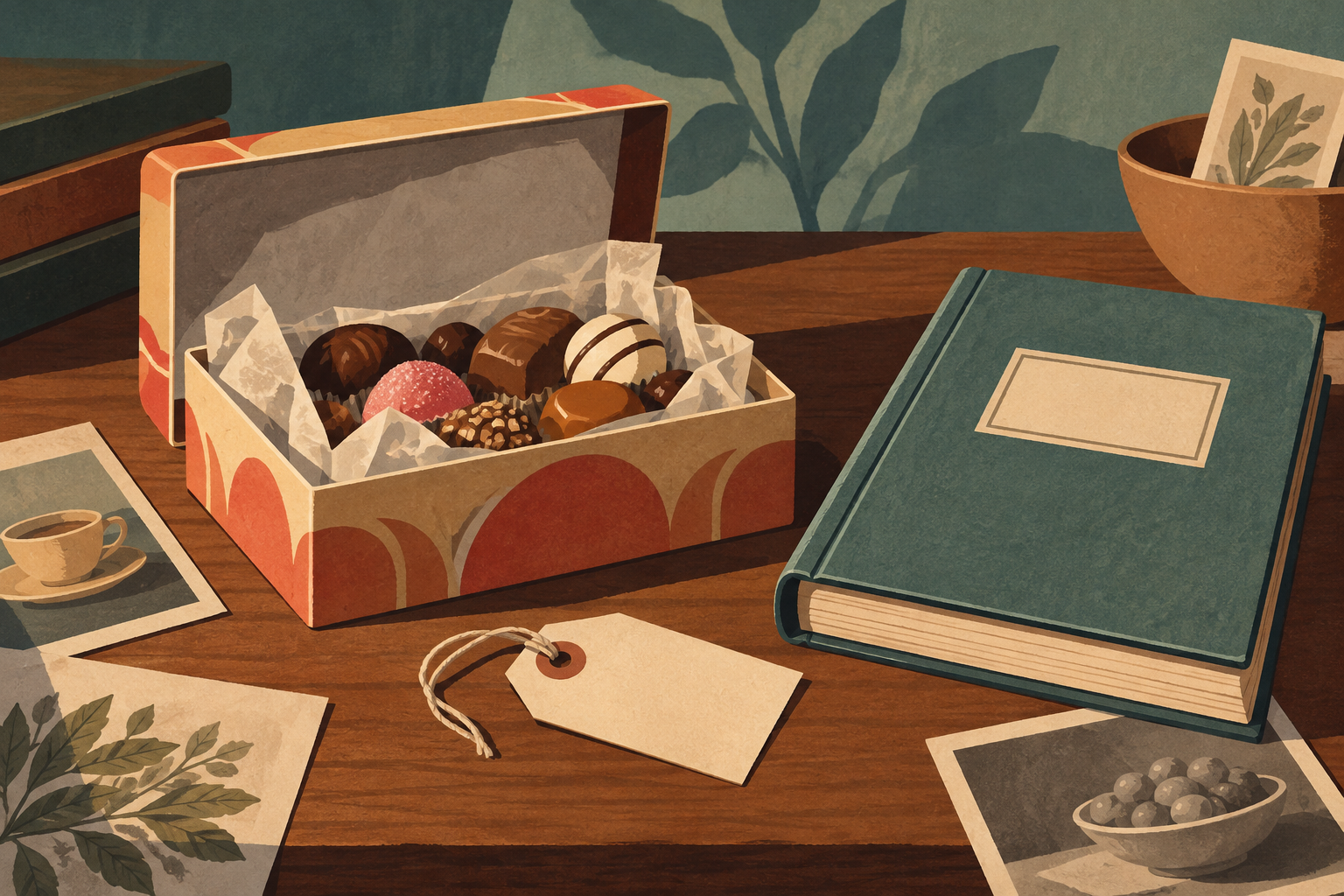
A biscuit, sweets or chocolate tin can preserve a way of presenting food and may itself become a collectible object. The Madrid History Museum identifies a collection of tins in these categories. This makes it possible to study specific objects as material heritage; it does not, by itself, reconstruct what each household ate, how often, or how those products were served.
The distinction matters. Packaging chiefly records what was fixed on it: its form, any surviving label and the way the product was presented. The municipal collection confirms that this kind of object is held by the museum, but the supplied information does not detail individual items, dates, makers or circumstances of use. Filling in those details without consulting catalogue records would turn a clue into a certainty.
Advertising and domestic use are different questions
Commercial presentation aims to communicate something about a product; domestic use belongs to another realm. A tin may suggest a visual identity or a sales promise, but it cannot confirm that the promise shaped a purchase or how its contents were consumed. Researching habits requires sources that document practices, not just images intended to promote an item.
The range of sources recommended by archives and libraries helps frame this distinction: the Castile and León archives service presents documentary and bibliographic sources for learning about gastronomy, while the Madrid History Museum provides an example of a material collection. These are not interchangeable forms of evidence. An object and a written document may answer different questions, and discrepancies between them should not be erased through an overconfident account.
Cookbooks and archives offer other angles
A cookbook can help researchers examine instructions and ways of organising culinary knowledge, but it does not prove that a recipe was prepared in every household or followed exactly. Archival documents can open other avenues, although their value depends on the document, its provenance and the information it contains. PARES, for example, provides an authority related to food and linked documents; the supplied result does not identify a particular series from which conclusions about everyday consumption could be drawn.
Mercasa’s material lists Alimentos con historia by Ismael Díaz Yubero as a popular work about food. The available record is not enough to attribute a specific argument to the book or summarise its chapters. It does, however, point to a useful distinction: synthetic works can help shape research questions, while claims about a particular package or practice must be checked against the specific source documenting it.
Reading form without turning it into a habit
Packaging design is a cultural source, but observation and interpretation must be kept apart. The museum’s identification of a tin collection is a fact stated by the institution. Interpreting how the form shaped the experience of the product may be a reasonable hypothesis, not a fact confirmed by the available excerpt. Supporting it would require the catalogued object, its description, images and, where available, related documents.
The same caution applies to shops and products. The Spanish Ministry of Culture document on Chocolatería “El Indio” describes it as a shop and a place of in-house manufacture dedicated to making chocolate. This is specific evidence about production and sale in that case, not general proof of how all chocolate shops operated. Keeping the case within its limits makes it possible to compare sources without turning an example into a rule.
A method for distinguishing promotion from practice
A sound investigation begins by identifying each source and asking what it can establish. For a tin, describe what is visible and check the object’s catalogue record. For an advertisement, distinguish the promotional message from any claim about reception or purchasing. Read a recipe’s instructions as text, not as automatic proof that it was followed. For an archival document, consider provenance and document type.
Then look for connections between independent sources. If a cookbook, label and commercial document agree on one point, that agreement may guide a conclusion; it does not remove the need to specify what each source says. The evidence supplied here includes no detailed examples of advertisements or domestic practices associated with the Madrid tins, so it cannot resolve a specific case of that kind.
What remains open
The value of these tins is not that they reveal a complete everyday meal on their own, but that they offer a material starting point. The museum collection, documentary and bibliographic sources on gastronomy, and research into sweets and women confectioners point towards different lines of enquiry. The University Complutense record describes a curatorial text for an event on the history of sweets and their women confectioners, dated 19 February 2024; the record supplied here gives no details that should be attributed to its contents.
A responsible history of food can bring packaging, recipes and documents together, provided it does not confuse them. A tin speaks to presentation and material preservation; other documents may bring us closer to production, circulation or practice, depending on their contents. Keeping those questions separate does not diminish cultural memory. It makes clearer what we know, what we interpret and what evidence is still missing.
- Decade
- Contemporary
- Region
- Spain
- Level
- Enthusiast
- Entities
- Museum, Museo de Historia de Madrid
Sources and references
- Museo de Historia de Madrid - La colección de cajas de ...www.madrid.es · 2026-10-10
- Cuando la comida entra en el museo: recetas, envases y ...www.retropause.com · 2026-10-10
- Centro Documental de la Memoria Histórica (182) - PARESpares.mcu.es · 2026-10-10
- Alimentos con historiawww.mercasa.es · 2026-10-10
- Chocolatería "El Indio"www.cultura.gob.es · 2026-10-10
- Archivos y Gastronomía | Archivos | Junta de Castilla y Leónarchivoscastillayleon.jcyl.es · 2026-10-10
- Patrimonio Comestible: Una historia de dulces y de sus ...docta.ucm.es · 2026-10-10