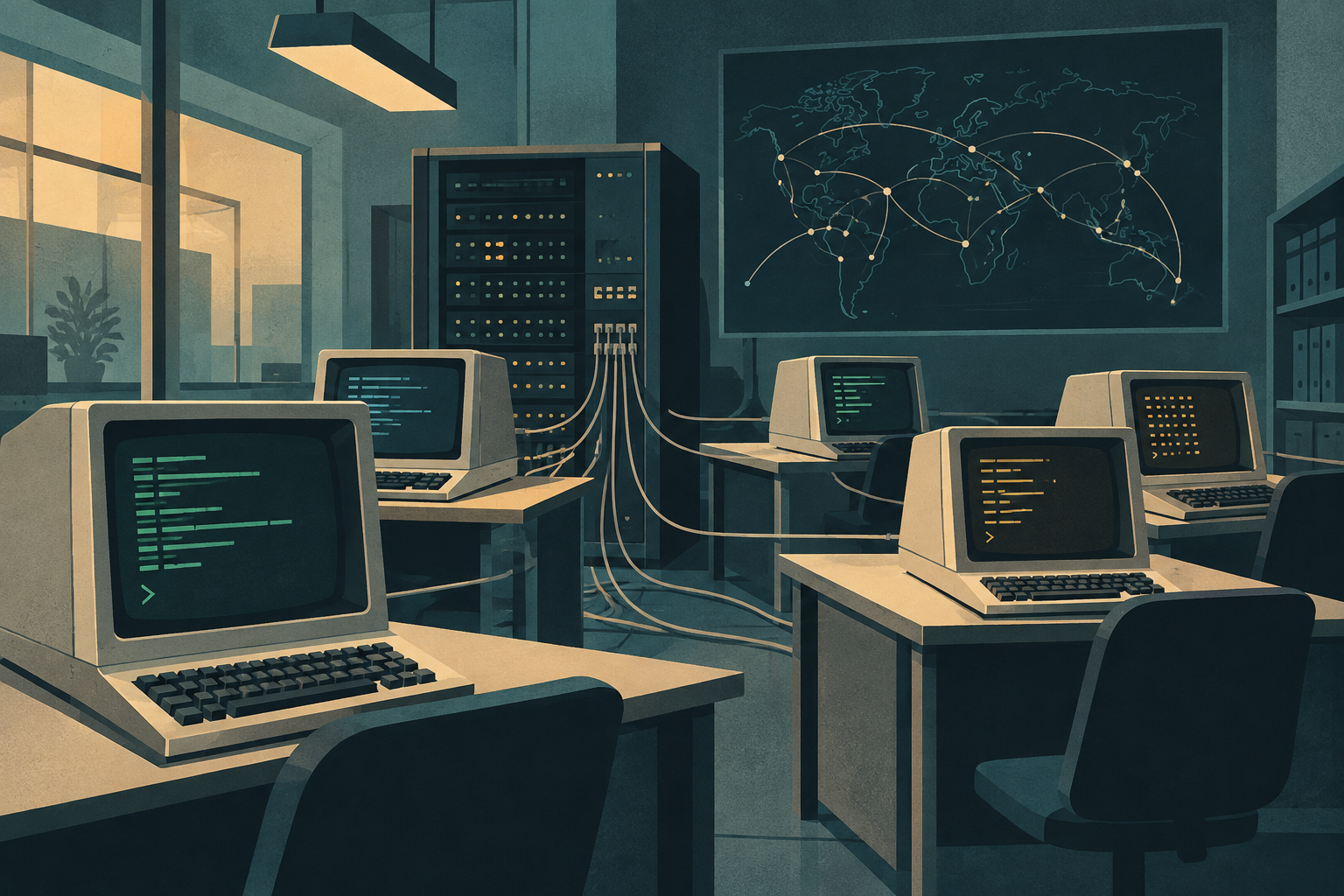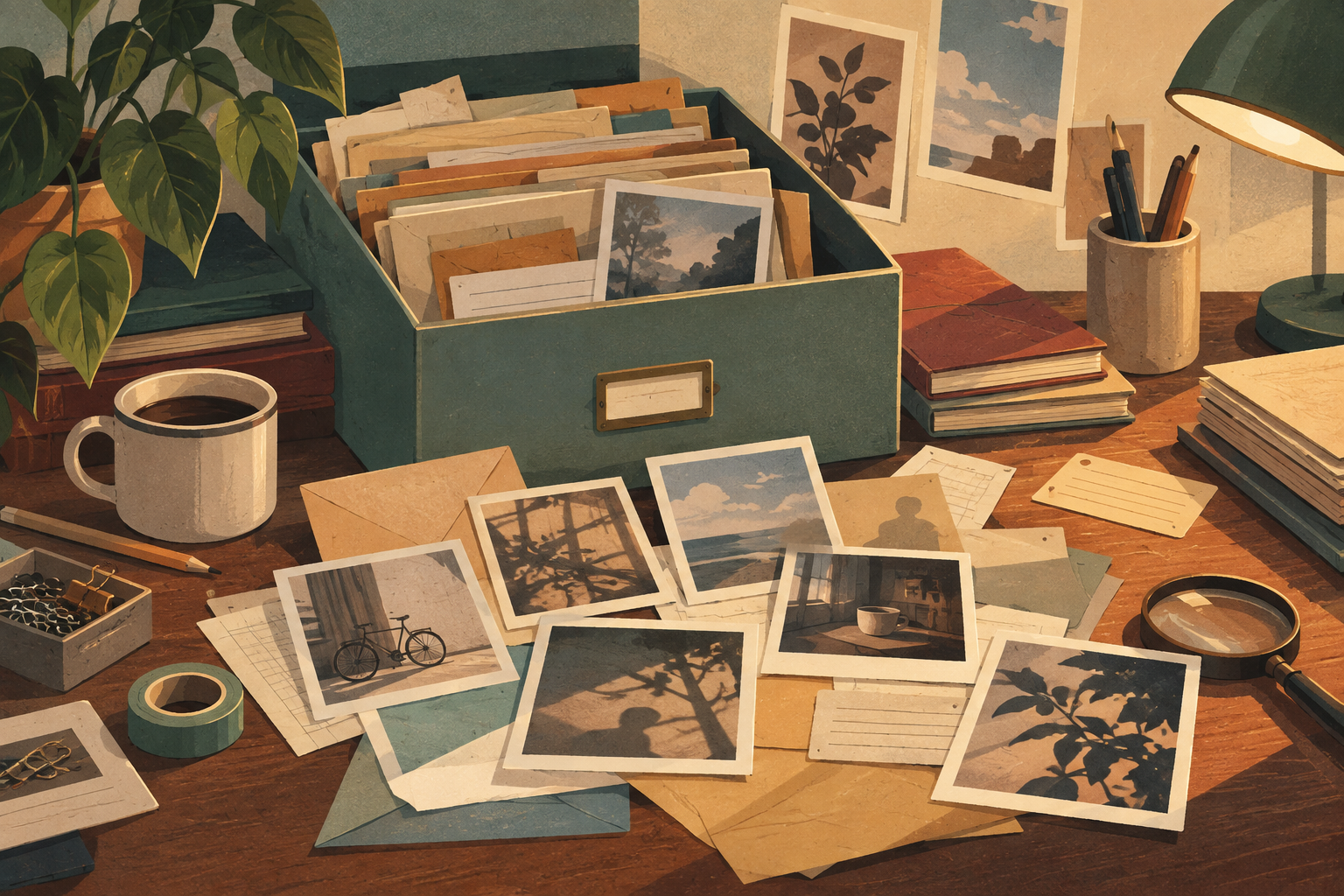
An archive is a trace, not life itself
Everyday life rarely appears in archives as a complete account. It arrives in fragments: documents produced through an activity, records selected for preservation, or materials an institution chooses to present. That distinction matters. A document may provide evidence about a particular practice, but it is not a comprehensive description of the people who lived it.
EVE Museos + Innovación’s definition of museum archives begins with this relationship between records, everyday activities, and selection. Selection is decisive: preservation involves choices, and what remains accessible depends both on what was recorded and on what was considered worth keeping. Studying everyday life therefore means asking about each document’s origin and journey, not merely reading its contents.
The questions that make the ordinary visible
The history of everyday life is an identifiable field of historiography in Spain; the 1995 issue of the journal Ayer devoted to the subject presents it as such. That reference locates an academic interest but does not justify attributing a single method or conclusion to the field. A more modest starting point is useful: ask which activities are represented, who created the record, and why it was made.
A museum in Tenerife offers another angle with its page on trades and everyday life. The supplied material mentions the continuation of a traditional Castilian guild system and the role of Cabildo ordinances. This is a localized lead on how work and its regulation may be documented; it is not, by itself, a complete picture of every resident’s life or a description that can be applied to any period or place.
Reading the conditions of production
Documents were not necessarily created to tell the story we want to reconstruct today. An ordinance, activity record, or photograph had its own purpose. Euskonews’s text on archives recalls their standing as sources for history and addresses their role in contemporary society. Using them carefully means considering who produced them, what function they served, and what circumstances allowed them to survive.
This attention prevents two levels from being confused: what is documented and what is interpretation. If a source mentions a rule, we can say that the rule is recorded there; without further evidence, we cannot assume that everyone followed it or that it had the same effect everywhere. The distance between a written rule and lived experience is a research question, not a gap to be filled by imagination.
From documentation to public storytelling
Archives are also presented through exhibitions, events, and reconstructions. A PARES post announces an exhibition by the Archivo General de Indias featuring environmental recreations and historical photographs. The Museo Reina Sofía, meanwhile, describes Archivos del común as a gathering organised with the Red Conceptualismos del Sur and says it emerged in 2015 in response to a need that the supplied excerpt does not specify. Both examples show that an archive is not only a repository: it can also become the subject of public interpretation and discussion.
This mediation helps make materials legible when they might otherwise seem opaque. But an environmental reconstruction should not be mistaken for an original document, and an exhibition does not necessarily represent everything an institution holds. It is worth asking which materials were chosen, which were left out, and how the selected objects relate to the accompanying account. The available evidence is not sufficient to detail the full contents of those exhibitions or events.
Absences matter too
Archives make historical accounts possible, but they also set limits on what can be claimed. Euskonews’s PDF recalls the value attributed to archives as sources; the editorial challenge is not to turn that value into a promise of completeness. If a practice does not appear in a particular body of documents, that does not prove it never existed. It may simply mean that it was not recorded, preserved, or found among the materials consulted.
The responsible response is not to fill silences with an imagined scene. It is to identify them, explain what further evidence would be needed, and keep verifiable facts distinct from hypotheses. This discipline is particularly useful when writing about ordinary life: selected sources may show activities, trades, or institutions without allowing us to reconstruct everyone’s experience equally.
A history made of questions
The resources gathered here support a limited proposition: everyday life can be studied through documents, archives, and museum materials, provided we examine how they were generated and selected. The historiographical reference in Ayer, the localized case of trades in Tenerife, and PARES and Reina Sofía’s examples of public mediation point to different approaches to the task without, by themselves, forming a general history.
An archive provides traces; editorial work means placing them in context, attributing them, and recognising their limits. Rather than presenting a document as a transparent mirror of an era, it is more productive to ask what activity it records, what purpose it served, whose voices it sidelines, and what conclusions it actually permits. Everyday life enters history not through automatic reconstruction, but through careful investigation of what has been preserved and what we still do not know.
- Decade
- 1990s
- Region
- Spain
- Level
- Enthusiast
- Entities
- Museum
Sources and references
- La vida cotidiana entra en el archivo: qué pueden contar los ...www.retropause.com · 2026-09-29
- 🧐📜 ¿Sabes qué es un archivo? ¿Y las labores que se ...www.facebook.com · 2026-09-29
- Los oficios y la vida cotidianawww.museosdetenerife.org · 2026-09-29
- Archivos del común VIwww.museoreinasofia.es · 2026-09-29
- Vol. 19 Núm. 3 (1995): La historia de la vida cotidianawww.revistasmarcialpons.es · 2026-09-29
- EL ARCHIVO EN LA SOCIEDAD ACTUAL - Euskonewswww.euskonews.eus · 2026-09-29