Watching again is not going back
Television is experienced as a sequence of broadcasts: one programme occupies a slot, ends, and gives way to another. An archive changes that relationship with time. It makes material from earlier periods available again, but it does not restore the original situation intact. Scheduling, broadcast time and domestic viewing conditions are part of the experience; a later replay preserves content, not necessarily its full context.
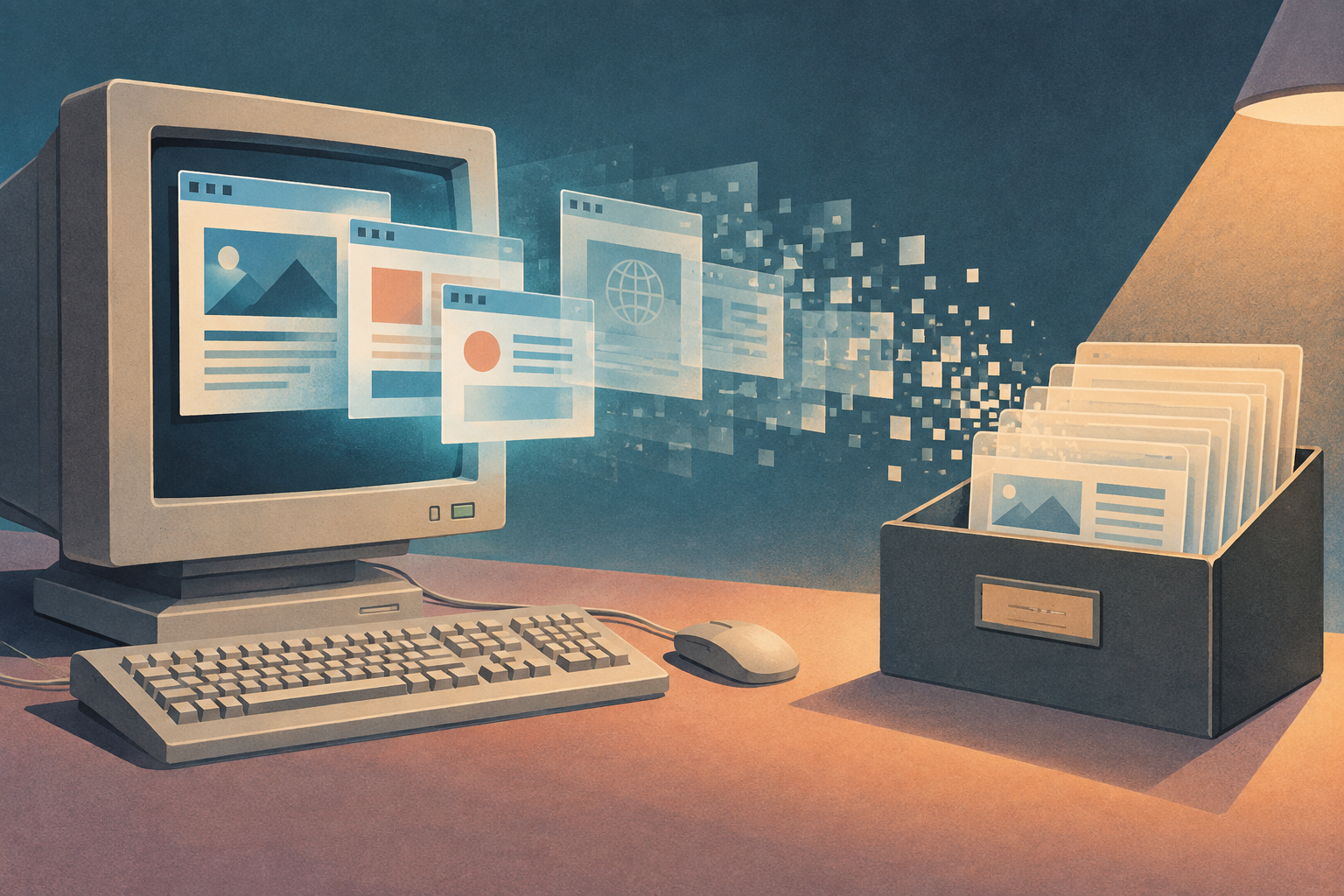
The Spanish Television Archive offers access to audiovisual material through RTVE Play. This access provides a concrete starting point for discussing preservation, but it does not justify assuming that everything ever broadcast is available or that every period and genre is represented equally.
An archive is also a form of selection
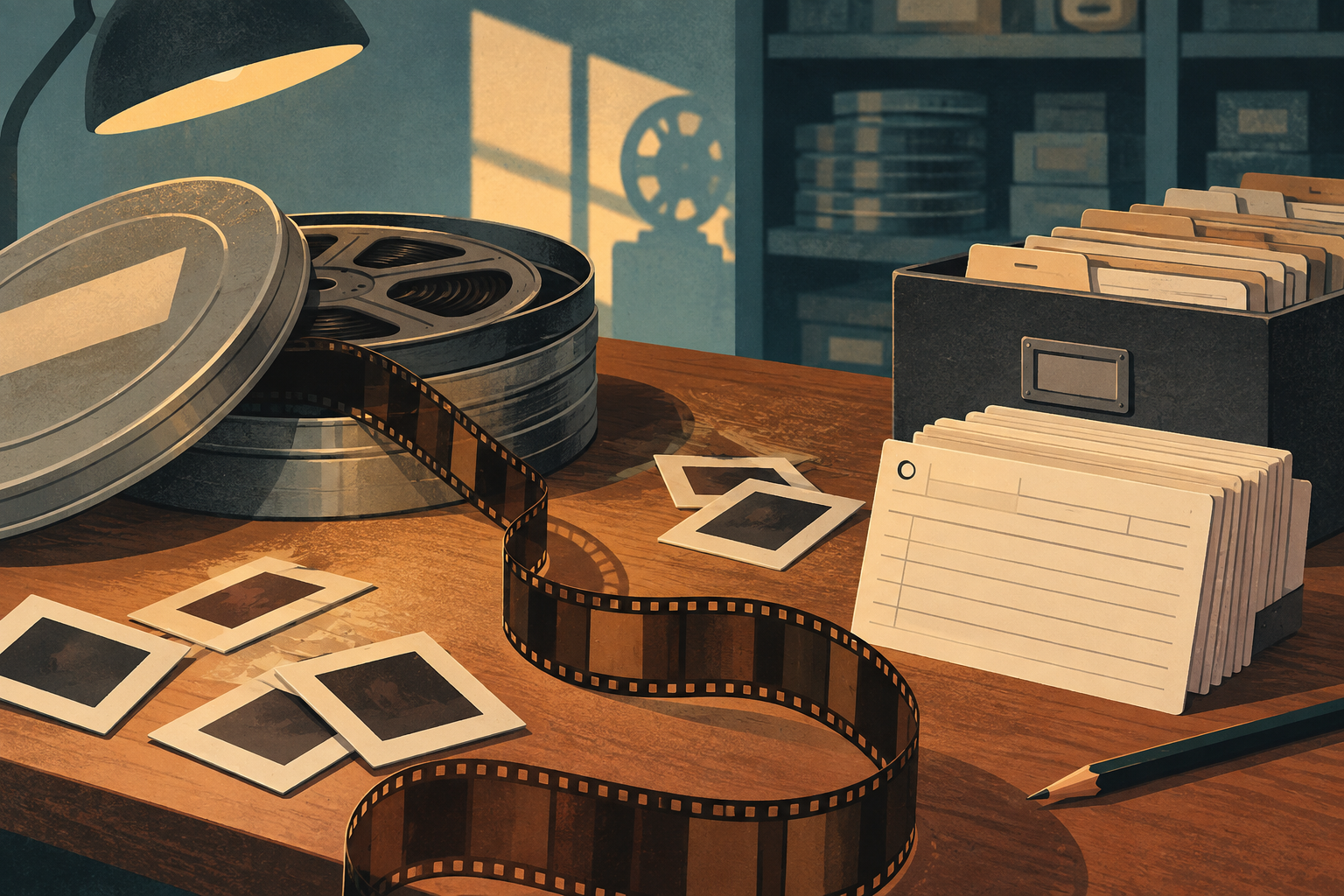
An archive is not a transparent window onto everything that happened. María Pilar Hidalgo Goyanes’s research uses the Spanish Television Archive as an example in studying the preservation of television audiovisual heritage. That approach reminds us that preservation involves decisions about what is kept, how it is organized and how it can be consulted.
Three things are often conflated: a broadcast having existed, a record of it being preserved, and that record being accessible today. RTVE’s archive page establishes that the institution offers a route to consultation; on its own, it does not document the completeness of the holdings or the full criteria by which materials were included.
From the 1970s to the turn of the century
Spanish television between 1970 and 2000 can be approached through programmes, familiar faces, household devices and social change. The scope is tempting, but it requires resisting the urge to turn an archive into a list of personal memories. A historical overview helps situate the period; an archive offers access to particular audiovisual objects; academic studies supply questions and frameworks for interpreting them. These sources complement one another but are not interchangeable.
Research on Spanish television from 1963 to 1969, published in Anàlisi, examines an earlier period and emphasizes expansion and social consumption. It provides context for understanding how television was already becoming a shared practice before 1970; it does not, by itself, establish how those practices changed in later decades.
A catalogue is not the domestic experience
A digital page organizes programmes so they can be found and played. At home, watching television also depended on schedules, screens, company and routines that an archive may not preserve. The distinction matters: viewing an old programme now is not the same as seeing it when it aired, alongside an audience sharing the same schedule.
That distance does not diminish the archive’s value. It makes its use more precise. A preserved programme can help us examine presentation, staging and audiovisual language. Claims about reception, popularity or collective memory require other kinds of evidence; access to a video alone cannot tell us who watched it or what it meant to each viewer.
What the evidence supports
The available documentation supports a limited conclusion: RTVE provides a searchable archive, the preservation of television audiovisual heritage has been the subject of academic research, and Spanish television can be studied across a longer period that includes the 1970s, 1980s and 1990s. It also shows why the medium’s history benefits from combining preserved material with historical context and analysis.
The evidence does not establish that the archive is exhaustive, that every item has the same access conditions, or that a digital catalogue recreates the experience of broadcast television. Nor does it provide enough information here to quantify losses, availability or audience use. Making these limits clear does not weaken the history; it prevents a present-day selection from being mistaken for the whole past.
Preservation makes new questions possible
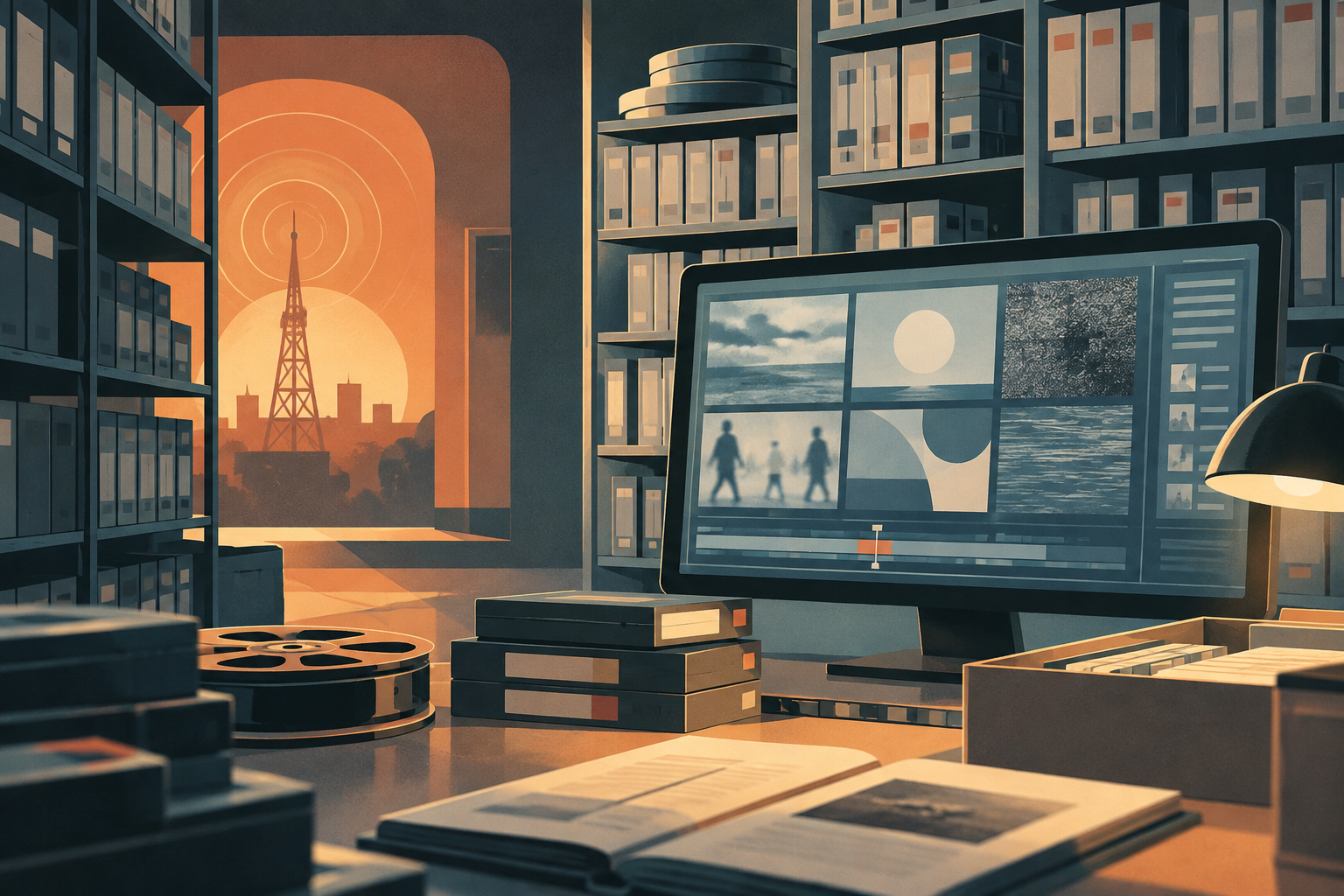
An archive turns broadcast television into material that can be examined again. Its value lies not only in recognizing a programme, but in asking what was preserved, how it is described and who can access it. The archived screen cannot replace missing context; it allows us to investigate that context more carefully.
The history of television therefore does not end with the final broadcast or begin anew whenever we press play. It continues through preservation decisions, catalogue structures and critical readings of the material that remains available.
- Decade
- 1990s
- Region
- Spain
- Level
- Enthusiast
- Entities
- Televisión
Sources and references
- El archivo como puerta de entrada a la televisión española de ...www.retropause.com · 2026-09-30
- Archivo de Televisión Española | Ver en RTVE Playwww.rtve.es · 2026-09-30
- Preservación del patrimonio audiovisual de televisión El ...produccioncientifica.ucm.es · 2026-09-30
- Historia y evolución de 40 años de televisión en Españalab.elmundo.es · 2026-09-30
- La televisión en España: expansión y consumo social, ...raco.cat · 2026-09-30