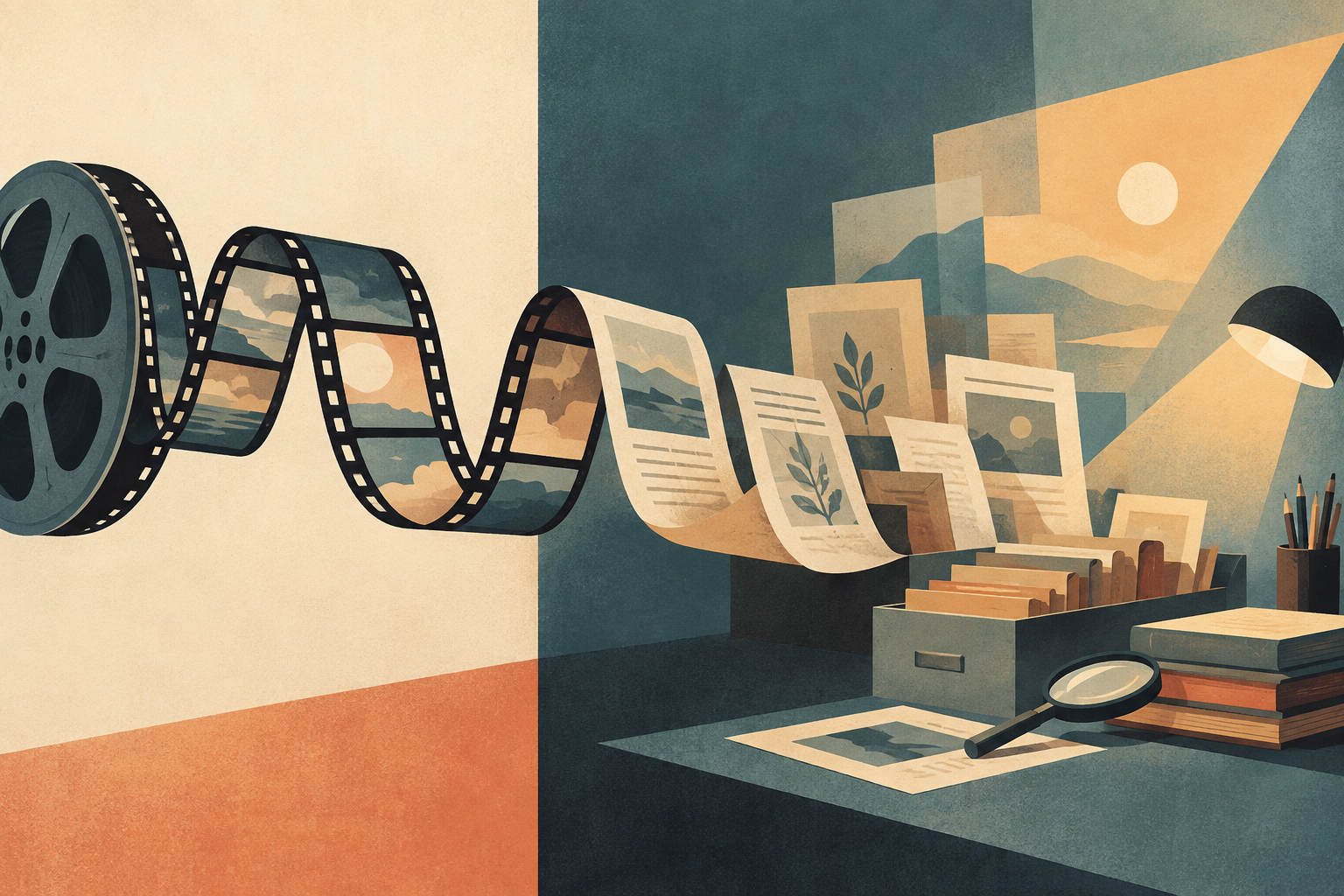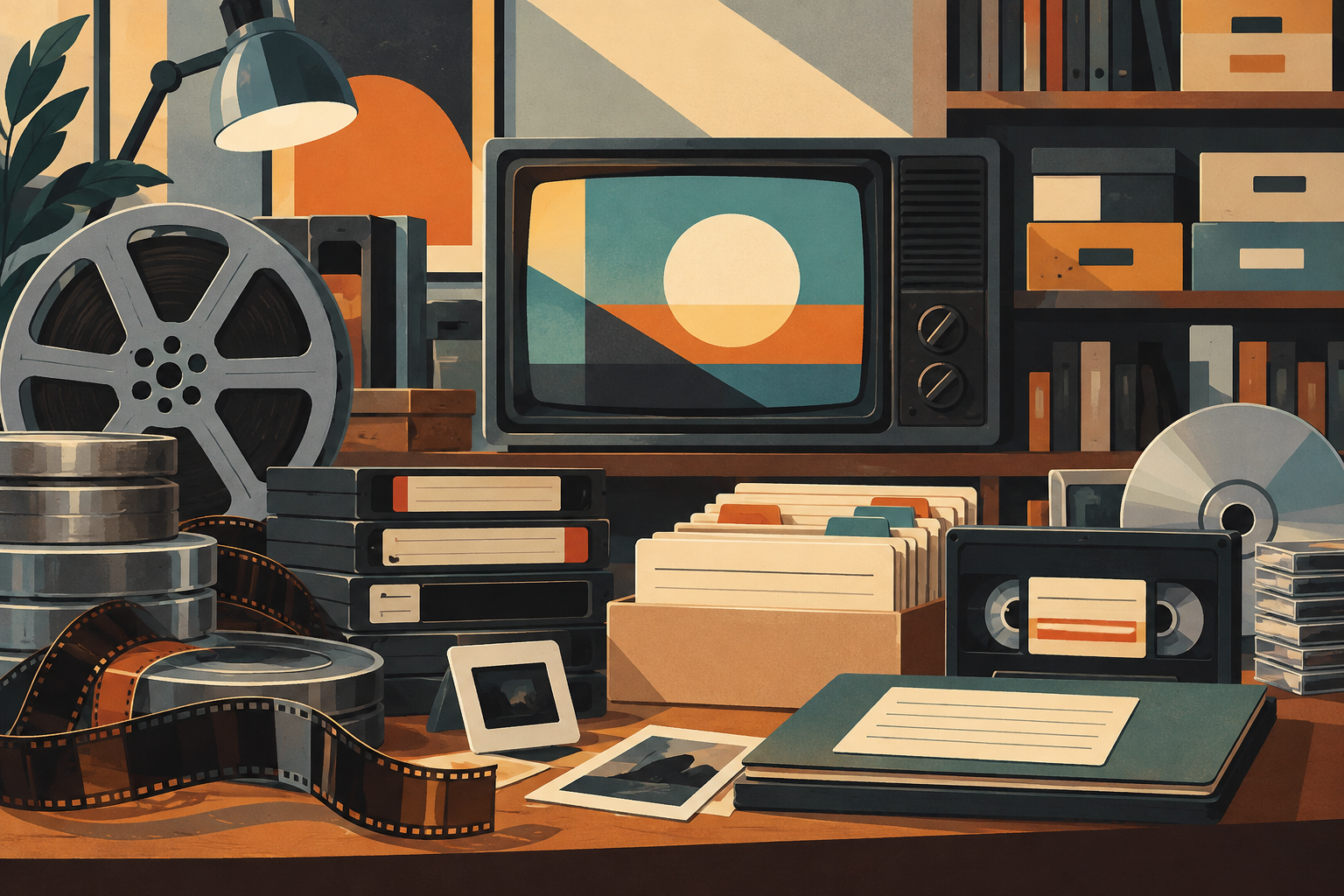
Television is often remembered as a sequence of images watched at home. But a broadcast kept in an archive becomes more than a memory: it can become evidence that needs description, context and interpretation. That is the idea RetroPause raises in its discussion of the TVE archive. Preservation is not simply a matter of storing recordings; it also means attending to the documents around them and to the conditions that make them understandable.
From broadcast to document
A preserved recording does not explain by itself what it is, how it was made or what place it occupies. RetroPause’s summary of the TVE archive specifically stresses the need to describe and contextualise material. The distinction matters: keeping a record available and making it interpretable are related tasks, but not identical ones. The first maintains availability; the second helps others identify and study it.
What lies beyond the screen
Another RetroPause article broadens the focus: preserving television means caring for recordings and documents. This perspective avoids reducing television heritage to the content that was broadcast. The source does not specify which documents are held, so it would be unwarranted to provide a list here. It does support a broader point: the history of a broadcast may depend on information that never appeared in the transmitted image.
Preservation as a cultural responsibility
An academic text from the Complutense University of Madrid on audiovisual heritage preservation reports that UNESCO recognised audiovisual archives in 1980 as part of humanity’s cultural heritage and recommended their safeguarding. This places preservation beyond individual nostalgia: archives can matter as heritage and require deliberate care. A UNESCO message included among the sources also describes audiovisual archives as stories about lives and cultures in different parts of the world. That is a broad statement, not a technical account of any particular archive.
Archives that are also interpreted
RTVE is not the whole picture. Señal Memoria presents RTVC’s television museum as a space for archive, memory and technology, intended to recover the history of public media. Meanwhile, an academic article available through Redalyc reflects on channel Volver’s role in preserving audiovisual television memory. These are distinct references and do not establish that all archives operate in the same way; together, they show that preservation can be approached through archives, museums and analysis of television channels.
What can be said, and what remains open
The available sources support the view that preserving television goes beyond retaining images, and that description, context and documents matter. They do not, however, provide enough detail to reconstruct specific technical processes, access policies, selection criteria or the condition of particular collections. Nor can conclusions about RTVE, RTVC or Volver be generalised to every institution.
That caution does not diminish the central question. An archive makes it possible to return to images, but their meaning also depends on how they are identified, connected with context and presented to people who consult them. Television therefore persists not only on a preserved screen, but in the work that allows it to be read as a document and as cultural memory.
- Decade
- Contemporary
- Region
- Spain
- Level
- Enthusiast
- Entities
- Museum, Televisión
Sources and references
- La televisión también se conserva: qué cuenta el archivo ...www.retropause.com · 2026-09-29
- Los archivos audiovisuales nos cuentan historias sobre ...www.facebook.com · 2026-09-29
- Preservación del patrimonio audiovisual de televisión El ...produccioncientifica.ucm.es · 2026-09-29
- La televisión también se conserva fuera de la pantallawww.retropause.com · 2026-09-29
- Tecnologías de la memoria: el museo y el archivo de RTVCwww.senalmemoria.co · 2026-09-29
- Sentir que treinta años no es nada: el rol de canal Volver ...www.redalyc.org · 2026-09-29