A history of technology can seem simple when told as an orderly succession: one invention appears, another improves it, and the next replaces it. That structure helps us find our bearings, but it can obscure a more useful question when looking at an old device: what work did it do, for whom, and in what circumstances? The evidence available here supports approaching that question as a method; it does not reconstruct everyday use of a particular model. These sources offer overviews, studies and references spanning different periods. They are not manuals, advertisements or user testimony for a specific device.
The temptation to line up inventions
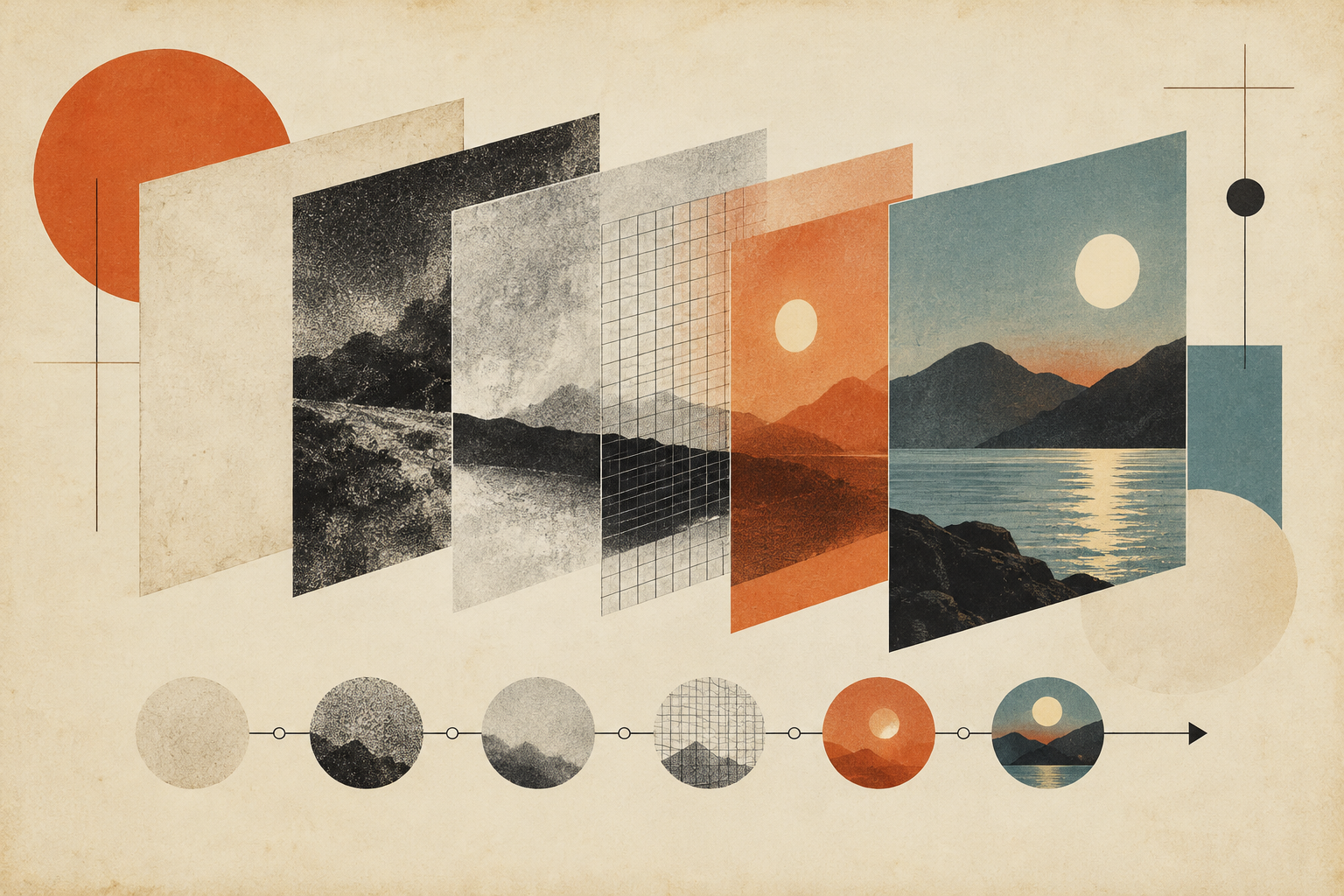
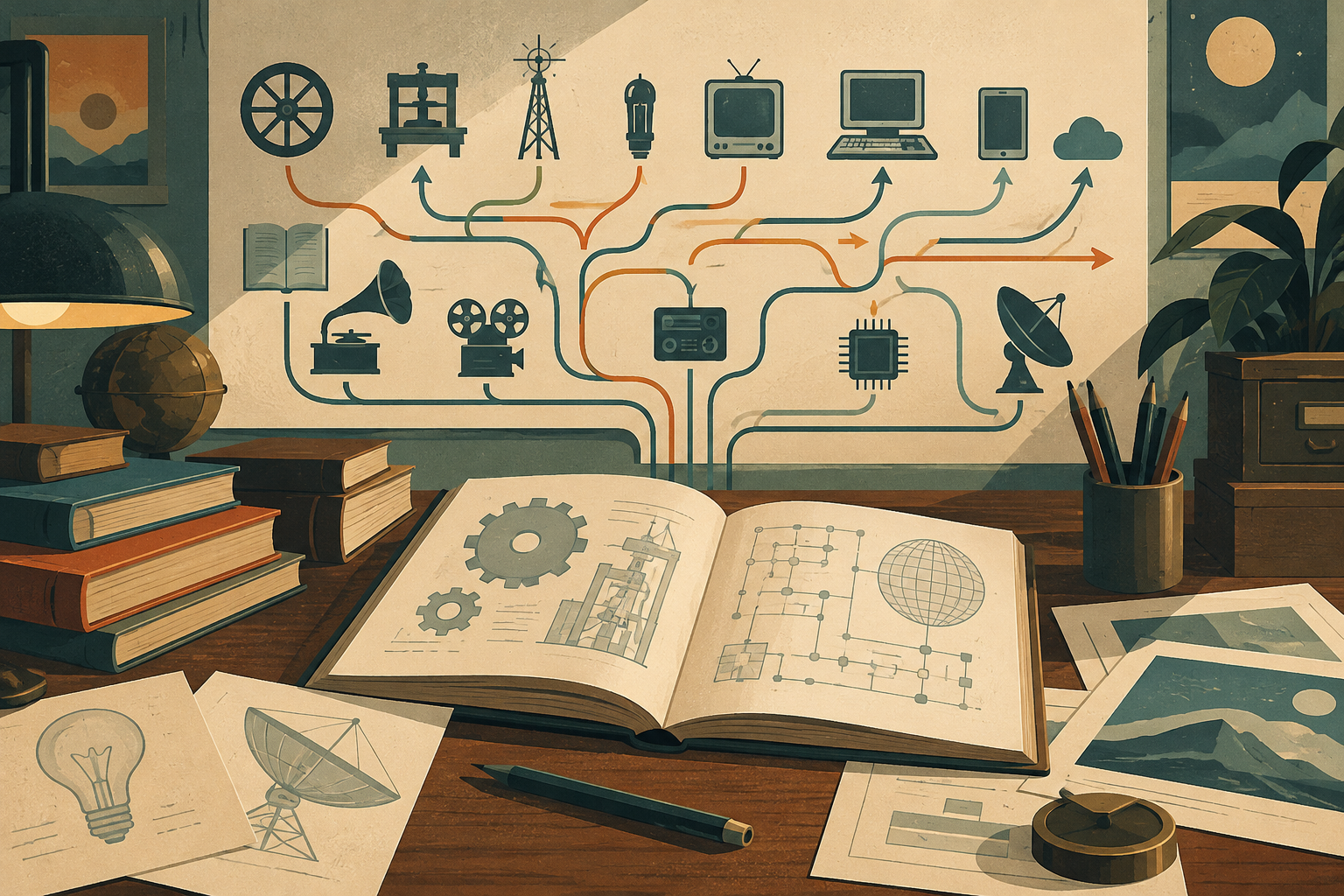
The RetroPause article among the sources explicitly questions the idea of telling the history of computing as a row of inventions. It is a useful editorial warning: a chronology selects and links events, but narrative order alone does not prove that each object caused the next. A rigorous account should distinguish what a source dates or states from the interpretation made by the writer.
Selection matters too. A device-centred account can push into the background the procedures, institutions and tasks that gave objects their meaning. Conversely, a history of techniques without concrete objects can be hard to picture. The challenge is not to abandon sequences, but to explain what they establish and what they leave out.
A history told at different scales
The material from the Polytechnic University of Valencia offers a specific scale: it says that some of Europe’s first industrial applications of robots on automobile manufacturing lines date to 1970 and 1971. That statement does not describe every use of robotics, nor does it by itself identify each installation. It does remind us that technological history can be studied through defined areas of work rather than presented only as a list of celebrated devices.
At another scale, an article in Revista CTS addresses information and communication technologies from 1930 to 1970. Its title establishes a broad period and a category that groups technologies; it does not justify treating all of their components as if they had the same use or trajectory. An overview helps locate questions, but claims about an individual object require evidence suited to that object.
Documents describe promises and limits
Technical and popular documents serve different purposes. A research text may organise a historical process; an institutional presentation may summarise a collection or an initiative; a news article may select examples to make a change understandable. None should automatically be read as a complete record of use.
The document hosted by Spain’s Ministry of Culture mentions the development, during the 1970s, of digital optical-disc technology that was initially non-erasable, and says that Philips presented a format in 1979. The source supports discussing those references as they appear in the available excerpt. It is not enough, however, to infer which users had access to these systems, how widely they spread or what tasks they performed. Such claims would require additional evidence, such as specifications, manuals, advertising, adoption records or identifiable testimony.
From overview to actual use
Questions about everyday use require a change in evidence. A design description can help examine how a device was conceived; a manual may clarify intended instructions and restrictions; an advertisement documents a commercial promise, not necessarily its fulfilment. If we do not have such material for a particular device, it is responsible not to turn a design intention into an experience shared by all its users.
It is also worth avoiding a false opposition between device and context. The same type of technology can be studied through different tasks, but the evidence here does not document detailed use cases that would let us reconstruct them. What it does show is the value of asking about sector, period and document type before generalising. “What could it do?” and “what did people do with it?” are related questions, not interchangeable ones.
What these sources leave open
The National Museum of Science and Technology’s page dates the beginning of the project to create the museum to 1962. It is an institutional reference for the history of that initiative; it does not, by itself, prove how every technological object in a collection was used. Likewise, BBVA’s article on 1970s technology offers a selection of gadgets and mentions cash machines in Spain. The excerpt is a lead for investigating devices and places of use, not a sufficient basis for generalising about availability or reception.
Taken together, these sources point towards avenues of research—industry, information technologies, storage formats, museums and examples of devices—but they do not form a uniform archive. Their different purposes and scopes should remain visible in any account.
A more useful history than a list
Chronologically ordered inventions can provide an initial map; understanding devices requires adding tasks, documents and limits. The central question is not only what came before or after, but what evidence allows us to describe use, and at what scale. When manuals, advertisements or records of use are missing, acknowledging that absence does not weaken history: it prevents a plausible narrative from passing as fact.
This is an invitation to read technology through two related histories: design and practice. The first can explain how an object was presented or described. The second requires evidence of what people did with it. Keeping them in conversation—without confusing promises, possibilities and documented experiences—turns a succession of devices into a more precise and more human history.
- Decade
- 1970s
- Region
- Europe
- Level
- Introduction
- Entities
- Museum
Sources and references
- La historia de la informática no cabe en una fila de inventoswww.retropause.com · 2026-10-08
- UN VIAJE A LA HISTORIA DE LA INFORMÁTICAmuseo.inf.upv.es · 2026-10-08
- Historia de las Tecnologías de Información y ...www.revistacts.net · 2026-10-08
- Evolución histórica de las Tecnologías de la Información y ...revistas.ucm.es · 2026-10-08
- Las nuevas tecnologías y los archiveros del Cuerpo ...www.cultura.gob.es · 2026-10-08
- Así era la tecnología de 1970 y así es ahorawww.bbva.com · 2026-10-08