Place is part of the reading experience
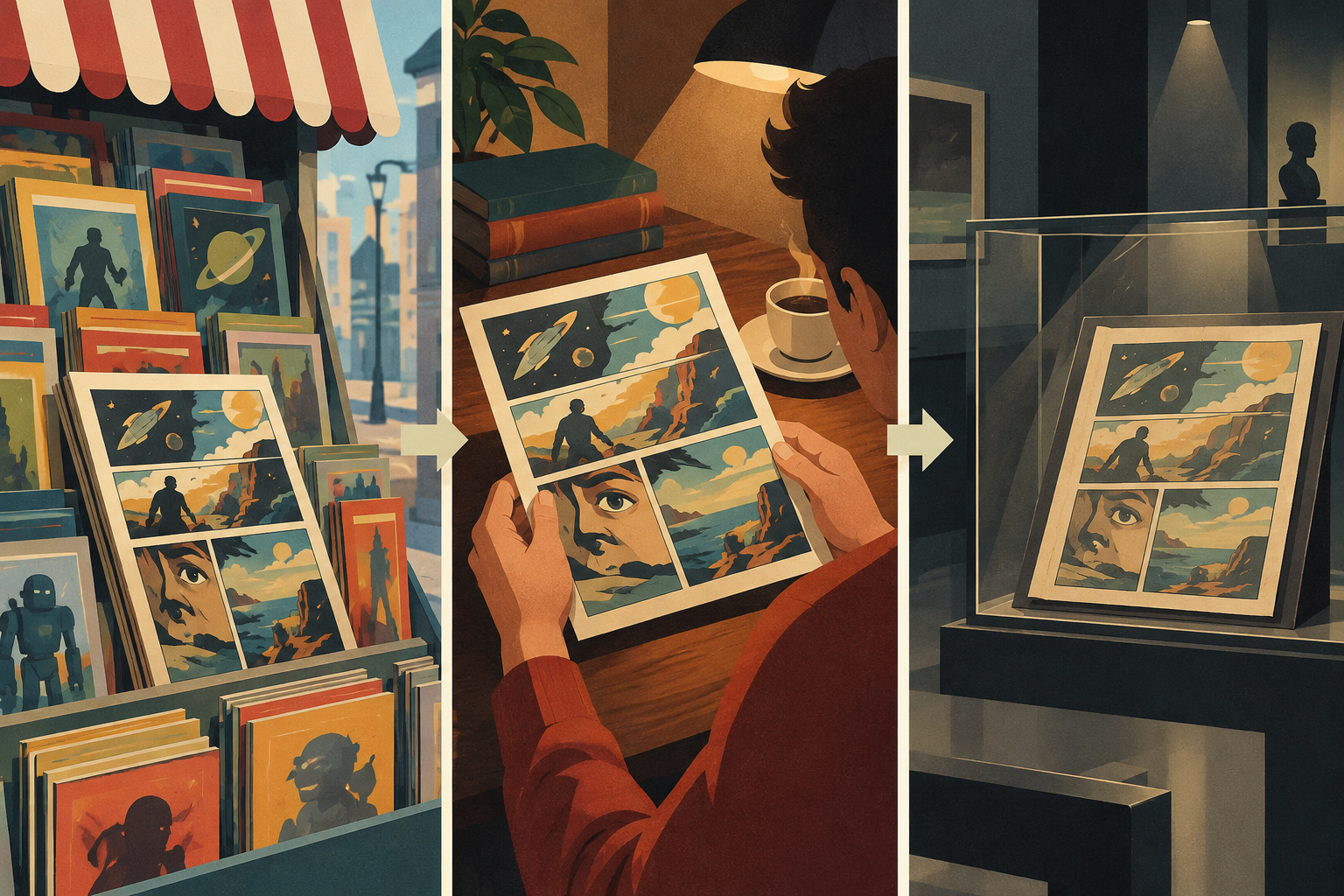
A comics magazine does not reach its reader in the abstract. It moves through a circulation system and is read in a particular setting. A RetroPause article on Spanish magazines from the 1970s and 1980s describes a shift in the places from which comics are seen, read and remembered. That framing invites us to consider a move from newsstand to museum without treating it as a mere change of scenery.
The key point is methodological: the drawn page is part of the work, but it does not exhaust its history. Access, consultation and preservation are separate matters, and each can direct attention differently. However, the evidence supplied does not explain how each magazine was distributed or how its formats changed. This article therefore examines the questions raised by a change of context rather than attributing a specific editorial transformation to an identified title.
From circulation to exhibition
María Pilar Méndez’s research on comics exhibitions provides a framework for considering museum display as a practice with a history, not an automatic novelty. The bibliographic summary itself points to a 1971 reference in BANG! concerning comics and the museum. This documents that the relationship between comics and exhibition was already receiving attention at the time; it does not, by itself, establish which magazines were shown, how they were displayed or who visited.
That limit matters. An issue placed in a display case can be viewed as an object, while reading a magazine involves turning pages and following a sequence. This distinction is an interpretation of different modes of access, not evidence about a particular exhibition documented in the sources provided.
Format as a question, not a ready-made answer
An article by Rubén Varillas frames comics as a question of formats and names magazines, fanzines, mini-comics, albums and graphic novels. The list helps pose a useful question: what material and editorial conditions shape reading? But the available material supplies only the article’s title and metadata, not its analysis. It cannot establish which format predominated in Spain in a given decade or what changes altered the pacing of a particular series.
Research could proceed by comparing identified, documented issues: dimensions, page order, continuity between instalments and verifiable publication data. Without those objects and records, these variables must remain research questions rather than conclusions.
Comics in cultural institutions
The Museo del Prado reports publishing a comic by Sento as part of its bicentenary celebrations, telling everyday stories of the institution. It is a concrete example of an institution publishing comics, but it should not be confused with evidence about Spanish magazines from the 1970s and 1980s. Its relevance here is limited and clear: a cultural institution can use comics to narrate its own story.
Research on cataloguing historical comics in Spain, reflected in the Comares material, raises another issue: describing and ordering publications also affects how they can be found and studied. The available summary indicates that cataloguing has been addressed, but does not provide enough information to detail methods or findings.
What can be said, and what remains open
The sources support the claims that Spanish comics magazines of the 1970s and 1980s have been approached through circulation and memory; that comics exhibitions have a history; and that format and cataloguing are relevant research topics. They do not support a title-by-title chronology, attribution of a change in reading to a specific editorial decision, or a precise account of a particular exhibition.
This caution does not diminish the subject. It helps distinguish the printed object from the practices, archives and narratives surrounding it. A solid answer to which editorial changes altered reading would require comparison of identifiable magazines and documentation. Until then, the journey from newsstand to museum is an invitation to consider page, circulation and preservation together—not proof of a single evolutionary path.
- Decade
- 1970s
- Region
- Spain
- Level
- Enthusiast
- Entities
- Museum, Rubén Varillas
Sources and references
- El cómic, una cuestión de formatos (2): revistas de cómics, fanzines, mini-cómics, álbumes y novelas gráficasdoi.org · 2026-10-12
- Del quiosco al museo: qué cambió para las revistas de cómic ...www.retropause.com · 2026-10-12
- Las exposiciones de cómics. Historia y contexto globalerevistas.publicaciones.uah.es · 2026-10-12
- HISTORIETAS del MUSEO DEL PRADO, un cómic de ...www.museodelprado.es · 2026-10-12
- Catálogo de la historia de España a través del cómic (1940 ...www.comares.com · 2026-10-12