The conservation of objects with cultural value has evolved from a purely technical approach to a practice that integrates digital memory. Traditionally, the main objective was to maintain the physical integrity of the piece, but today institutions recognize that the meaning of an object does not reside solely in its matter, but in the context that surrounds it. This paradigm shift is particularly relevant for retro objects, whose cultural relevance depends largely on their ability to evoke an era and its associated values.
The challenge of material and contextual duality
Keeping an object in good condition is a complex task that requires specific knowledge about materials and restoration techniques. However, evidence suggests that physical preservation is insufficient if not accompanied by the conservation of the cultural context. Institutions like the Reina Sofía Museum have established that conservation is not only a technical process but also a tool for transmitting values. This perspective implies that the archive should not be limited to an inventory of objects, but should function as a space of interpretation where the public can access the history and culture behind the piece.
Digitalization as an interpretive tool
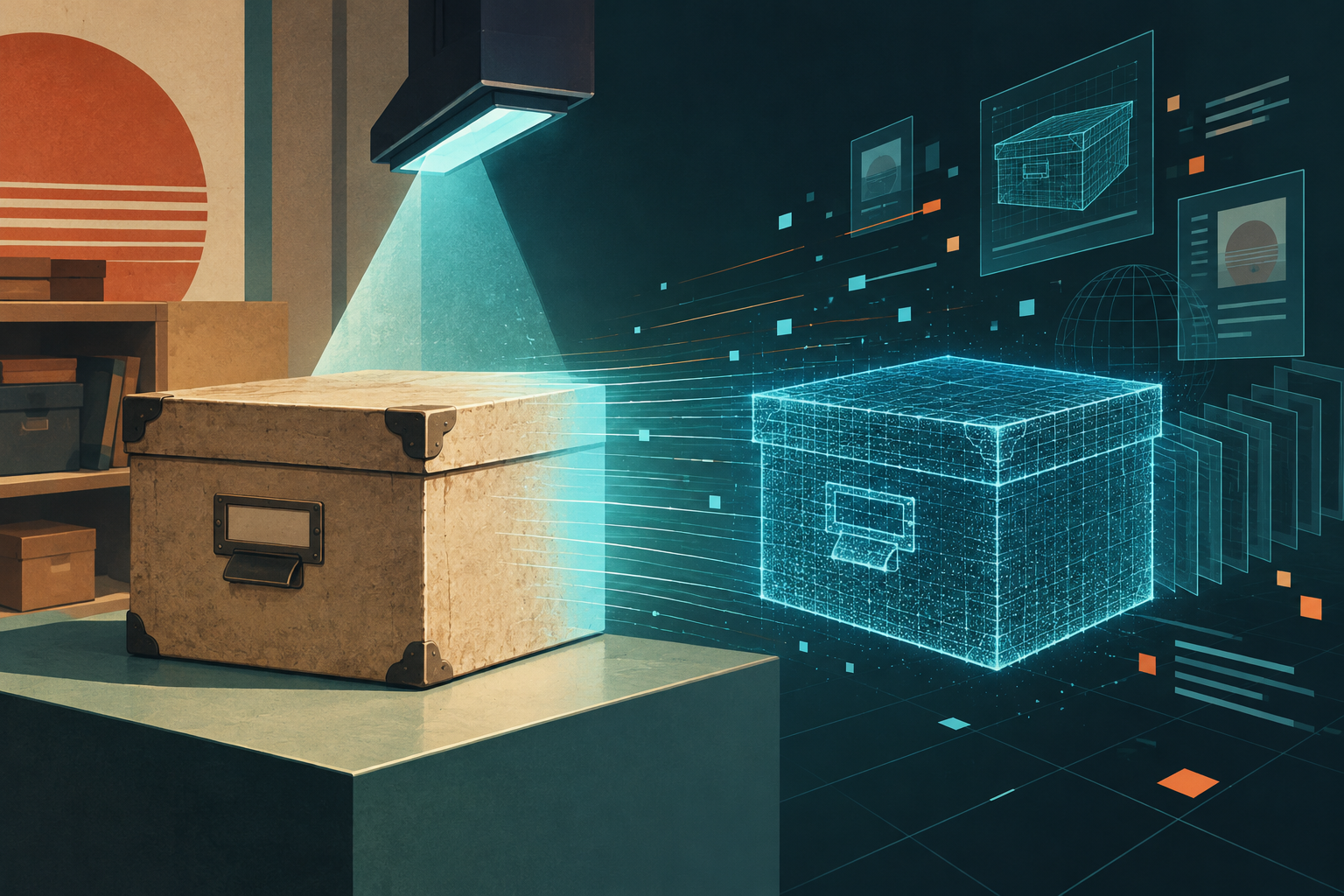
Digitalization offers new possibilities to address this challenge. Conservation projects in historical museums have demonstrated that the creation of 3D models allows documenting the state of an object without relying exclusively on its physical matter. This technology does not seek to replace the original, but to expand its horizon of understanding. By digitizing a retro object, an additional layer of information is created that can include written, oral, and audiovisual documentation, providing a richer and more multidimensional access to its cultural context.
The archive as a space of interpretation
The transformation of the archive from a simple inventory to a space of interpretation is a fundamental change in how institutions manage their heritage. Evidence indicates that the preservation of electronic media and digital art requires bibliographic and audiovisual archives that provide access to primary sources. In the retro field, this means that contemporary reinterpretation does not erase the difference between the original object and its current context, but contextualizes it. The archive thus becomes a bridge between the past and the present, allowing the public to understand the cultural relevance of the object at different historical moments.
The tension between aesthetics and function
The relationship between the aesthetics and function of a retro object is a complex issue that digital documentation helps to resolve. By providing access to the history and culture behind the object, digitalization allows the public to understand not only its form, but also its purpose and its social impact. This deeper understanding helps to resolve the tension between the aesthetic appreciation of the object and its original function, showing how both aspects are interconnected and contribute to its cultural value.
Social inclusion and sustainability
The digitalization of retro objects also has implications for social inclusion and sustainability. Disruptive technologies are being used to dynamize museum collections, making cultural heritage more accessible to a wider audience. This approach not only preserves the object, but also promotes its use and its relevance in current society. Sustainability in museums is reinforced by the ability of digitalization to reduce the need for physical handling of objects, thus extending their useful life and minimizing their environmental impact.
Limitations of digital verification
Despite its advantages, digitalization has limitations. Not all aspects of an object can be captured by technology, and the interpretation of the cultural context requires human judgment that digitalization cannot replicate. Furthermore, the dependence on technology raises questions about the durability and long-term accessibility of digital archives. It is important to recognize these limitations and work on solutions that complement digitalization with traditional conservation practices.
Conclusion
Digital memory is redefining the relationship between the retro object and its cultural context. By transforming the archive from an inventory to a space of interpretation, digitalization allows the public to access a richer and more multidimensional understanding of the object. This process does not replace the original, but expands its horizon of understanding, making the retro object a living practice of memory and context. The collaboration between physical conservation and digitalization is key to ensuring that cultural heritage remains relevant and accessible for future generations.
- Decade
- Contemporary
- Region
- Global
- Level
- Enthusiast
- Entities
- Museum, Museo Reina Sofía
Sources and references
- DEPARTAMENTO DE CONSERVACIÓN-RESTAURACIÓN ...www.academia.edu · 2026-10-20
- Conservación del patrimonio y sostenibilidad en museosdoi.org · 2026-10-20
- Dinamización de las colecciones del Museo de La Salle a través de tecnologías disruptivas para una mayor inclusión socialopenalex.org · 2026-10-20
- Conservación digital del Museo Ipiranga en Brasilwww.autodesk.com · 2026-10-20
- conservación del arte electrónico: ¿qué preservar y cómo ...www.annetteweintraub.com · 2026-10-20
- Centro de Documentación de Artes Visuales ...www.instagram.com · 2026-10-20
- Prácticas divergentes de preservación del arte de los medioswww.jstor.org · 2026-10-20