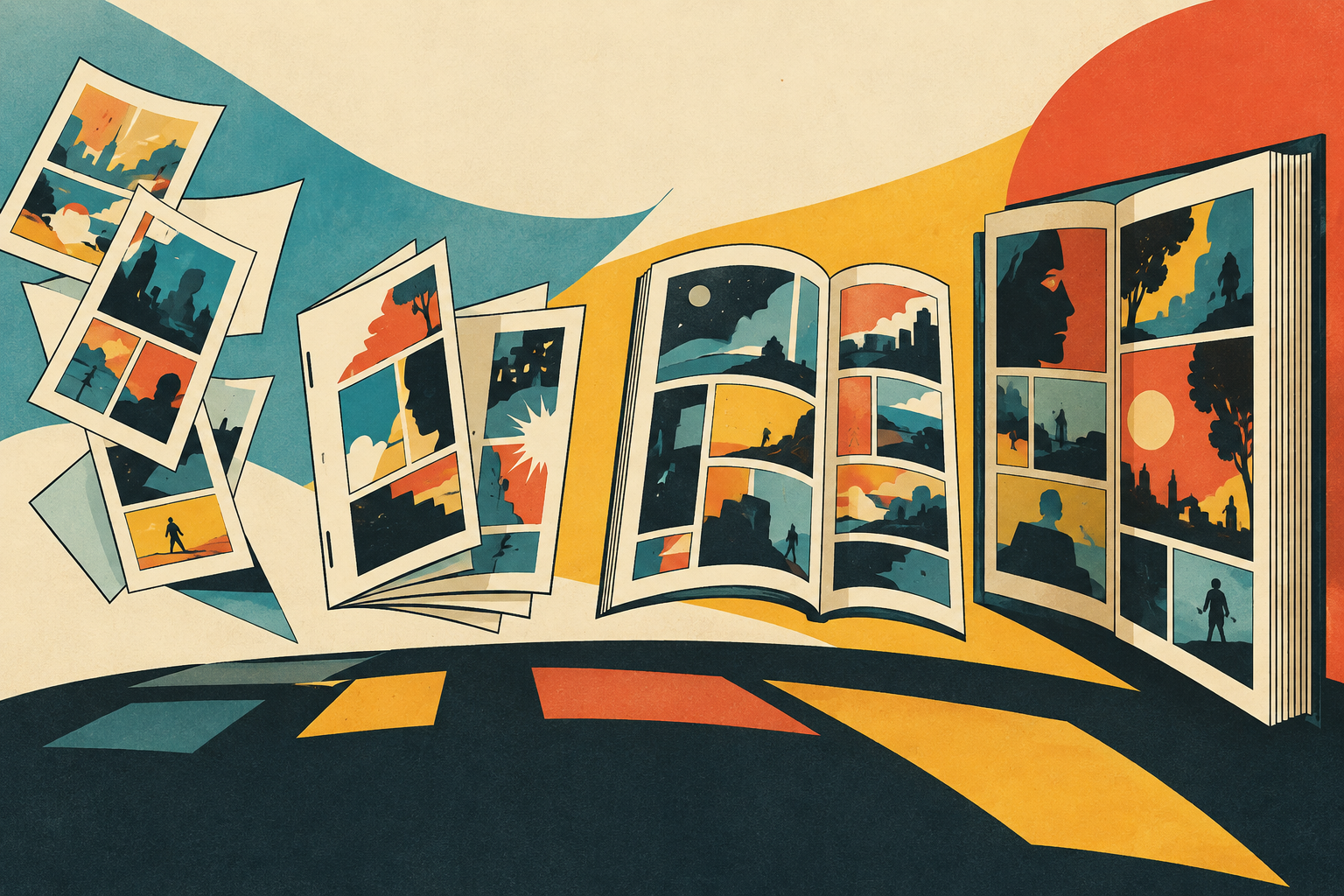
Comics reach readers as sequences of words and images, but also as specific publications: magazines, fanzines, pamphlets or albums. That distinction is more than physical. A format can organize reading rhythm, shape how a work is encountered and suggest whether it belongs to everyday consumption or to a collection. The value of this perspective is that it treats format as part of the cultural conditions of storytelling, without assuming that format alone explains how every audience read a comic.
Form also organizes narrative
A page is read within an object with boundaries: size, binding, page count and publication method. Those conditions can affect the arrangement of images and the experience of turning from one page to the next. The evidence available here, however, does not describe specific graphic decisions or establish that a particular edition caused a particular narrative change. It does support a broader point: magazines, fanzines, minicomic publications, albums and graphic novels are distinct editorial categories, not merely different names for the same container.
Rubén Varillas’s article on comic formats provides a relevant framework for examining this variety. Its title identifies the range of publications under consideration, but the available information does not include the article’s full arguments. It is therefore important to distinguish the question the reference raises from conclusions that might be attributed to it: format merits attention, but findings absent from the evidence cannot responsibly be summarized here.
Different rhythms of encounter
Publication frequency can encourage different habits. A regularly issued publication invites readers to return to a story in installments; a collected volume may make continuous reading or revisiting the work as a complete object easier. This is a reasonable interpretation of the difference between serial publication and collection, not a verifiable account of every reader’s behavior. The material provided includes no frequency data, print runs or reader testimony with which to measure such habits.
The distinction matters because the time between installments can become part of reception: it may prolong anticipation, sustain discussion of a series or allow a reader to resume a sequence in one sitting. But such effects also depend on the work, its audience and the circumstances of access. The mere existence of different formats does not establish that one kind of publication always produces a more immersive experience.
Newsstands, bookstores and circulation
Where a publication is sold helps frame how it is encountered. A comic available at a general retail outlet may be found as an incidental read; in a specialist bookstore, it may sit among titles aimed at readers already interested in the medium. This comparison describes a cultural possibility, not a universal rule about venues or their customers.
The evidence refers to research on the history of comics in France and lists Spanish magazines including Bang!, Totem and El Papus. It also includes a study concerning appropriation, racism and social criticism in comics. These references confirm that publications and their contexts have been studied, but they are not enough on their own to reconstruct distribution networks or establish how each title was perceived. An account of circulation needs specific documentation about places, periods and audiences.
The cultural value of the object
Material presentation can also shape the value assigned to a work. An edition designed to be kept and grouped with others may take on a collectible dimension; a periodic issue may be associated with a recurring reading practice. The distinction between use and preservation helps explain why format matters, although it does not mean every album is collectible or every magazine disposable.
Comic culture includes both the story and the ways that story is published, circulated and kept. Attention to the object raises questions that an account focused only on plot and drawing might miss: what an edition gathers together, what rhythm it proposes and what routes of access it creates. This does not replace formal analysis of the pages. It complements it with the material history of publication.
What the evidence can establish
The available documentation is limited. It includes the bibliographic record of a 2014 academic article devoted to magazines, fanzines, minicomic publications, albums and graphic novels, as well as records concerning comics publications and related research. It does not provide the full text of that article, comparable sales series, reader data or a documented chronology proving audience fragmentation during the 1990s. Nor does it support a general transition from monthly pamphlets to annual albums across Europe or Latin America.
The strongest claims are therefore also the most bounded: different formats exist, and studying them alongside narrative and circulation is productive. Comparisons about habits, markets or specific effects should remain research questions until supported by evidence tailored to those claims.
Reading the support as well
Considering format broadens comic history. Alongside authors, characters and images come publication frequency, sales channels and the material form of each edition. This perspective does not make the support an automatic cause of a particular reception. It does support a precise conclusion: understanding how a work participates in culture requires examining not only what it tells, but also the editorial form and circulation conditions that bring it to readers.
- Decade
- 1990s
- Region
- Global
- Level
- Enthusiast
- Entities
- Rubén Varillas
Sources and references
- El cómic, una cuestión de formatos (2): revistas de cómics, fanzines, mini-cómics, álbumes y novelas gráficasdoi.org · 2026-10-17
- Historia y Cómics: una perspectiva francesadoi.org · 2026-10-17
- Marvel: La historia visual 1970-1979 Este tomo recorre de ...www.instagram.com · 2026-10-17
- Ibéroes: Racismo y crítica social en la apropiación ...www.tandfonline.com · 2026-10-17
- ES MUY DE CÓMIC: VENTAS NORTEAMERICANASpepoperez.blogspot.com · 2026-10-17