The clothing accumulated in specialized institutions does not constitute a mere inventory of outdated objects, but an active recording system. These spaces operate as deposits of creativity and technical innovation, where the garment ceases to be a consumer item and becomes a support for social memory. Available evidence suggests that the primary function of these archives transcends physical custody to encompass research, education, and the construction of complex cultural narratives.
The organization of material knowledge
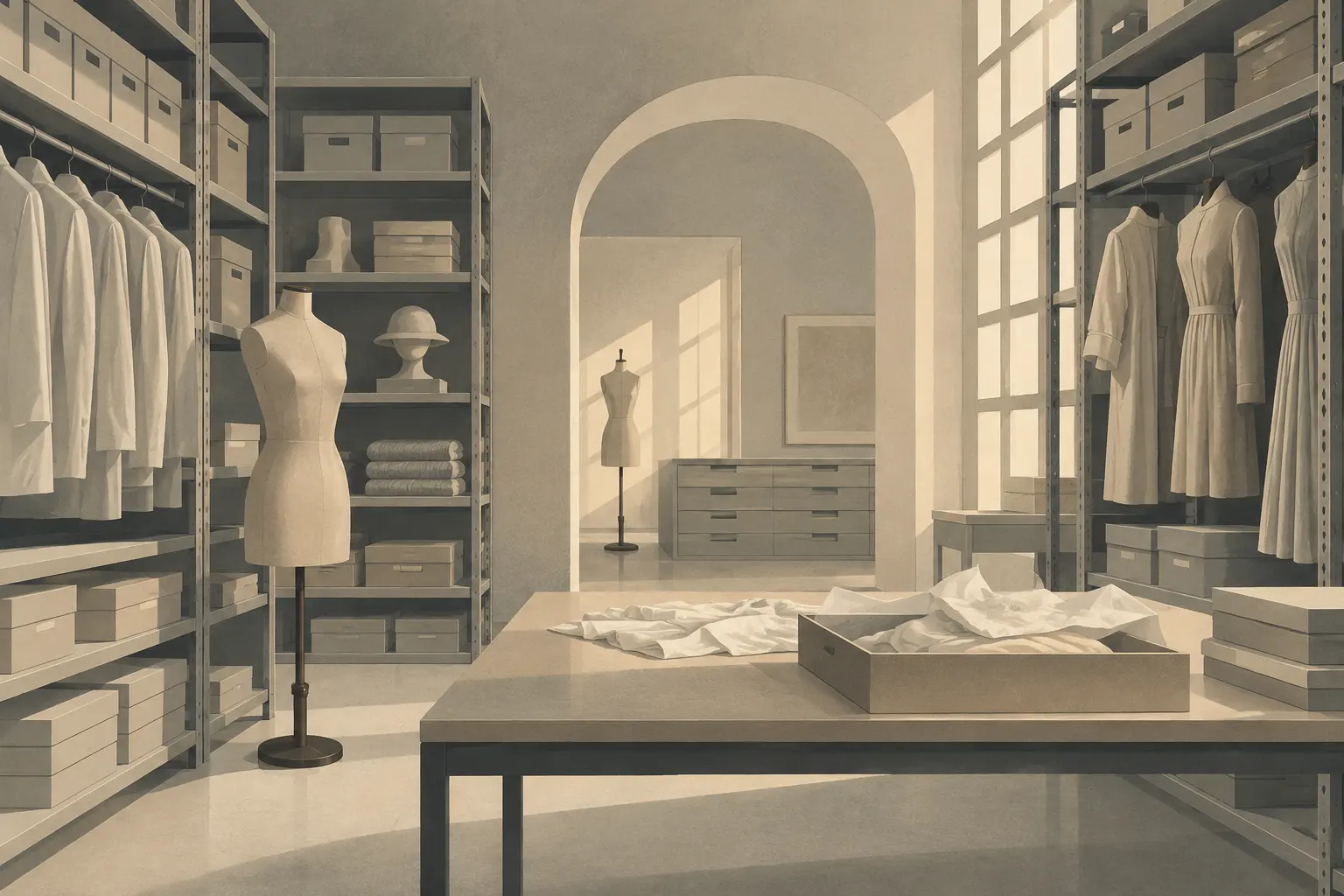
The internal structure of these deposits follows specific taxonomic logics. According to academic sources, organization is carried out by historical era, designer, or cultural origin. This classification is not arbitrary; it allows researchers to track the evolution of manufacturing techniques and changes in usage patterns. By grouping garments under these criteria, the archive facilitates the comparative study of fashion as a continuous social practice, beyond the passing trends dictated by advertising.
Clothing as historical evidence
The garment preserves in its physical structure information that written documents often omit. Clothing reveals real uses and cultural contexts that marketing often simplifies or hides. By examining the wear, repairs, or adaptations of a garment, curators access a material biography that documents the interaction between the individual and their environment. This approach allows the study of fashion not as a superficial aesthetic, but as a social practice that reflects hierarchies, identities, and available resources in a given period.
Conservation between art and technique
The preservation of these objects requires a delicate balance between art history and materials engineering. The inherent fragility of fabrics requires specific technical approaches to avoid interventions that preserve the form but erase the history. Costume conservation has become a disciplinary meeting point, where museum ethics must decide which aspects of the garment are essential to its documentary value. This technical process is crucial to ensure that the garment remains legible as a historical document and not just as an aesthetic relic.
Global reference institutions
Various institutions maintain collections that serve as pillars for understanding material culture. The Fashion Museum in Paris and the Fashion Institute of Technology in New York are highlighted examples. The latter maintains a permanent collection of approximately 50,000 garments and accessories, illustrating the magnitude of the preservation effort. These collections are not static; they are actively used for exhibitions and educational programs that seek to contextualize the evolution of design and textile technique globally.
The curatorial challenge of narrative
The selection of which garments form part of the collection and how they are exhibited determines the narratives society receives about its own past. There is an inherent problem in fashion curation: balancing public exhibition with long-term preservation. The goal is to ensure that the stories told through clothing reflect the diversity of human experiences, avoiding the aesthetics of a specific era eclipsing broader social realities. This balance is fundamental for the archive to fulfill its function of critical memory.
Beyond immediate consumption
The fashion archive offers a space to think of clothing as material culture, resisting the logic of immediate consumption. By separating the garment from its commercial life cycle, the archive allows for a deeper reflection on its meaning. This perspective demystifies the idea of fashion as a purely visual or commercial phenomenon, placing it at the center of social and technical dynamics. The archived garment thus becomes a tool for understanding how societies are built through what they wear and how they produce it.
Conclusion
Fashion archives transform clothing into a valuable historical document, surpassing the reductionist view of the consumer object. Through rigorous organization, technical conservation, and critical curation, these institutions preserve not only the form but the social function of clothing. The legacy of these spaces lies in their ability to reveal the complexities of identity and technical innovation, offering a more nuanced understanding of contemporary cultural history.
- Decade
- Contemporary
- Region
- Global
- Level
- Enthusiast
- Entities
- Museum
Sources and references
- Explorando el papel de los archivos de moda: Preservar y ...translate.google.com · 2026-10-20
- La Conservación del vestuario: punto de encuentro de ...unesdoc.unesco.org · 2026-10-20
- Los mejores —y más elegantes— museos de moda del mundo.es.qz.com · 2026-10-20
- El archivo y lo análogo como MEMORIA, haciendo resistencia ...valeriaakl.substack.com · 2026-10-20
- EXHIBICIONES DE INDUMENTARIA EN LOS MUSEOSrevistaconserva.cl · 2026-10-20
- La indumentaria como archivo: enfoques y problemáticasdialnet.unirioja.es · 2026-10-20