The presence of food in a museum space poses a fundamental contradiction. Unlike a video game console or a painting, food is a living organism that degrades, changes smell, and loses its original function in a short time. This biological reality forces ethnographic and contemporary history museums to rethink their exhibition strategy. The article explores how these institutions avoid relying on the perishable object to represent table culture, using instead packaging, advertisements, and recipe books as material witnesses of a practice that is largely intangible.
The impossibility of freezing flavor
Available evidence suggests that the safeguarding of food heritage does not reside in the product itself. Attempting to preserve the flavor or texture of food in a museum is technically unviable in the long term. The focus then shifts to what surrounds the food. Rituals, social context, and consumption practices become the true object of study. This distinction is crucial for understanding why museums do not exhibit fresh food, but the artifacts that accompany it.
Packaging as a historical document
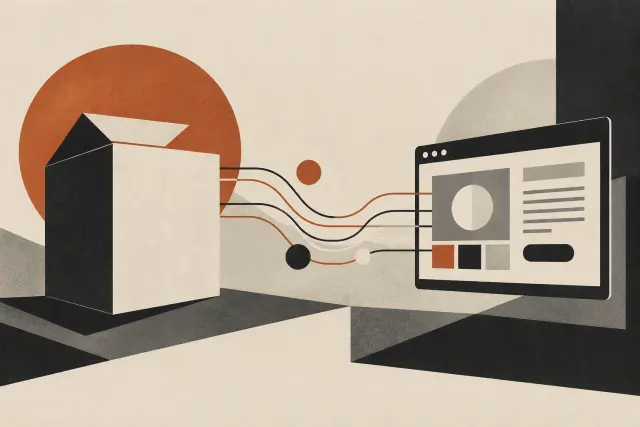
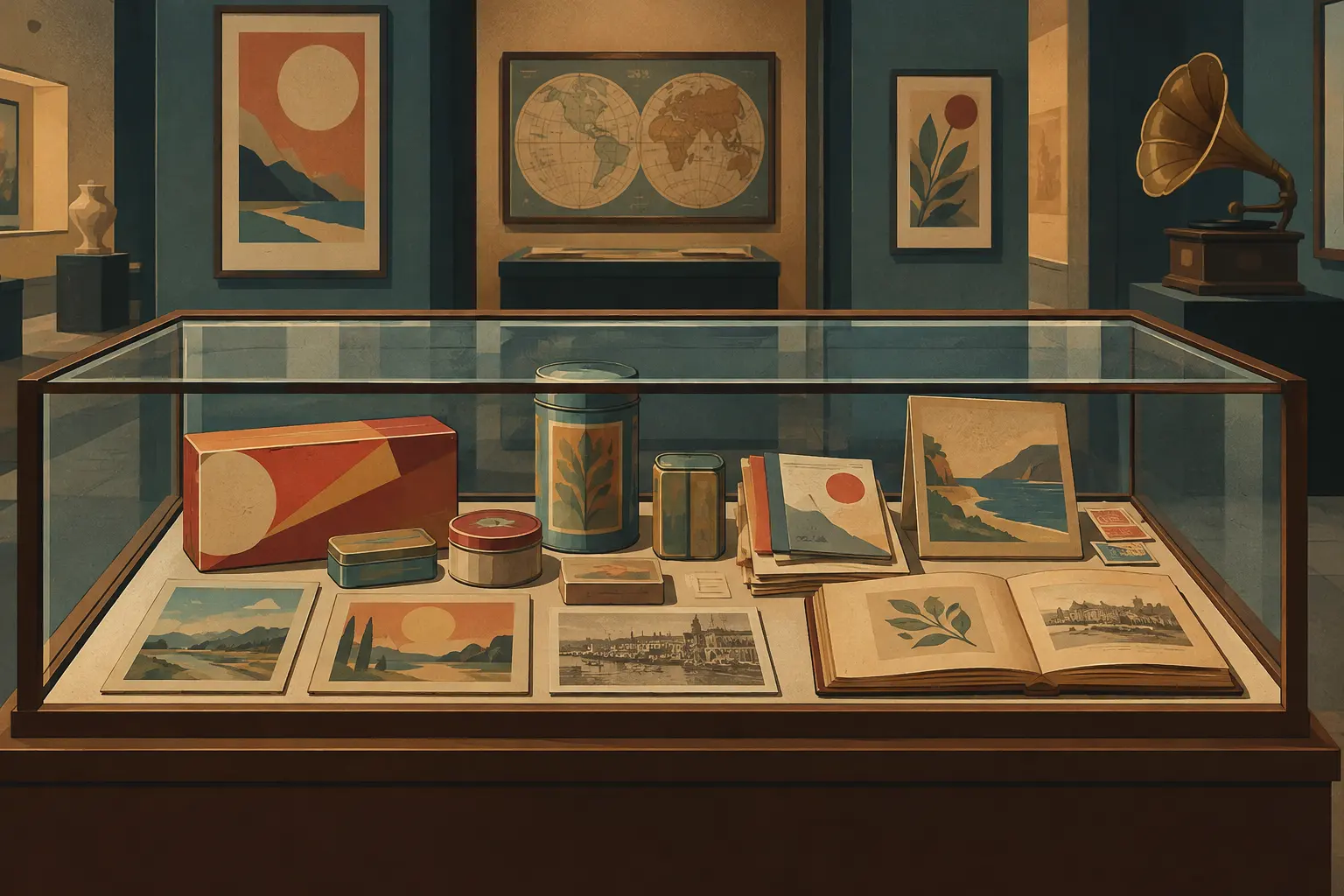
Packaging serves a dual function. On one hand, it protects the product during its commercial life. On the other, it acts as a historical document that records the identity of a brand and the society that consumes it. The design of a package is not just an aesthetic issue; it is a record of graphic trends, available materials, and marketing strategies of an era. By preserving a package, the museum preserves the footprint of a specific commercial and cultural interaction.
Graphic documentation as a substitute
In the absence of the product, graphic documentation becomes the main tool for evocation. Advertisements, labels, and brochures allow the visitor to reconstruct the sensory experience through imagination. These graphic elements are not merely decorative; they are key pieces that connect the viewer with the product narrative. The exhibition strategy focuses on how these graphic documents can convey the essence of a culinary practice without promising the physical presence of the food.
Distinction between promotion and domestic practice
It is important to differentiate between commercial promotion and domestic practice. Packaging and advertisements reflect the company's vision, while recipe books and cooking objects reflect daily life. Museums must balance these two perspectives to offer a complete view of food culture. Commercial promotion shows how the product was sold, while domestic practice shows how it was consumed and integrated into daily life.
The role of recipe books and texts
Recipe books and texts about cooking are another fundamental source. These documents not only contain instructions for preparing food, but also reveal the preferences, restrictions, and innovations of a society. The preservation of these texts is simpler than that of food, but their interpretation requires a deep cultural context. Museums use these texts to explain the transformations in eating habits over time.
Limitations of verification
Although packaging and graphic documents are useful, they have limitations. They cannot transmit the real flavor, smell, or texture of the food. Moreover, the interpretation of these objects depends on the historical and cultural context, which can be difficult to reconstruct with precision. Museums must be transparent about these limitations and not promise a complete sensory experience. The verification of the authenticity of these objects is also a challenge, especially when it comes to ancient or rare pieces.
Conclusion
The musealization of food requires a conceptual rather than technical approach. Museums cannot preserve flavor, but they can preserve the memory of the practices that surround it. By using packaging, graphic documents, and texts, institutions manage to represent table culture in a meaningful way. This approach allows visitors to understand the importance of food in history and society, without relying on the physical presence of a perishable product.
- Decade
- Contemporary
- Region
- Global
- Level
- Introduction
- Entities
- Museum, Museos etnográficos
Sources and references
- Food Studies en español: Investigación actual en ...digital.sandiego.edu · 2026-10-20
- El patrimonio alimentario en los museos etnográficos. 2019www.academia.edu · 2026-10-20
- Patrimonios alimentarios : entre consensos y tensioneshorizon.documentation.ird.fr · 2026-10-20
- Lo inmaterial en el museo. Museos y patrimonio alimentarioriunet.upv.es · 2026-10-20
- LA CONSERVACION PREVENTIVA EN LOS MUSEOSwww.museosdetenerife.org · 2026-10-20