The widespread perception of design in the cultural sphere often reduces it to the superficial visual layer of an exhibition. However, a rigorous review of specialized literature reveals that design operates as an information organization system that directly conditions the physical and symbolic survival of objects. In the contemporary museum, the boundary between aesthetic presentation and technical conservation is more porous than assumed. Decisions on how an object is displayed, stored, or narrated are not neutral; they are curatorial acts that define access to heritage and, by extension, the integrity of collective memory.
The organizational function of design
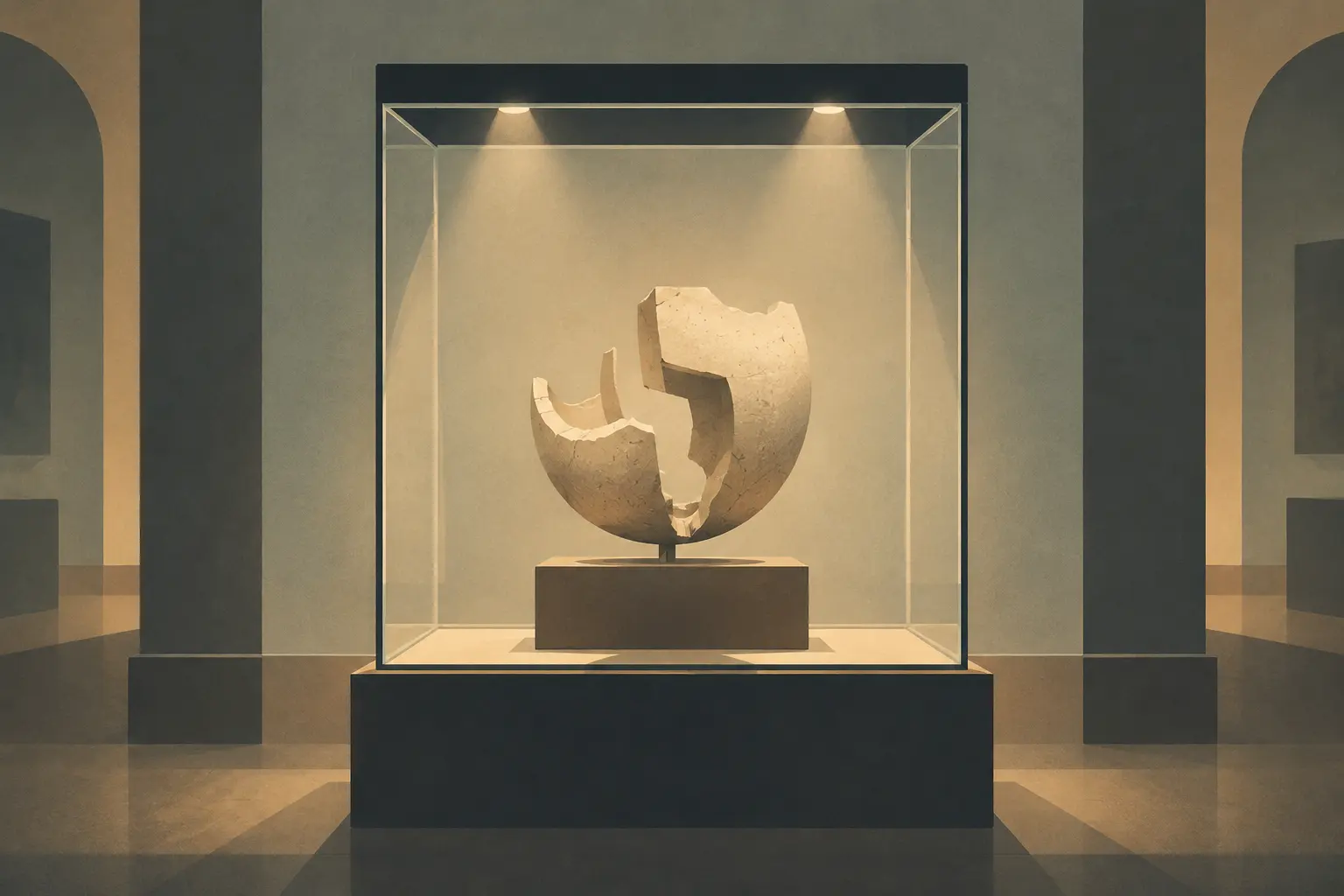
Design has shaped the everyday environment and improves life in complex ways, but its application in preservation spaces requires a redefinition of its objectives. It is not about beautifying, but about structuring. In the museum context, design organizes information to facilitate visitor understanding, but this same organization implies physical restrictions. Every decision regarding mounting, lighting, or signage affects the public's interaction with the piece. Evidence suggests that design acts as a mediator that proposes ways to use objects, and in a museum, that 'use' is strictly regulated to prevent deterioration. Therefore, the effectiveness of design is measured not only by communicative clarity but by its ability to maintain the necessary distance between the spectator and the fragile artifact.
Material conservation and packaging decisions
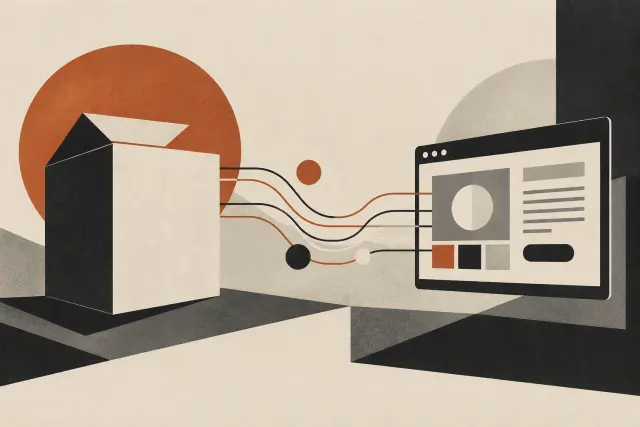
The conservation of archive, library, and museum materials is closely linked to specific design decisions. Practical museum administration manuals, such as those developed by UNESCO, point out that physical preservation depends on how supports, display cases, and storage systems are designed. Here, design ceases to be an aesthetic discipline and becomes a conservation tool. Packaging, for example, is not just a matter of transport, but a protective interface that must consider environmental and mechanical factors. The choice of materials, the structure of boxes, and the arrangement of objects in warehouses are design decisions that determine the longevity of collections. Ignoring this functional dimension exposes heritage to unnecessary risks, turning presentation into a threat to preservation.
The challenge of brand museums
The emergence of brand museums introduces an ethical and functional tension in museum design. Recent studies, such as those focused on the IKEA Museum, explore how these spaces facilitate the commodification and cultural transfer of a company's heritage. In this scenario, design must balance the communicative effectiveness of the brand with the social function of the museum. The concept of 'democratic design' emerges as central in the marketing communication of these institutions, but its application raises questions about authenticity. Does design serve to preserve the brand's history or to dilute its original value in favor of sales? Evidence indicates that design can facilitate cultural transfer, but it can also distort historical narrative if not carefully adapted to the social context. The commodification of heritage requires that design function as a critical filter, not just a commercial amplifier.
Themed entertainment and the reality of objects
Themed entertainment design in museums seeks to enhance the 'reality' of objects, privileging the role of culture in living environments. This approach, often associated with 'mimesis', attempts to create immersion and emotional connection. However, this enhancement of reality must be carefully calibrated to not substitute the authenticity of the object with a simulation. Design here acts as an enhancer of cultural aura, but risks turning the experience into a consumer product. The key lies in how design integrates culture within cultural environments without losing sight of preservation. If themed entertainment becomes an end in itself, the original object becomes an accessory to the experience, which contradicts the fundamental purpose of museum conservation.
Communicative effectiveness and social context
Advertising and design have a social function that must adapt to the context. A doctoral thesis on the communicative effectiveness of brands underlines that the evolution of advertising design must respond to profound social changes. In museums, this means that design cannot be static or universal. It must adapt to the expectations and values of the community that visits the space. Visual communication must be clear, but also respectful of the complexity of heritage. When design ignores the social context, it risks being perceived as an external imposition, which weakens the connection between the public and the object. Adaptation to the context is not just a marketing strategy, but an ethical necessity to ensure that collective memory is accessible and relevant.
Limits of verification and current practice
Although academic literature offers solid theoretical frameworks, the practical application of design as a conservation tool varies significantly between institutions. There is no single formula that guarantees the perfect balance between accessibility and preservation. The cited studies provide specific examples, such as the IKEA case or advertising museums, but do not offer a universal guide. The complexity of materials, the diversity of collections, and cultural differences make each design decision unique. Furthermore, the speed at which exhibition technologies and digital communication evolve poses constant challenges. Verification of the long-term results of these design decisions is limited, as effects on conservation and public perception manifest over decades. Therefore, museum design must be approached as an iterative process, subject to continuous review in light of new evidence and social changes.
Conclusion: Design as an act of preservation
Design in the contemporary museum transcends decoration to become an essential component of conservation. By organizing information and proposing modes of interaction, design determines how cultural heritage is perceived and protected. Functional decisions, from packaging to brand narrative, have a direct impact on the integrity of objects and the authenticity of the experience. In the face of commodification and the temptation of themed entertainment, design must maintain its critical function of mediation. It is not a matter of choosing between aesthetics and conservation, but of integrating both dimensions into a coherent practice. The future of museum conservation depends on design's ability to balance accessibility with preservation, ensuring that collective memory is not diluted in visual noise, but strengthened through rigorous and respectful organization of information.
- Decade
- Contemporary
- Region
- Global
- Level
- Introduction
- Entities
- Museum
Sources and references
- Publicidad y diseño: la eficacia comunicativa y función social de las marcas: evolución y adecuación al contexto socialdoi.org · 2026-10-20
- Diseño y patrimonio cultural: cómo asegurar la conservación ...turia.uv.es · 2026-10-20
- Museos de marca, mercantilización del patrimonio cultural ...translate.google.com · 2026-10-20
- (PDF) ¿Se merece la publicidad un museo? Estudio y ...www.researchgate.net · 2026-10-20
- Diseño de Entretenimiento Temático en Museosevemuseografia.com · 2026-10-20
- Cómo administrar un museo: manual prácticounesdoc.unesco.org · 2026-10-20