Graphics are part of the experience
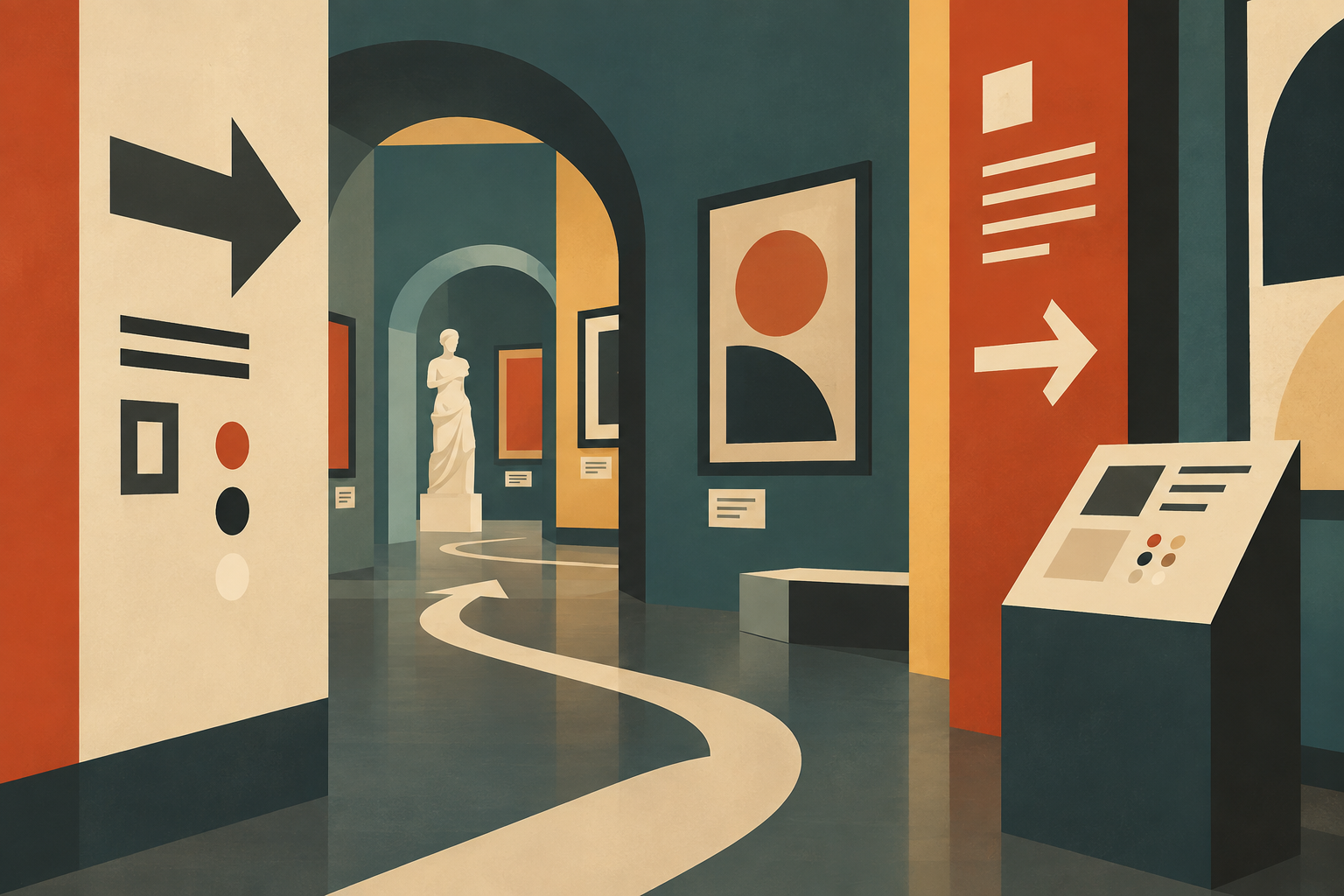
A sign points the way; a label connects an object with written information; a catalogue makes content available beyond the immediate route. These are different functions, even though each depends on visual decisions. The RetroPause page among the supplied sources makes the point that signage, labels and catalogues communicate. Taking that idea as a starting point means treating museum graphics not as a decorative layer but as something that organises, makes visible and leaves out.
The material provided does not describe a particular museum or document a complete graphic system. This analysis therefore does not assign colours, typefaces, routes or intentions to a specific institution. It focuses on a functional question: what decisions turn information into orientation and reading?
Orient, identify, extend
Each medium can answer a different task. A sign may help someone find a space; a label may provide information connected to an object; a catalogue may gather information in a publication. This distinction is an analytical tool, not a claim about the design of a particular exhibition. To assess a graphic element, start with the action it enables and the context in which it is consulted, before describing it with aesthetic labels such as “modern” or “classic.”
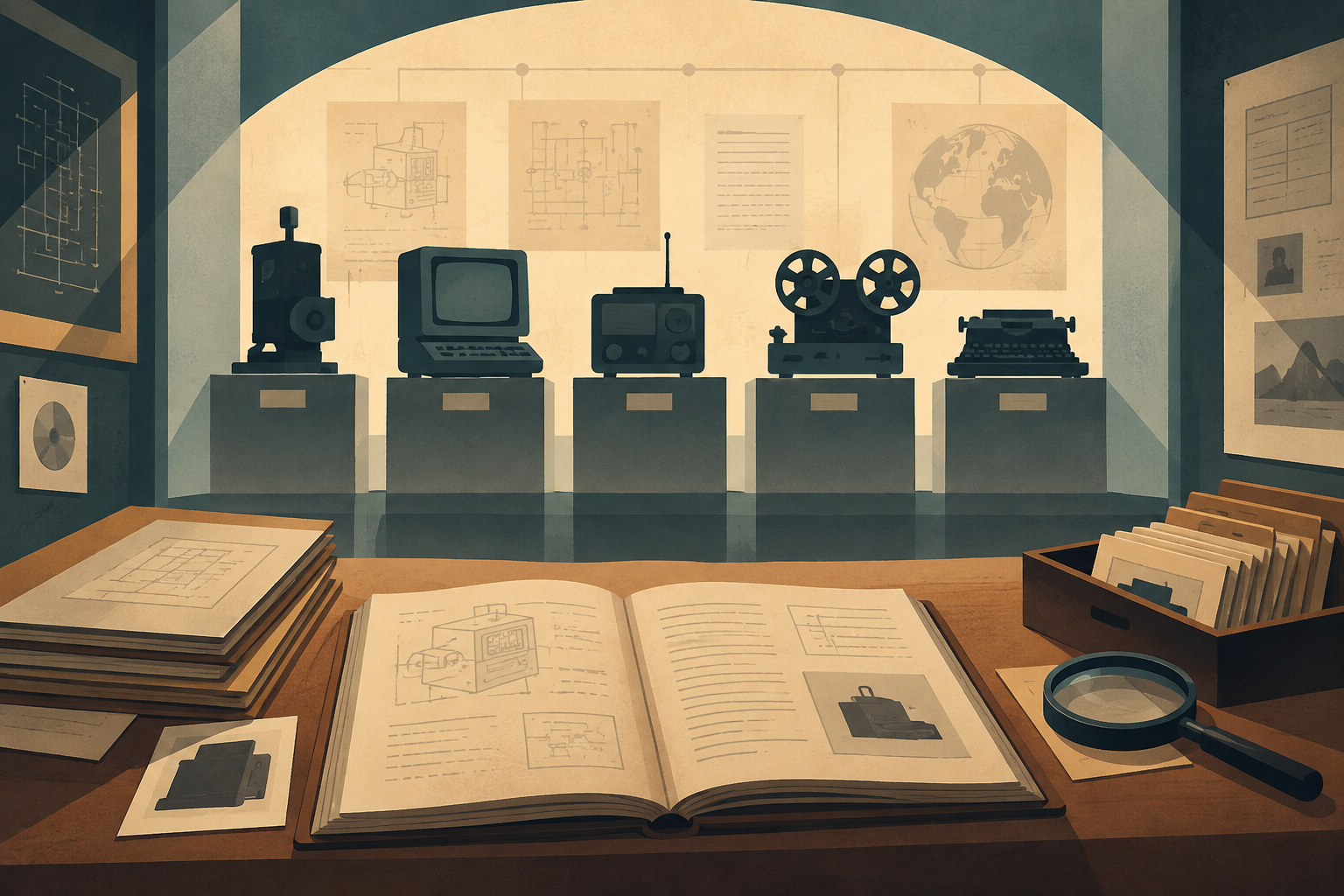
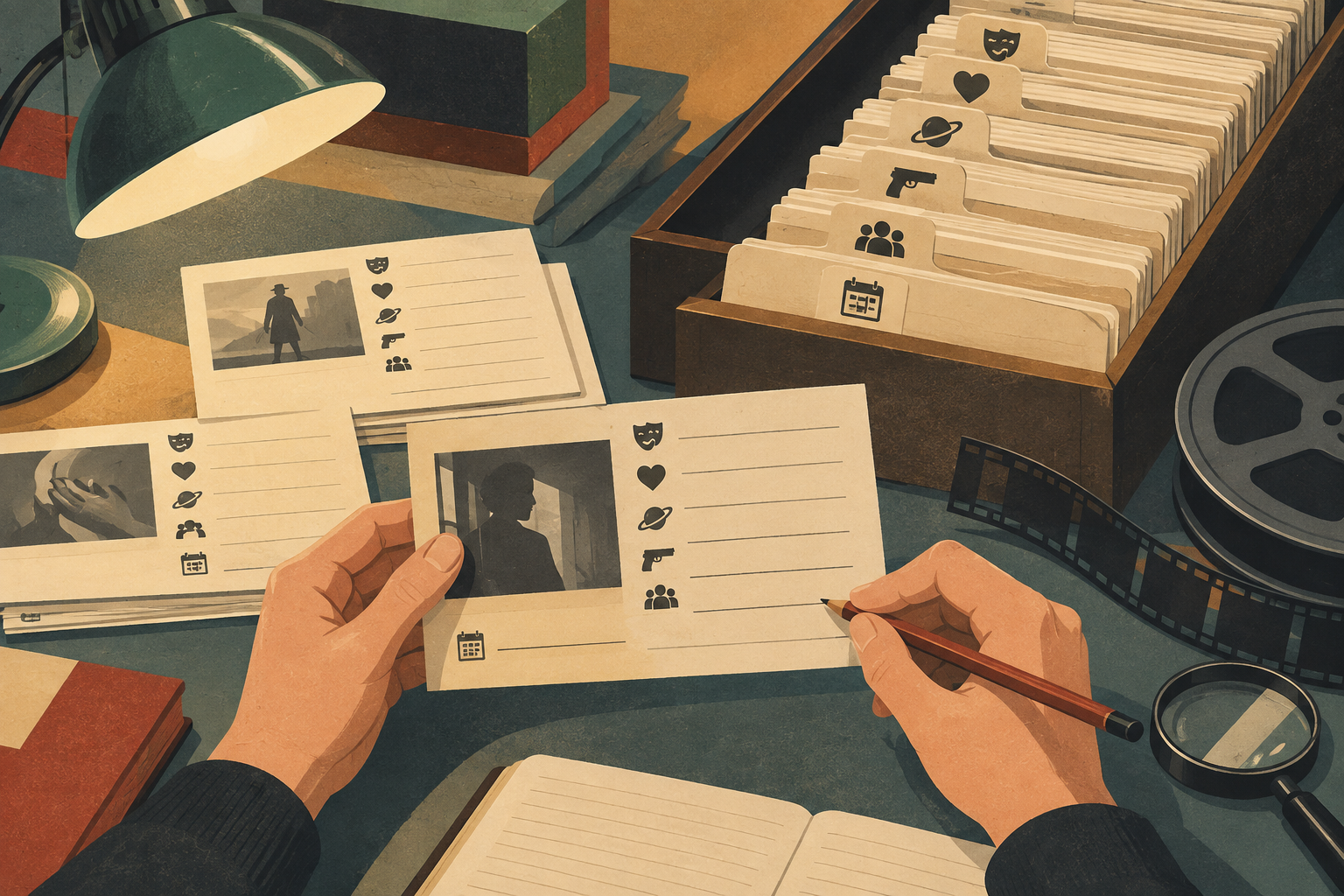
Ibermuseos’ visual-documentation protocol defines visual documentation of collections as photographic recording of objects for identification. A record photograph and a label are not equivalent, but the definition helps articulate an important distinction: an image may help recognise and identify, while other graphic elements may organise access to information. Their purpose has to be demonstrated with specific sources; it cannot be inferred just from an orderly appearance.
Archives preserve traces, not the whole experience
The Prado Museum Archive states that it holds seven documentary collections, including records produced and received by the museum itself. Spain’s Ministry of Culture says that state-museum archives preserve documentation relating to objects from the time they are deposited. These descriptions show why institutional archives can hold traces needed to study an exhibition and its objects. They do not, by themselves, prove that every label, sign or graphic version has been preserved.
A surviving document may reveal a planned or recorded decision, but not necessarily how visitors read it. Reconstructing use would require sources documenting the installation, the versions actually displayed or visitor responses; the supplied material does not provide them. The distinction between intended design, preserved object and actual experience must remain visible.
Advertising, design and social function
Academic records offer related questions. One thesis is titled “Advertising and design: communicative effectiveness and the social function of brands: evolution and adaptation to social context.” Another bibliographic record identifies an article on the design and advertising of variety shows and the conservation of a ventriloquism collection. The titles establish that these subjects have been researched, but they are not enough to summarise findings, describe specific objects or draw conclusions from the works.
The comparison suggests, cautiously, that visual communication, social function and preservation can be studied together. In a museum, however, wayfinding information, interpretation of an object and advertising for an event are not necessarily the same genre. Calling all exhibition graphics “advertising” would erase differences of purpose that the available evidence does not justify erasing.
Reading decisions without confusing them with style
A careful reading can ask who needs the information, what action each medium enables, what relationship it establishes between text and image, and what documentation allows that interpretation to be checked. These are analytical questions, not predetermined answers. An OpenAlex record for a scholarly article on museums, public education and the visualisation of scientific evidence confirms, at least through its title and metadata, that museum visualisation has been a research topic; the supplied data do not support attributing particular arguments to it.
The limit is clear: the supplied sources identify institutions, documents and research topics, but provide few visual examples or detailed descriptions of particular designs. We cannot determine here whether a specific element worked well, was accessible or changed visitor behaviour. We can establish a method: begin with documented function, distinguish it from aesthetic impression, and state what remains unverified.
Museum graphics are neither a neutral backdrop nor automatically effective decoration. They can orient, identify and organise information; learning how a particular element did so requires specific documents. Archives open that investigation but do not replace evidence of use. This distinction makes it possible to value visual language without assigning it facts the sources cannot support.
- Decade
- Contemporary
- Region
- Spain
- Level
- Enthusiast
- Entities
- Museum
Sources and references
- Publicidad y diseño: la eficacia comunicativa y función social de las marcas: evolución y adecuación al contexto socialdoi.org · 2026-10-02
- El diseño y la publicidad de los espectáculos de variedades: la conservación de la colección de ventriloquía de Balder y Sanzdoi.org · 2026-10-02
- La mirada que pasa: museos, educación pública y visualización de la evidencia científicaopenalex.org · 2026-10-02
- La gráfica del museo también comunica: diseño, archivo y ...www.retropause.com · 2026-10-02
- Archivo - Museo Nacional del Pradowww.museodelprado.es · 2026-10-02
- Archivos de Museo: Funcionamientoevemuseografia.com · 2026-10-02
- ARCHIVOS DE LOS MUSEOS ESTATALESwww.cultura.gob.es · 2026-10-02
- protocolo-documentacion-visual.pdfwww.ibermuseos.org · 2026-10-02