The conservation of contemporary art has ceased to be a purely technical discipline to become a field of ethical and social tension. Traditionally, the restorer acted as a guardian of matter, seeking to halt physical deterioration. However, current practices, especially in institutions like the MACBA or the Reina Sofía Museum, recognize that preservation is a process of negotiation. This negotiation does not occur only between the object and time, but between art, science, and professional ethics. The article analyzes how this paradigm shift affects the documentation of ephemeral works and how archives have transformed into living spaces that connect the past with the present cultural context.
From technique to negotiation
The concept of critical conservation, proposed by researchers like AM Galán-Pérez in 2025, establishes that thinking about conservation implies recognizing it as a space of negotiation. This means there is no single correct way to preserve a work. In the case of unstable or ephemeral works, the decision to intervene or not, and how to do so, depends on a delicate balance between the artist's intention and the current cultural context. Institutions no longer just preserve objects; they document the history of art and design, taking the pulse of the present. This perspective forces museums to be more than object repositories, turning them into active agents in the construction of cultural memory.
The role of museums as spaces in motion
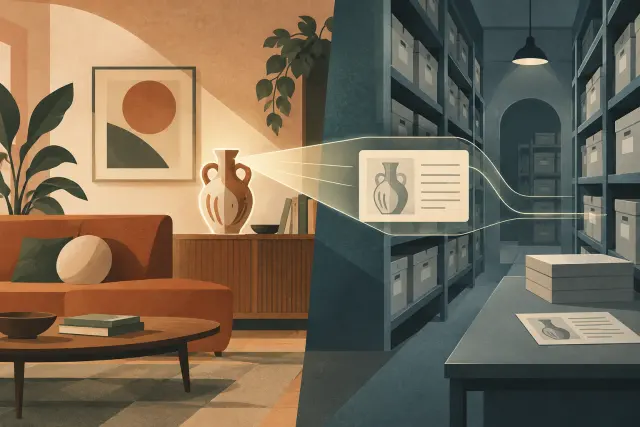
The Museum of Contemporary Art and Design (MADC) and the MACBA are examples of how institutions have reconfigured themselves. The MACBA archive, for example, preserves documentation of special historical value generated by the museum and by other entities related to artistic practices. This goes beyond the simple custody of works. It is about preserving the context, conversations, and decisions surrounding artistic creation. The MADC, for its part, has been studied as a museum in motion, where institutional development is intrinsically linked to its context. This dynamic reflects a vision of the museum not as a static container, but as an organism that evolves with its environment.
Documenting the ephemeral
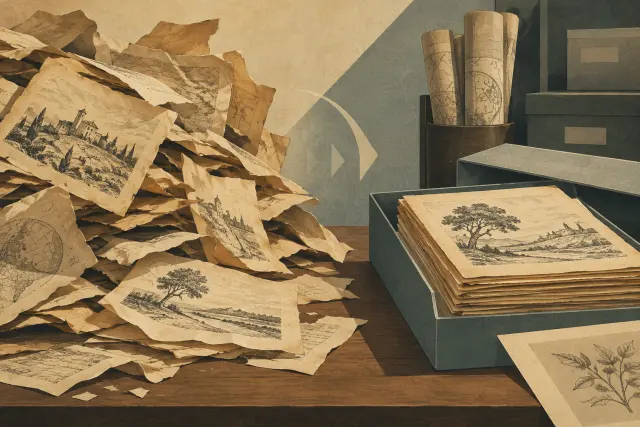
One of the greatest difficulties in contemporary art conservation is the documentation of ephemeral works. These works, by definition, are destined to disappear or change. Evidence suggests that critical conservation is fundamental to understanding how contemporary reinterpretations preserve and transform historical references without erasing their differences. Instead of trying to freeze time, museums seek to capture the essence of the work through documentation. This includes photographs, videos, testimonials, and material records. Documentation thus becomes an extension of the work itself, a medium for the artistic experience to transcend its fragile materiality.
The case of the Picasso Museum in Barcelona
A concrete example of this negotiation is observed in the Picasso Museum in Barcelona. Following the results of a study conducted by the MET, the museum decided to review some similar works in its collection. This case illustrates how scientific research can influence conservation decisions. The review was not limited to technique, but involved a reevaluation of the value and authenticity of the works. This process of critical review is part of contemporary conservation practice, where scientific evidence and cultural interpretation intertwine. The decision to review the works shows the responsibility of institutions in managing their heritage.
Professional ethics in preservation
Professional ethics plays a crucial role in the conservation of contemporary art. Conservators must navigate between fidelity to the original work and the needs of the institution and the public. The negotiation between art, science, and social and professional ethics is a continuous process. There are no easy answers, and every decision carries consequences. Transparency in this process is essential to maintain public trust and the integrity of the institution. Museums must be clear about their conservation decisions, explaining the reasons behind each intervention or non-intervention. This transparency is part of the professional ethics that guides conservation practice.
The limits of the verifiable
Despite advances in documentation and research, there are limits to what can be verified. The artist's intention, for example, may be difficult to determine with certainty. The cultural context also changes over time, which can alter the interpretation of a work. Critical conservation recognizes these limits and works within them. It is not about finding absolute truth, but about constructing a coherent and defensible narrative. Archives act as spaces in motion that connect the past with the present, but also as places where these uncertainties are negotiated. Documentation is not a neutral record, but a construction that reflects the perspectives of those who create it.
Conclusion
The conservation of contemporary art is a field in constant evolution. The transition from a technical approach to one of ethical and social negotiation reflects changes in society and in the understanding of art. Institutions like the MACBA and the Reina Sofía Museum are at the forefront of this change, redefining their role in the preservation of cultural memory. The documentation of ephemeral works and the critical review of collections are examples of how this new practice is applied in reality. The future of conservation will depend on the ability of institutions to continue negotiating the value of works in a constantly changing cultural context. Ethics, science, and art will continue to be the pillars of this negotiation, but their balance will remain a challenge.
- Decade
- Contemporary
- Region
- Global
- Level
- Enthusiast
- Entities
- Museum, Archivo del MACBA, Museo Reina Sofía, Museo de Arte y Diseño Contemporáneo
Sources and references
- Museo de Arte y Diseño Contemporáneo: orígenes, desarrollo institucional y contexto de un museo en movimientodoi.org · 2026-10-20
- Conservación de Arte Contemporáneo 21ª Jornadaissuu.com · 2026-10-20
- Conservación de Arte Contemporáneorecursos.museoreinasofia.es · 2026-10-20
- Boletín LATAM 2014 Octubre- Diciembrewww.iccrom.org · 2026-10-20
- Archivowww.macba.cat · 2026-10-20
- Conservación críticadialnet.unirioja.es · 2026-10-20