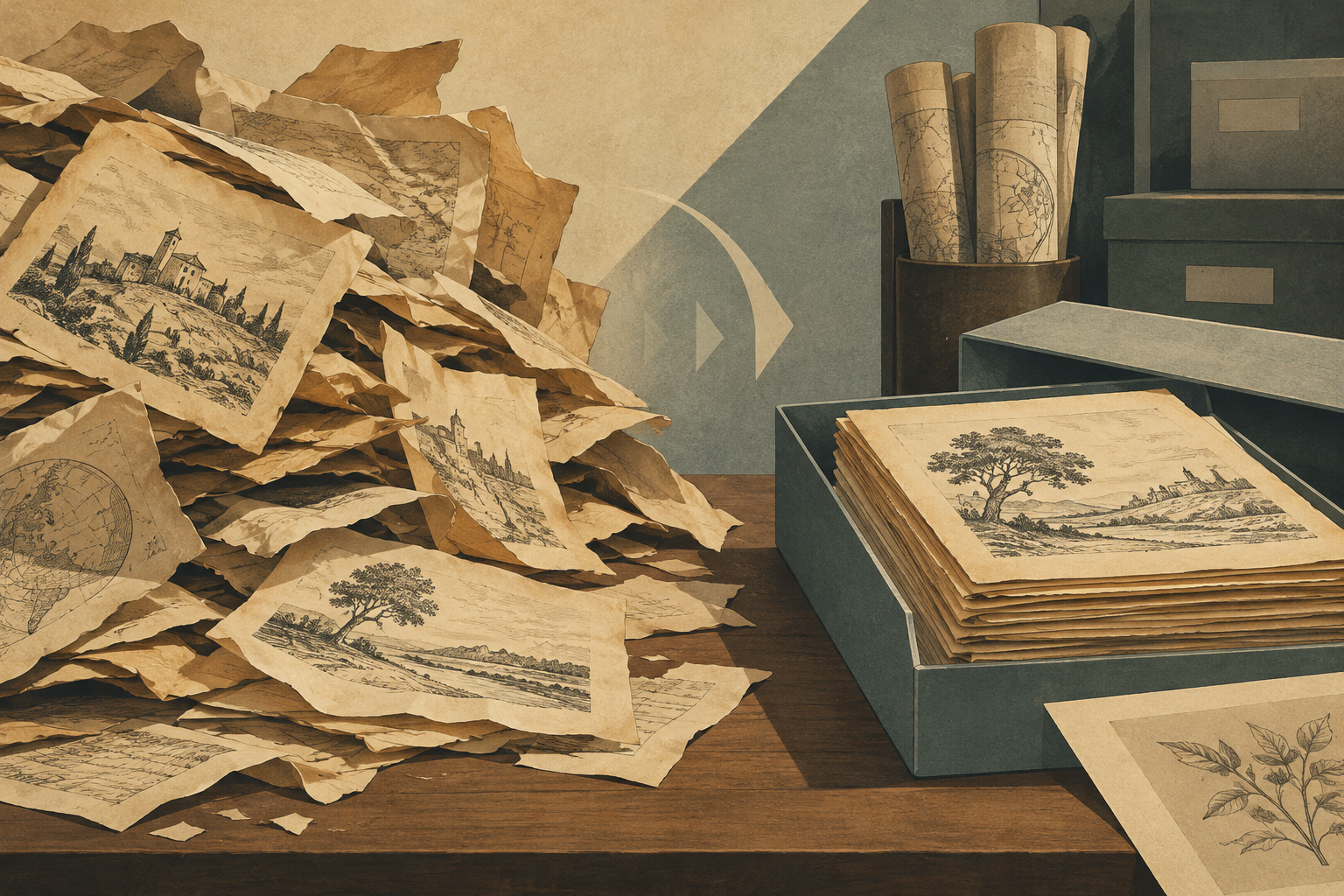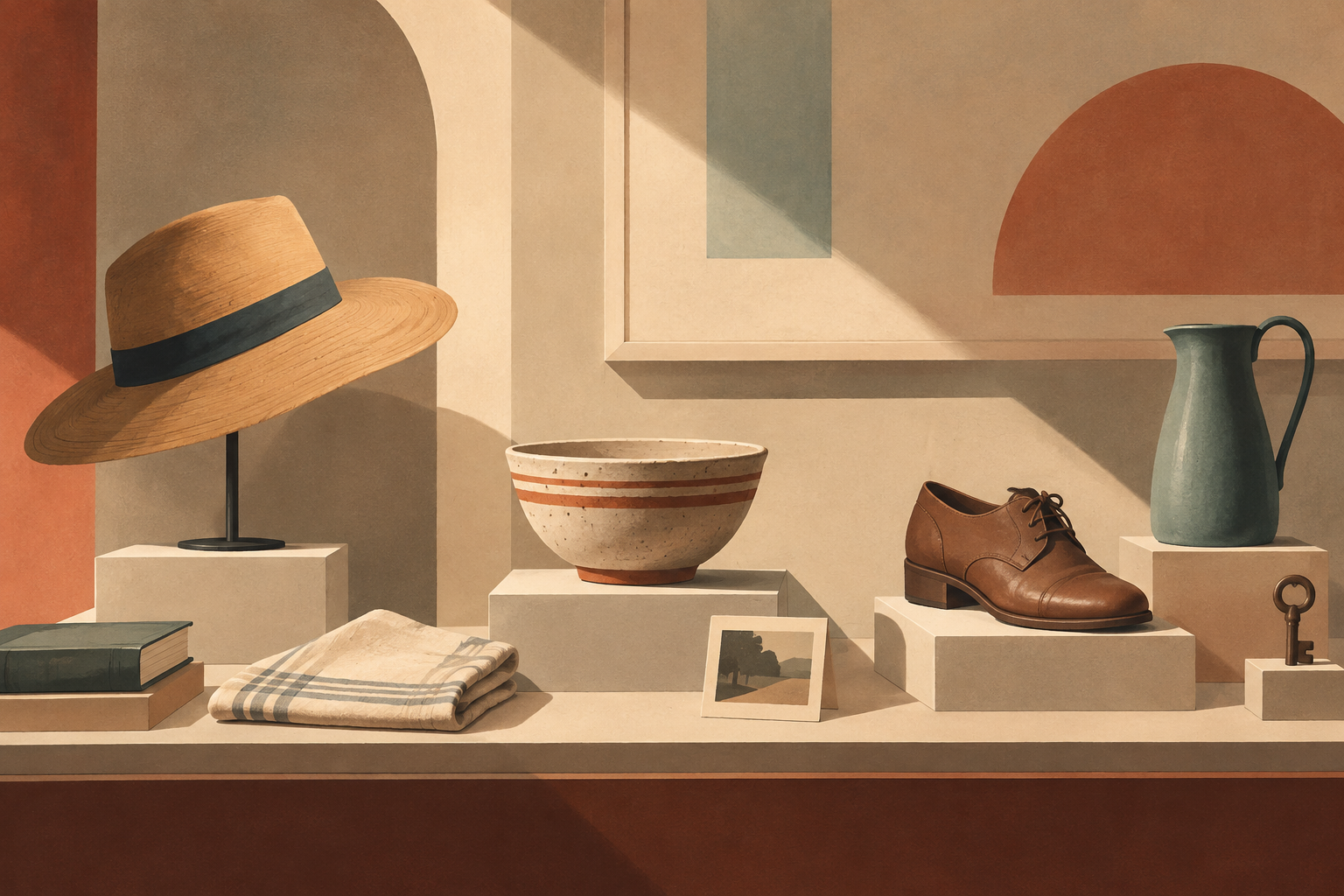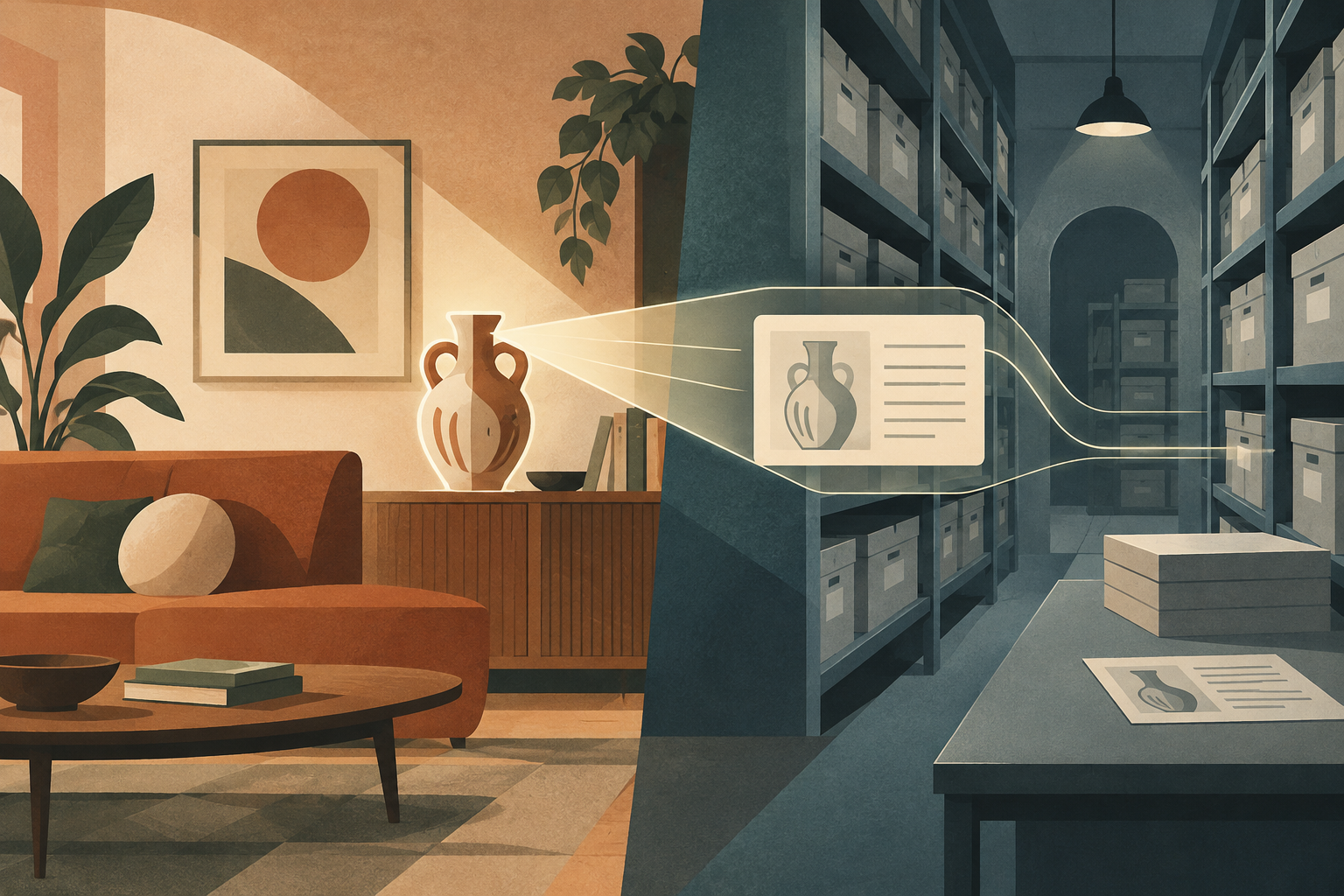
The transformation of a domestic object into a historical document does not happen through simple accumulation, but through a rigorous technical and conceptual process. In contemporary museology, decoration ceases to be mere ornament and becomes a primary source of information about everyday life. This change of status requires cultural institutions to implement specific protocols that go beyond simple physical custody, integrating precise identification and cultural contextualization of each piece. This analysis examines how conservation and documentation manuals establish the necessary frameworks for a decorative object to acquire verifiable heritage value.
Precision in object identification
The first step for a domestic object to be considered documented heritage is its correct identification. According to the Preventive Conservation Plan of the Sephardic Museum, special attention must be paid to descriptions, measurements, dates, and, above all, cultural context. This guideline underscores that reasoned classification is as important as physical data. Without this detailed information, a piece remains an isolated object, unable to communicate its historical relevance. Precision in these records allows researchers and the public to understand the function and meaning of the object within its era.
Context as a conservation factor
Documentation does not limit itself to describing what an object is, but also how its environment influences its condition. IberoMUSEOS guidelines emphasize the need to analyze the cultural asset along with the context that may influence its conservation state. This holistic approach recognizes that material degradation is not an isolated process but is linked to environmental and handling factors. By documenting the context, museums can anticipate problems and design more effective preventive strategies, ensuring that the cultural information contained in the object is preserved along with its physical matter.
Standardization of technical vocabulary
For documentation to be useful in the long term, it must be coherent and accessible. The Manual for the Documentation of Patrimonial Collections in Chile highlights the importance of vocabulary standardization as one of its well-defined and integrated work areas. This standardization allows different professionals and institutions to use the same terms to describe conditions, materials, and techniques. Without unified terminology, records become ambiguous and difficult to cross-reference with other databases. Standardization facilitates the integration of work areas, allowing information to flow efficiently between initial registration and subsequent research.
Threats to organic materials
Domestic decoration is often composed of organic and textile materials, which are particularly vulnerable. The ICCROM Risk Management Guide points out that mechanical damage and contamination are constant threats to these types of materials. Unlike metal or stone objects, textiles and fibers can deteriorate rapidly if factors such as humidity, light, and physical contact are not controlled. Risk management, therefore, is not just a matter of physical security but a tool to preserve the integrity of the cultural information these objects carry. Early identification of these threats allows intervention before damage becomes irreversible.
Design as a preservation tool
The relationship between design and cultural heritage is closer than is often thought. Research from the University of Valencia suggests that design is not only an aesthetic matter but a tool to ensure conservation. By reconstructing interiors through photographs and catalogs, researchers do not just see objects, but social practices. The design of the space and the arrangement of objects within it offer clues about how people lived in a particular place. This perspective allows understanding the interaction between aesthetics and practical needs, revealing how people used their everyday environment.
Reconstruction of social practices
Museum documentation allows going beyond the individual object to understand the social practices that surrounded it. By analyzing how domestic spaces were decorated, researchers can infer habits, social hierarchies, and cultural values. Photographs and catalogs act as windows to the past, allowing a more complete reconstruction of everyday life. This approach transforms decoration into a historical narrative, where each object tells a part of a community's history. The ability to read these records as primary sources enriches our understanding of social and cultural history.
Limits of historical verification
Although documentation is a powerful tool, it has its limits. Not all aspects of domestic life can be verified through preserved objects. Cultural interpretation always involves a degree of inference, and it is important to distinguish between documented facts and researchers' hypotheses. Museums and archives must be transparent about what is known and what is assumed, avoiding presenting interpretations as absolute facts. This intellectual honesty is crucial for maintaining the credibility of documentation and for allowing future research to refine or correct existing narratives.
Conclusion
The conversion of domestic decoration into documented cultural heritage is a complex process that requires technical precision, cultural context, and risk management. The protocols established by institutions such as the Sephardic Museum, IberoMUSEOS, ICCROM, and the University of Valencia provide the basis for this work. By following these guidelines, museums do not just preserve objects, but preserve the memory of everyday life. This collective effort allows future generations to access a richer and more nuanced understanding of their past, transforming what was once simple decoration into an invaluable source of historical knowledge.
- Decade
- Contemporary
- Region
- Global
- Level
- Enthusiast
- Entities
- Museum, Museo Sefardí
Sources and references
- PLAN CONSERVACIÓN PREVENTIVA MUSEO SEFARDÍwww.cultura.gob.es · 2026-10-20
- Guía para la Elaboración e Implantación de Planes de ...www.ibermuseos.org · 2026-10-20
- Manual de Documentación - de Colecciones Patrimonialeswww.cdbp.gob.cl · 2026-10-20
- Guía de Gestión de Riesgos para el Patrimonio Museológicowww.iccrom.org · 2026-10-20
- Diseño y patrimonio cultural: cómo asegurar la conservación ...turia.uv.es · 2026-10-20
- La Conservación de material etnográficounesdoc.unesco.org · 2026-10-20