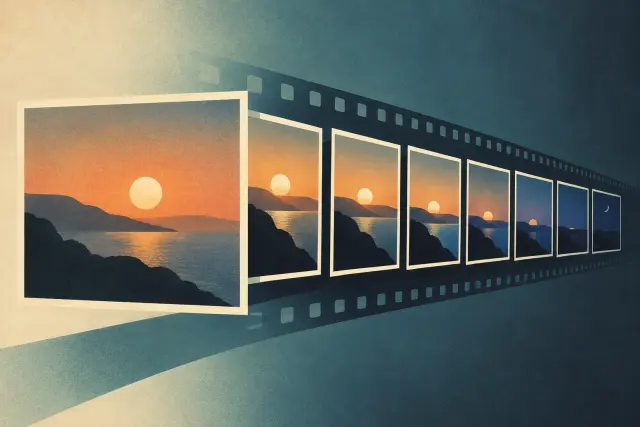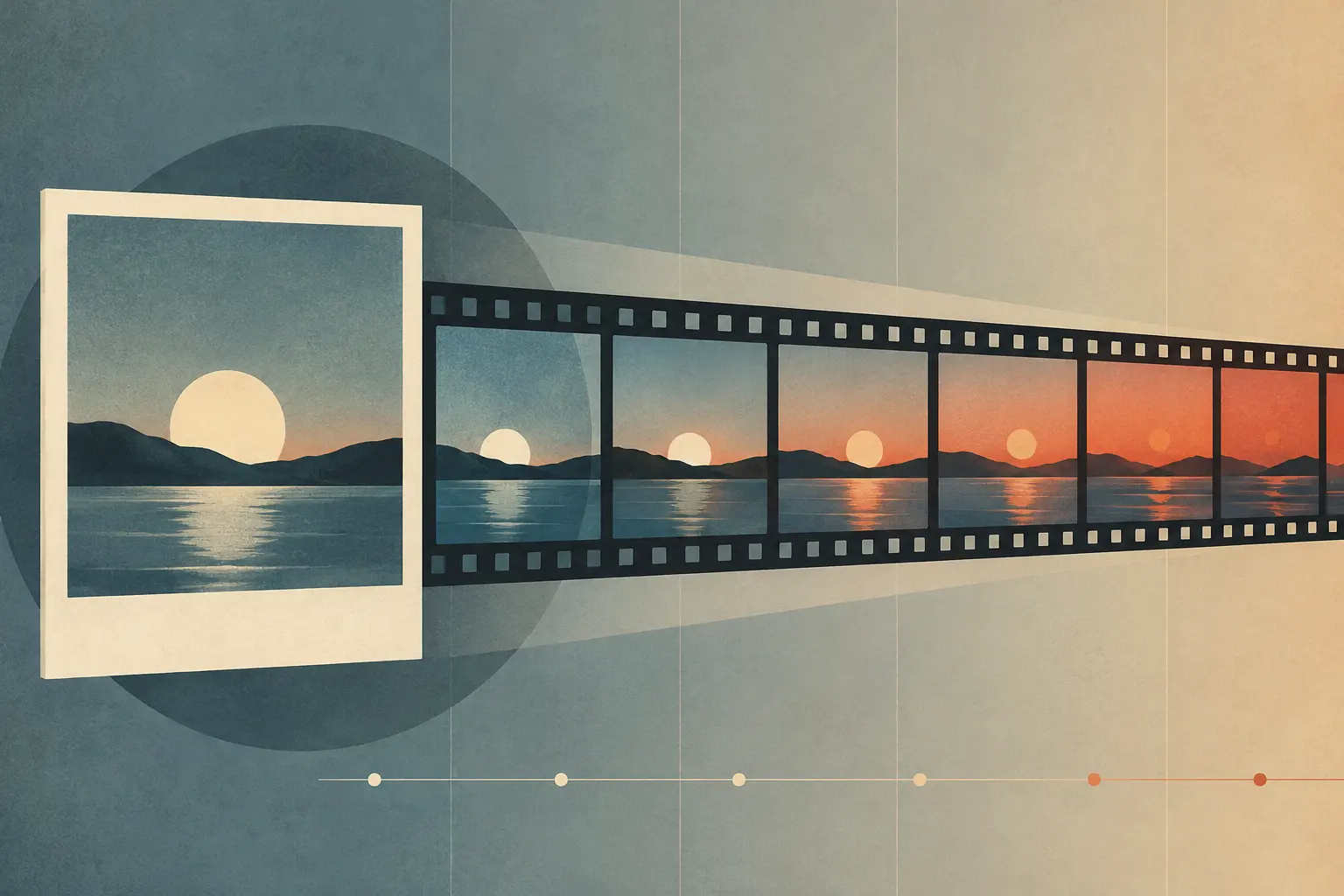
Today’s cameras can switch easily between photography and video. That technical convergence, however, does not make the two media the same practice: still and moving images draw on shared visual resources but organize them differently. In his analysis of photography and video, Antoni Marín Amatller locates the decisive difference in time: in how elements change within a shot, how shots relate to one another, and what rhythm emerges from that organization.
Shared resources, different functions
Composition, framing, lighting and colour treatment matter in both photography and video. The difference is not that one medium has these resources and the other does not, but in how they are used. In a photograph, the composition is fixed when the scene is captured, although processing can later alter the image. In an audiovisual shot, composition can change as the action unfolds: subjects move, the camera moves, or both happen at once.
Composition in a sequence therefore cannot be read only as the arrangement of elements in a single frame. It also matters how that arrangement develops during the shot and guides the viewer’s attention. Movement is not obligatory, but it creates expressive possibilities that a still image does not share in the same way.
The same applies to framing and shot scale. A photograph usually involves a choice made for an individual image; a video take can begin wide and move closer to a subject through camera movement or a change of focal length. The decision concerns both what to show and how what is shown changes.
Light and continuity
Lighting can also evolve during an audiovisual take. In photography, light shapes the captured moment and may be adjusted later in processing. In video, it not only determines the appearance of each frame but can change as the scene progresses. Its role is not confined to an isolated shot: lighting and colour also help maintain visual coherence across shots.
Marín Amatller does not propose an absolute opposition. Photography can be part of a series or narrative, and video does not need constant movement to be video. His distinction concerns tendencies and working units: photography is often conceived through images that can stand on their own, while audiovisual creation usually organizes takes as components of a sequence.
The sequence as a unit of meaning
In audiovisual work, each shot belongs to a larger whole. A sequence relates shots of different scales and durations; their order and length direct attention and contribute to rhythm. A shot may have force in itself, but its function also depends on what comes before, what follows and where it sits in the sequence.
Editing turns filmed material into a temporal form. It selects fragments from takes, determines their duration and establishes relationships between them. Editing, then, does more than join images: it organizes the development of a scene and creates rhythm. Post-production may continue the process with colour grading, digital compositing and sound work, helping shape the finished result.
Rhythm does not depend only on the length of each shot. It can also arise from changes within a shot: shifts in composition, framing, lighting or camera movement. Combined with duration and editing, these elements create an audiovisual experience that cannot be reduced to a succession of images.
Technique does not replace intention
The ease of switching between photography and video makes capturing both kinds of image more accessible, but it does not guarantee command of their languages. A technically sharp, well-composed image does not by itself ensure an expressive sequence. Video also requires decisions about when to show something, how long to hold it and how to connect it to the next shot.
The camera offers possibilities; the maker’s intention and temporal organization determine the form they take. Understanding that distinction helps us recognize what photography and video share without mistaking common tools for a common visual grammar.
- Decade
- Contemporary
- Region
- Global
- Level
- Introduction
- Entities
- No linked entities
Sources and references
- El factor temporal y el ritmo como distintivo entre fotografía y vídeodoi.org · 2026-10-26
- Modelo multidimensional de los factores que afectan la interacción entre marketing y ventas en el lanzamiento de nuevos productos en Latino Américadoi.org · 2026-10-26
- Fotografía para lanzamientos de marca y producto - eventecheventech.mx · 2026-10-26
- Fotos para eventos de marca y lanzamiento de productoswww.fotofuneventos.com · 2026-10-26
- Fotografia Corporativa: Agencia de Contenido Visual ...www.wearemoonk.com · 2026-10-26