The history of music is not preserved solely in written notes or magnetic waves, but in the complex relationship established between the physical object and its interpretation. Musical archives, far from being inert repositories, function as active spaces where the past is reconfigured in the present. This dynamic is particularly visible in institutions such as the Mariana Music Museum in Brazil, or the holdings managed by the National Institute of Musicology in Argentina. In these places, the distinction between the original work, its specific edition, and the medium that contains it is not academic nitpicking, but a reality that conditions how we listen to and understand music today.
The Materiality of Sound
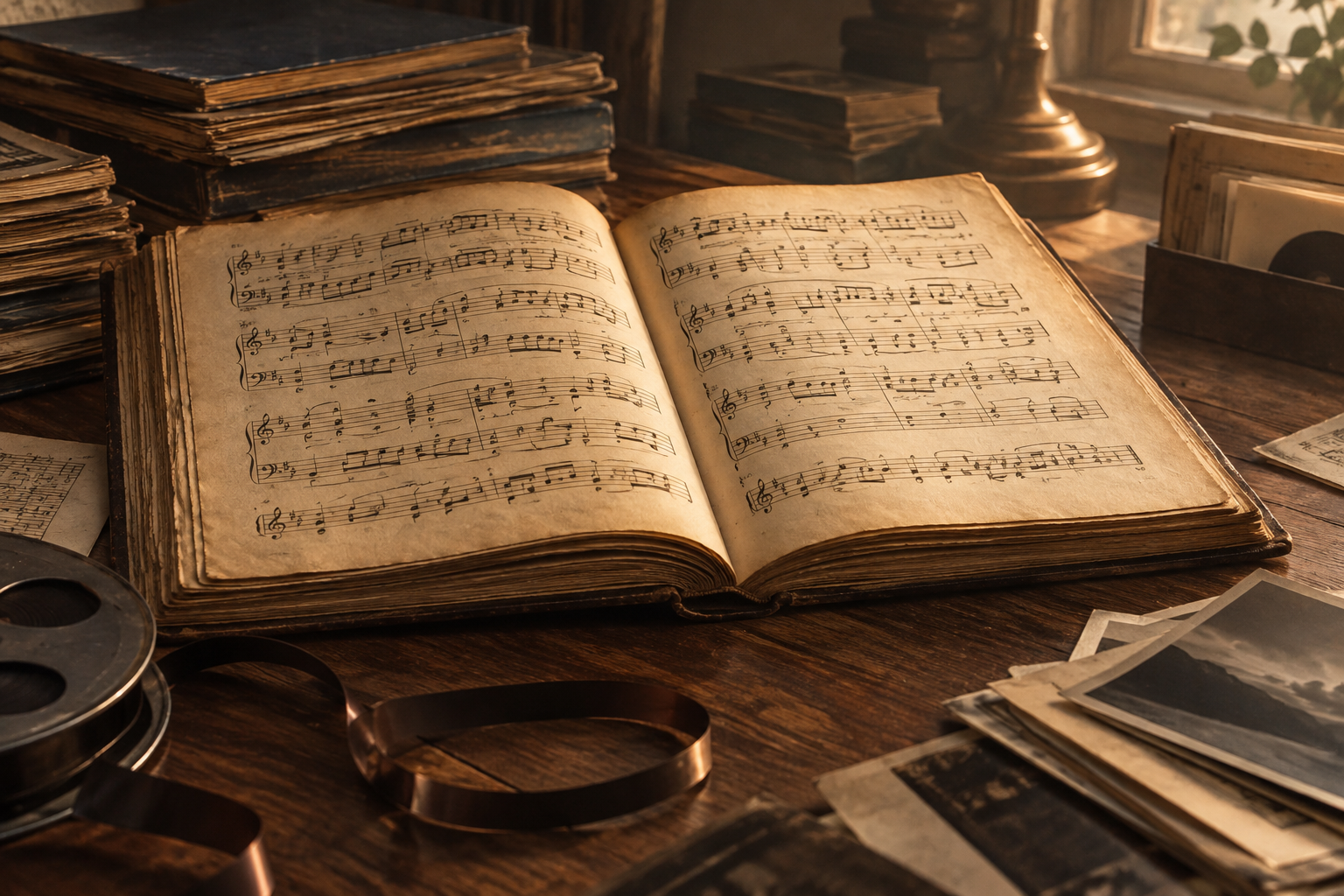
The physical medium is not a neutral container. An 18th-century paper score, such as those forming part of the Mariana Music Museum archive, created in 1965 by Oscar Fernández de Oliveira, carries the marks of its time: the type of paper, the ink, and handwritten annotations. When a researcher or musician interacts with these documents, they do not access an absolute truth, but a materialized edition. The conservation of these elements requires specific interventions that, if not rigorously documented, can alter the integrity of the historical testimony. Paper ages, discolors, and becomes fragile, forcing conservators to make decisions that directly impact legibility and, therefore, musical interpretation.
The Mariana Case and Institutional Memory
The Mariana Music Museum is a paradigmatic example of how private initiative and patronage can build a solid cultural memory. Founded by the third Archbishop of Mariana, a known patron of the arts, this archive gathers materials from the 18th and 19th centuries. Its inclusion in international memory of the world records underscores its value not only as a collection but as a witness to a specific musical tradition. The management of these holdings involves not only protecting the object but contextualizing it. Without that context, the score is just ink on paper; with it, it becomes a piece of the region's cultural history.
Authenticity and Intellectual Agendas in Peru
The preservation of folklore presents different challenges than those of classical or erudite music. A recent study on the Peruvian folkloric musical archive between 1949 and 1952 reveals that the management of "authentic sounds" was marked by intellectual agendas and institutional challenges. During that period, the notion of authenticity was not static, but was constructed through transnational connections and curatorial decisions. This demonstrates that the archive does not only reflect culture but also shapes it. What is decided to be recorded, preserved, or discarded responds to criteria that go beyond the technical, involving the political and aesthetic visions of the time.
Valuation as a Management Tool
Currently, the valuation of musical collections has evolved from a purely technical approach to one that integrates the cultural dimension. Recent research suggests that exploring how cultural valuation can contribute to archive management is fundamental. It is not just about assigning an economic or conservation value, but about understanding the symbolic weight of each piece. This perspective allows institutions to prioritize resources and dissemination strategies that respect the complexity of the heritage. Valuation thus becomes a bridge between physical conservation and intellectual accessibility.
The Archive as a Moving Space
The idea that the archive is a moving space, where the past is heard in the present, challenges the traditional view of preservation as an act of freezing. Cultural institutions, as noted in contexts such as the Reina Sofía Museum, invite us to think of the archive not as an end, but as a starting point. Contemporary listening of old recordings or the interpretation of historical scores are acts of creation that depend on the mediation of the archive. This mediation includes the quality of digitization, the precision of transcriptions, and the depth of contextual documentation.
Challenges of Digitization and Intervention
The transition from physical to digital media introduces new layers of complexity. Digitization is not a faithful copy, but a technical interpretation that can introduce biases or information losses. Rigorous documentation of each intervention, whether in the original paper or the digital file, is essential to maintain the integrity of sound memory. Without this traceability, the archive risks becoming a collection of decontextualized data, lacking the depth necessary for adequate cultural understanding. Technology must serve research, not replace the critical judgment of the specialist.
Conclusion: The Integrity of Testimony
Understanding the history of music requires accepting that the medium is part of the message. The distinction between work, edition, and medium is not an obstacle, but a tool for a more informed and critical listening. Musical archives, from the Mariana holdings to the Peruvian folkloric records, remind us that cultural memory is a continuous process of negotiation between the past and the present. The responsibility of those managing these archives is not only to conserve the object but to preserve its ability to continue generating meaning and cultural connection in the future.
- Decade
- 1990s
- Region
- Global
- Level
- Enthusiast
- Entities
- Museum, Museo Reina Sofía, Sounds, Argentina
Sources and references
- La valoración de colecciones como herramienta para la ...revistas.javeriana.edu.co · 2026-10-18
- Museo Claudio realizará taller de conservación de ...m.facebook.com · 2026-10-18
- Archivo del Museo de Música de Mariana, siglos XVIII-XIXwww.unesco.org · 2026-10-18
- Escuchar un paíswww.museoreinasofia.es · 2026-10-18
- 🥼SIMPOSIO SOBRE ARCHIVOS MUSICALES ● 2026 El ...www.instagram.com · 2026-10-18
- La accidentada gestión de sonidos auténticos: Agendas ...www.cambridge.org · 2026-10-18