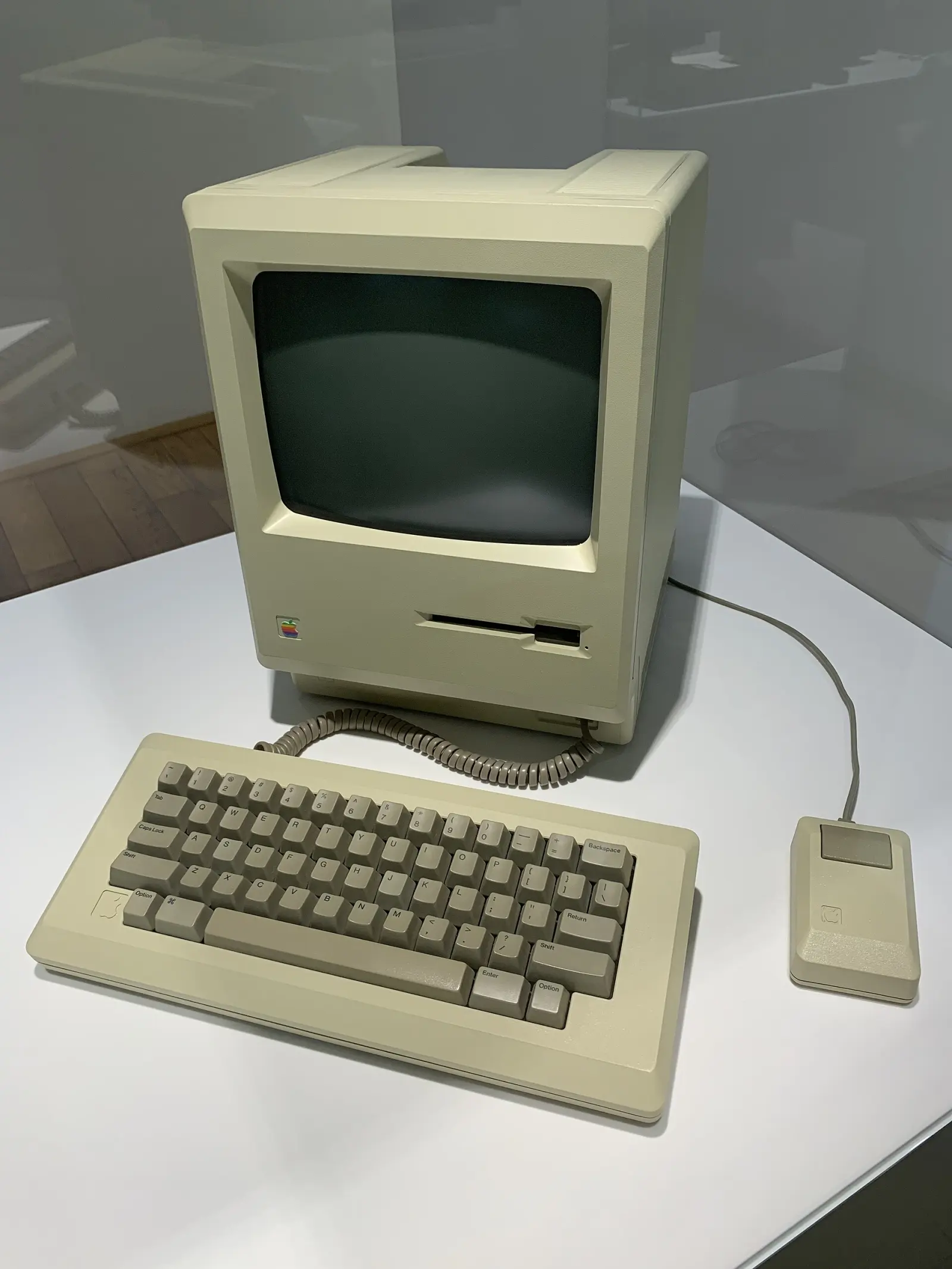
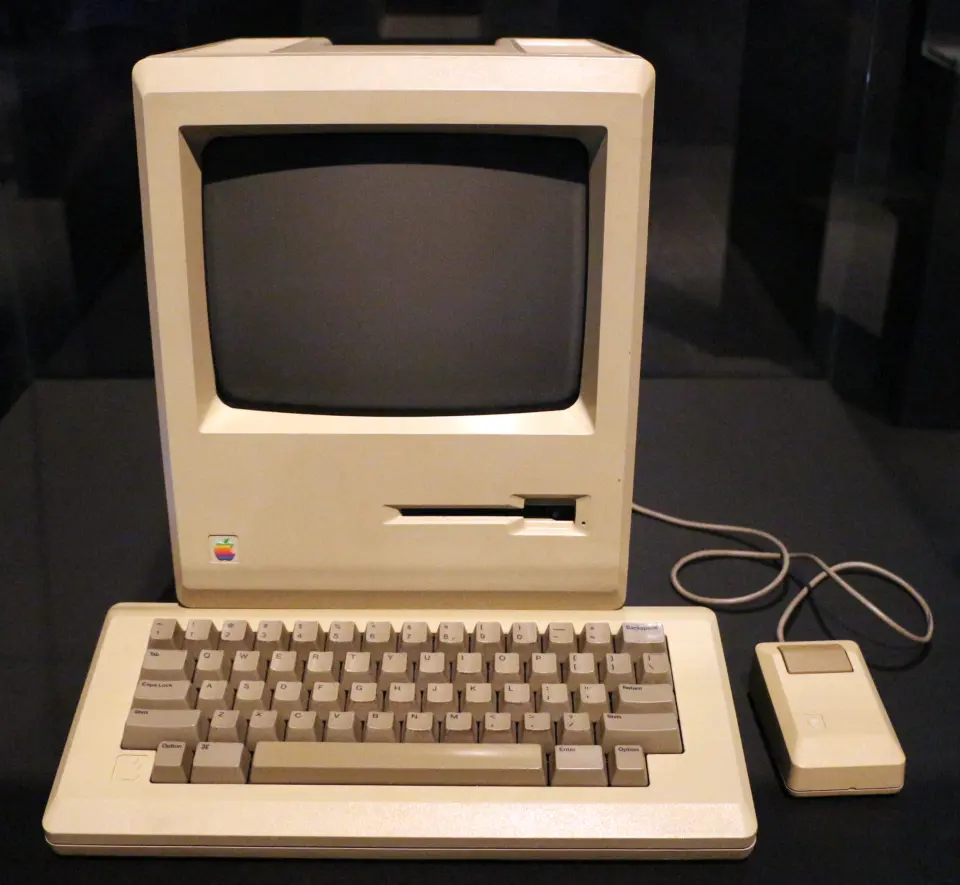
Apple introduced the original Macintosh on January 24, 1984, bringing a screen, mouse, and graphical interface together in a compact computer. Its significance does not lie in having invented those elements by itself: Apple had already marketed the more expensive Lisa, and the Macintosh project drew on earlier ideas and technologies. Its ambition was to make visual interaction with a computer more accessible and place it at the heart of a product aimed at a broader audience.
An idea built around ease of use
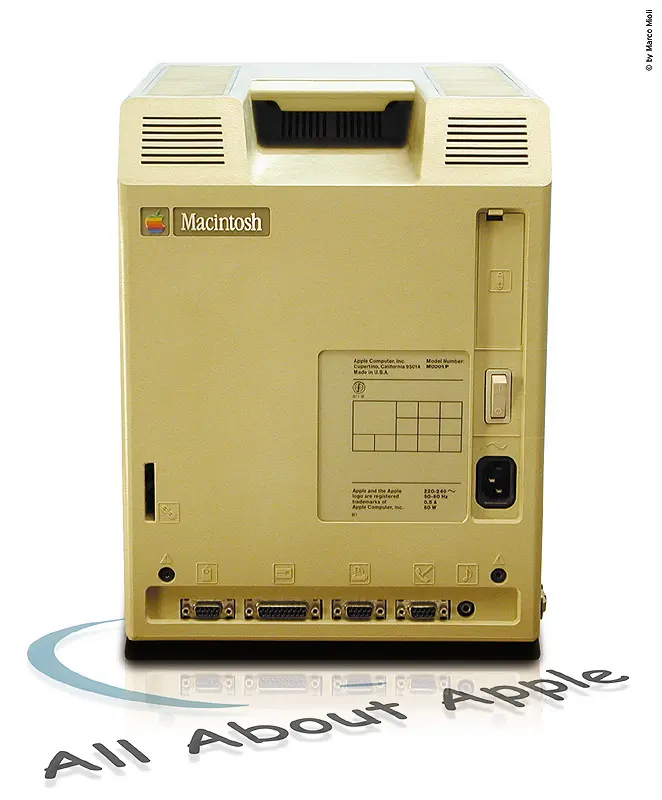
The project began with Jef Raskin, who imagined a low-cost computer that would be easy to learn. During development, Steve Jobs took on a decisive role in guiding the team and shaping the product. The result was an integrated machine with a nine-inch monochrome display, 128 KiB of RAM, and a 3.5-inch floppy drive.
The screen and mouse changed how people interacted with a computer: instead of typing instructions at a command line, users could work with graphical elements. The system came with MacPaint and MacWrite. Drawing or writing offered a tangible demonstration of what the interface could do and helped present the Macintosh as a tool that did not require specialist knowledge to begin using.
Ease of interaction, however, did not mean a broad range of functions. The initial selection of applications was limited, and developing software for the platform required specific work. John Sculley later recalled that the included programs did not adequately cover needs such as spreadsheets, databases, or more extensive word processing. An interface could make a machine easier to understand, but it could not replace the applications required for different tasks.
A compact machine with little memory
The 128 KiB of RAM limited the programs the computer could run and the amount of work users could do without interruption. The first model also lacked an internal hard drive and did not offer a straightforward memory upgrade. In 1985, Apple released the Macintosh 512K, known as the Fat Mac, with four times the memory of the original. The early evolution of the range therefore responded to a practical constraint, not just a design consideration.
Price also shaped who could access the machine. The Macintosh initially sold in the United States for $2,495: it cost less than the Lisa, but remained a significant purchase. Apple ran a promotion that let prospective buyers take a computer home for a day. Demand exceeded supply, and some returned machines could no longer be sold as new, illustrating the logistical difficulties that accompanied the initiative.
From personal computer to desktop publishing
One of the platform’s most consequential uses emerged from combining the Macintosh with a laser printer and page-layout software. From 1984 onward, this combination made it possible to design pages containing text and images, preview their layout on screen, and print them. Desktop publishing turned the graphical interface into a practical production tool and helped establish a recognizable field of use for the Macintosh.
Later models, including the Macintosh II, added color and expansion options. The product line continued to change in both architecture and form as personal computers took on new uses. That development should not be mistaken for the immediate replacement of earlier machines: adoption depended on available software, sufficient memory, and a price buyers could afford.
The original Macintosh’s legacy is best understood through the gap between its promise and its material conditions. Its interface made a different way of interacting with a computer visible, but early users still had to work with limited memory and a restricted range of applications. Making computing more approachable was not achieved by the screen alone; it also depended on what the machine could run, who could buy it, and which tasks had software available.
Documentary gallery
- Decade
- 1980s
- Region
- North America
- Level
- Introduction
- Entities
- Disquete, Macintosh, Cuatro
Sources and references 5
- La historia del Apple Macintosh - Mac Historytranslate.google.com · 2026-11-14
- Macintosh - Wikipedia, la enciclopedia librees.wikipedia.org · 2026-11-14
- La historia de Applewww.maestrosdelweb.com · 2026-11-14
- APPLE – ENCITHINKS - WordPress.comencinamoranlazaro.wordpress.com · 2026-11-14
- Steve Wozniakes.wikipedia.org · 2026-11-14