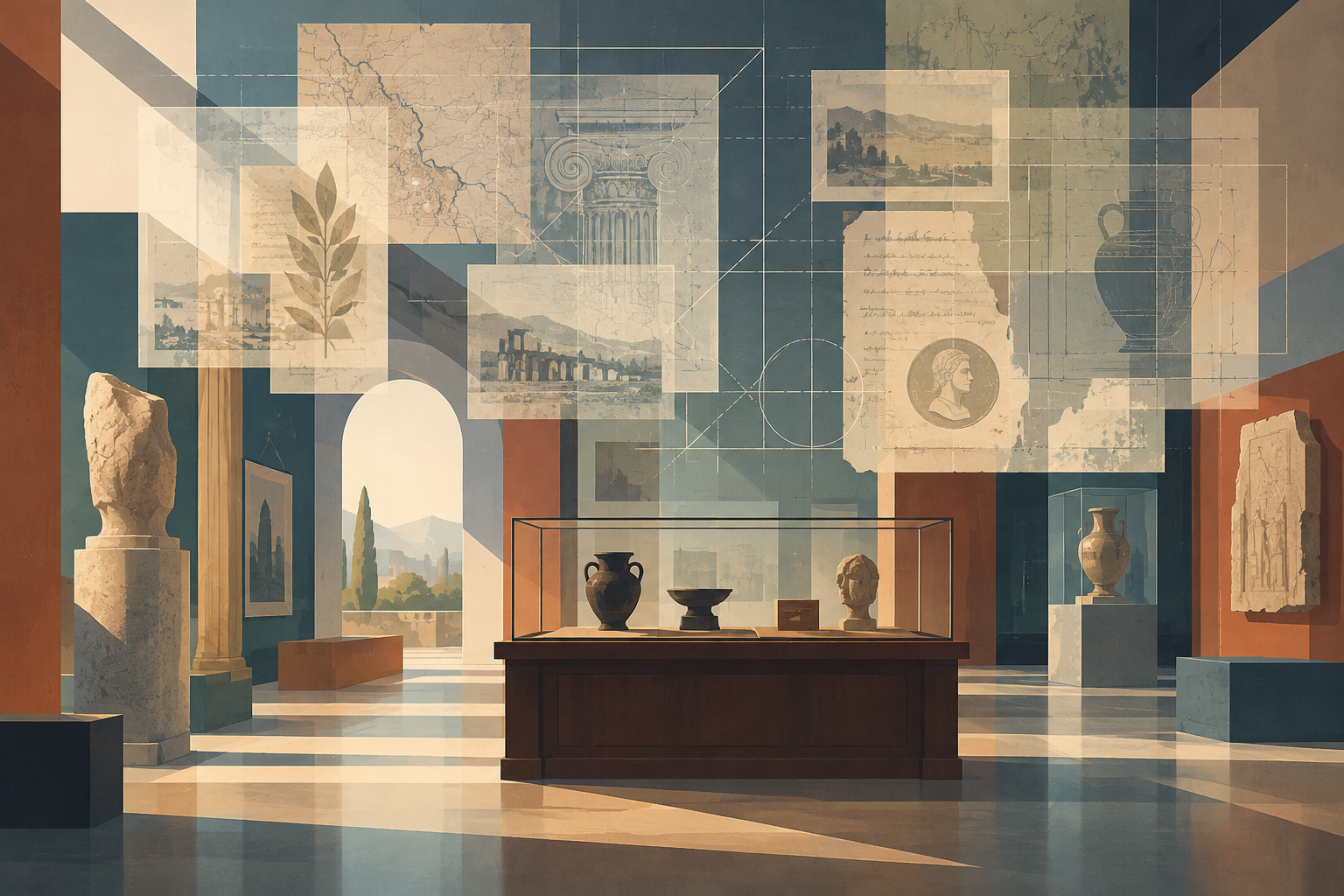
The conservation of interior spaces has evolved from a focus on the physical integrity of objects to a broader understanding that includes cultural and social context. Traditionally, museums and archives limited themselves to cataloging furniture, upholstery, and decorative elements as isolated pieces. However, current heritage collection documentation manuals insist that the record must include detailed descriptions, measurements, dates, and, fundamentally, the cultural context. This paradigm shift allows for the reconstruction of how an interior was organized and who used it, turning each object into a historical document that reveals past social practices.
Documentation as a tool for reconstruction
Heritage collection documentation manuals, such as the one published by the Heritage Documentation Center, establish that the record must be comprehensive. It is not enough to identify a piece of furniture; it is necessary to understand its function within a specific space. This approach allows conservators and historians to understand the relationship between aesthetics and the practical needs of everyday life. By prioritizing context over the isolated object, nostalgia is prevented from distorting the understanding of the past, and a more complete view of social practices is offered.
The role of context in risk management
The risk management guide for museum heritage emphasizes that the analysis of the cultural asset must consider the environment influencing its conservation state. Factors such as contamination, humidity, or the dissociation of documents from the archive can negatively affect objects. Therefore, documentation is not just an administrative act but a preventive tool. By understanding the context, museums can identify potential risks and take measures to mitigate them, ensuring the long-term preservation of collections.
Interdisciplinarity in conservation
The study of design and cultural heritage requires interdisciplinary collaboration between conservators, historians, and designers. Design has shaped our world and improved our lives in ways that often go unnoticed. To fully understand the value of an interior, it is necessary to integrate diverse perspectives. Conservators bring technical knowledge about materials and preservation techniques, historians provide the social and political context, and designers understand functionality and aesthetics. This collaboration enriches documentation and allows for a deeper interpretation of heritage.
Primary sources and archive photographs
Primary sources and archive photographs are essential for understanding the coexistence of aesthetics and the practical needs of everyday life. These sources allow for the reconstruction of the original appearance of an interior and understanding how it was used. However, it is important to note that photographs can be selective and do not always reflect the complete reality. Therefore, they must be complemented with other types of documentation, such as inventories, correspondence, and oral testimonies. This combination of sources allows for a more faithful and nuanced reconstruction of the past.
Limitations of documentation
Despite advances in interior documentation, there are limitations that must be considered. It is not always possible to recover all original information, and some sources may be incomplete or biased. Moreover, the interpretation of cultural context can be subjective and depend on the researcher's perspective. Therefore, it is important to be transparent about the limitations of documentation and acknowledge uncertainties. This allows visitors and researchers to better understand the nature of the reconstruction and avoid premature conclusions.
Conclusion
The documentation of interiors as a practice of cultural memory is a powerful tool for preserving and understanding the past. By integrating cultural and social context into the record, museums and archives can offer a more complete and nuanced view of past social practices. This approach not only preserves objects but also preserves the stories and experiences that surround them. In an increasingly globalized world, this practice is essential for keeping cultural memory alive and promoting understanding between different cultures.
- Decade
- Contemporary
- Region
- Global
- Level
- Enthusiast
- Entities
- Museum
Sources and references
- Manual de Documentación - de Colecciones Patrimonialeswww.cdbp.gob.cl · 2026-10-18
- PLAN CONSERVACIÓN PREVENTIVA MUSEO SEFARDÍwww.cultura.gob.es · 2026-10-18
- Guía para la Elaboración e Implantación de Planes de ...www.ibermuseos.org · 2026-10-18
- Guía de Gestión de Riesgos para el Patrimonio Museológicowww.iccrom.org · 2026-10-18
- La Conservación: el porvenir del pasadounesdoc.unesco.org · 2026-10-18
- Diseño y patrimonio cultural: cómo asegurar la conservación ...turia.uv.es · 2026-10-18