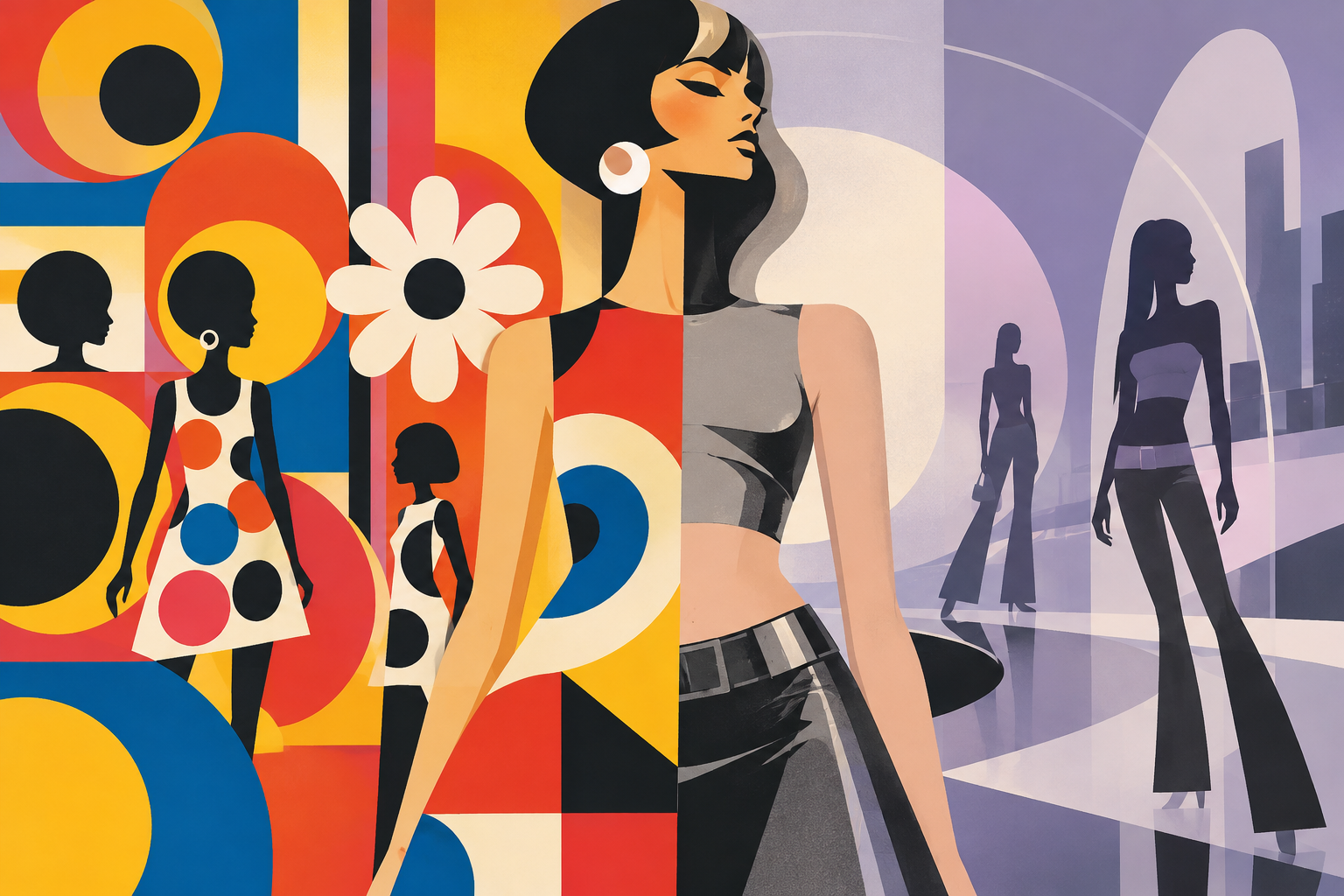
The fashion of the 2000s is often remembered as an era of maximalism and excess, but its aesthetic development reveals a deeper historical complexity. Far from being an isolated phenomenon, the dominant aesthetic of the mid-decade operated as a bridge between past and present. According to the FIT fashion history chronology, retro styles inspired directly by the 1960s emerged. This connection was not accidental, but the result of a specific interaction between the music industry and clothing design, where British indie pop acted as a visual catalyst. This article examines how that influence materialized in specific garments and how it transformed as it moved from the underground scene to haute couture and fast fashion.
Indie Pop as an Aesthetic Driver
The relationship between music and fashion in the 2000s was not unidirectional. British indie pop groups, which gained prominence in the mid-decade, brought with them a visual code that challenged the minimalism of the 90s. Evidence suggests that these groups directly influenced the adoption of retro silhouettes. It was not an exact imitation of 60s fashion, but a reinterpretation that captured the essence of freedom and experimentation of that era. Indie pop provided the cultural context necessary for the public to accept the return of patterns and cuts that had been considered obsolete two decades earlier.
From Nostalgia to Functional Design
A common mistake is to assume that 2000s retro was simple nostalgia. However, designers selected specific elements from the 60s and integrated them into a contemporary context. This involved the use of more modern materials and silhouettes adjusted to current body proportions. The adaptation was functional: garments had to be wearable in everyday life, not just on runways. This process of selection and transformation demonstrates that retro design is a dialogue between eras, where the past is filtered through the needs and tastes of the present. 2000s fashion did not copy the 60s; it translated them.
Key Pieces and Their Transformation
The FIT chronology specifically mentions the emergence of retro styles in the mid-decade. Among the garments that defined this trend were tracksuits, polo shirts, sometimes layered or with the collar popped, cargo pants, and rugby shirts. Although some of these garments have roots in other decades, their combination and styling in the 2000s reflected 60s influence. For example, the use of the polo shirt with the collar popped evoked a carefree and youthful attitude, similar to 60s icons, but executed with a more polished and commercial aesthetic. This mix of elements created a unique visual identity for the decade.
The Role of Global Pop Culture
Fashion does not exist in a vacuum. The popularity of artists like Lady Gaga, whose debut album The Fame was released in 2008, contributed to the acceptance of eclectic and retro styles. Although Gaga was more associated with synthpop and 80s pop, her influence on late-2000s pop culture helped normalize fashion experimentation. The music industry, including the resurgence of formats like the girl group, also played a role in spreading certain styles. The globalization of fashion allowed these trends to spread rapidly, creating a shared visual language internationally.
Limitations of Historical Evidence
It is important to recognize that the available evidence is limited. The FIT chronology provides a general framework, but does not detail the specific mechanisms by which designers made decisions about which 60s elements to include or exclude. Additionally, the influence of British indie pop is mentioned, but not explored in depth how it translated into specific designs. The lack of data on consumer perception and specific sales of retro garments limits our understanding of the magnitude of this phenomenon. Despite these limitations, the connection between music and fashion is clear and significant.
The Legacy of Reinterpretation
The impact of 2000s retro fashion extends beyond the decade. It set a precedent for future reinterpretations of past styles. It demonstrated that fashion could be both commercially successful and culturally relevant by connecting with the collective memory of a previous generation. This legacy is seen in current trends that continue to explore retro, but with a deeper historical awareness. 2000s fashion was not an end, but a turning point in how the industry approaches the past.
Conclusion
2000s fashion was a space where past and present met, generating new forms of personal and cultural expression. The influence of British indie pop and the reinterpretation of 60s styles created a unique visual identity for the decade. This phenomenon illustrates how retro design is not simple nostalgia, but a complex dialogue between eras. By studying these reinterpretations, we can better understand how fashion reflects and shapes the culture of its time. The lesson of the 2000s is that the past is never completely dead; it only waits to be reinterpreted.
- Decade
- Contemporary
- Region
- Global
- Level
- Enthusiast
- Entities
- The Fame
Sources and references
- 2000-2009 | Cronología de la historia de la modatranslate.google.com · 2026-10-18
- 60Sriunet.upv.es · 2026-10-18
- Versión (música)es.wikipedia.org · 2026-10-18
- The Famees.wikipedia.org · 2026-10-18
- Girl groupes.wikipedia.org · 2026-10-18