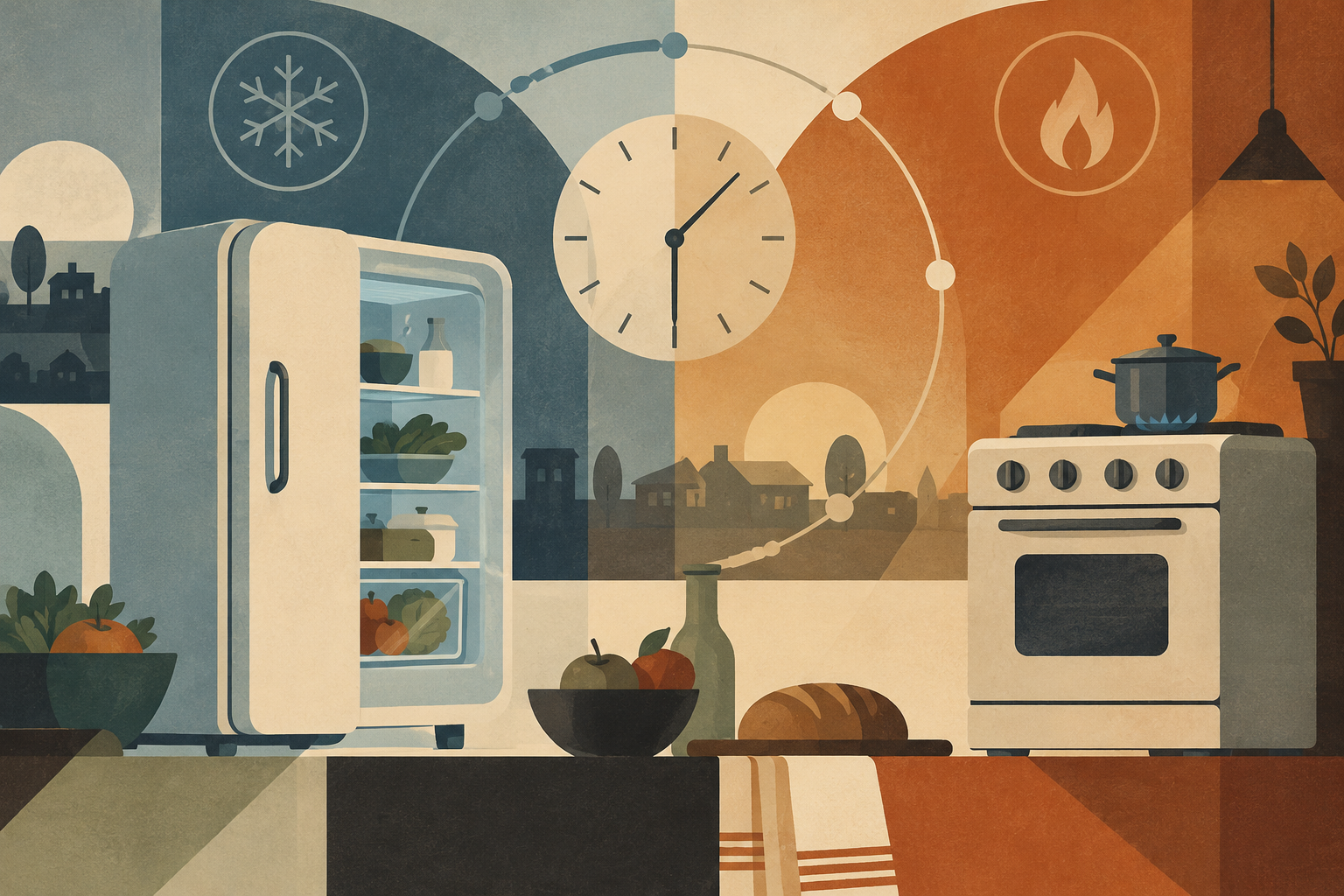
The usual narrative about domestic modernization in Argentina tends to focus on the 1970s as the definitive turning point. However, recent academic evidence suggests that the transformation of everyday life was a longer and more complex process. The work by F. Rocchi, published in 2022, examines the evolution of the consumption of durable goods, specifically electric refrigerators and gas stoves, covering the period from 1920 to 1970. This approach broadens the temporal perspective and allows us to understand how these objects were not simply technical tools, but agents of social change that reconfigured family routines.
The Temporal Scope of the Transformation
Rocchi's research challenges the idea that domestic modernization was an exclusive phenomenon of the 1970s. By extending the analysis to 1920, a line of continuity is revealed in which electrification and gasification began to penetrate urban sectors much earlier. This continuity is crucial for understanding that the adoption of these goods was not a sudden event, but a gradual process that developed over five decades. The availability of these objects varied significantly according to the access and socioeconomic conditions of each group, which prevents speaking of a national uniformity in the domestic experience.
Beyond Technique: The Social Dimension
The study highlights that the introduction of refrigerators and gas stoves was not just a technical change, but a profound transformation of social practices within the home. These objects reconfigured the management of time and food, altering family dynamics and daily routines. The research places this phenomenon in a broader context of studies on material life and food, highlighting how the availability of these goods influenced the daily decisions of Argentine families. This social perspective allows us to understand the impact of domestic technology on the structure of daily life, beyond its technical specifications.
Material Life as an Object of Study
The proliferation of consumption studies in areas such as the conditions of material life, food, and cooking has enriched the understanding of everyday history. Rocchi inscribes himself in this historiographical current, which seeks to understand how material objects shape human experiences. This approach allows analyzing the relationship between technology and society, revealing how durable goods not only facilitated domestic tasks but also transformed the expectations and cultural practices associated with life in the home. The research contributes to a more nuanced understanding of domestic modernization in Latin America.
Socioeconomic and Regional Variations
It is fundamental to recognize that the adoption of these goods was not homogeneous. The processes of electrification and gasification affected different sectors of the population unequally. Families with greater economic resources could access these goods earlier and in greater quantity, while other groups faced significant barriers. This inequality in access reflects the existing socioeconomic divisions in Argentine society at the time. Rocchi's research avoids generalizations about the entire population, emphasizing the importance of considering local variations and the specific conditions of each social group.
Historiographical Context and Current Relevance
Rocchi's work is framed in a historiographical tradition that values the history of everyday life as a fruitful field of research. Authors like C. Moreyra have proposed historiographical cuts to think about the history of everyday life, highlighting its interest and relevance. This perspective allows connecting the domestic experience with broader historical processes, such as industrialization, urbanization, and modernization. The current relevance of this study lies in its ability to offer a valuable historical context to understand the social dynamics of the time, as well as to reflect on the implications of domestic technology in contemporary life.
Limits of the Available Evidence
Although Rocchi's research provides a solid basis for understanding domestic transformation in Argentina, it is important to recognize the limits of the available evidence. Data on the consumption of durable goods may not fully capture the diversity of domestic experiences throughout the country. Furthermore, the lack of detailed information on the perceptions and practices of families may limit the understanding of how these objects were integrated into everyday life. The research is based on academic and statistical sources, which may not reflect the complexity of individual and local experiences.
Conclusion: A Comprehensive Look at Domestic Modernization
The evolution of durable goods in Argentina between 1920 and 1970 reveals a profound transformation of everyday life, mediated by the adoption of electric refrigerators and gas stoves. This process, far from being uniform, varied according to socioeconomic and regional conditions, reflecting the existing inequalities in society. F. Rocchi's research offers a valuable perspective to understand how domestic technology influenced the structure of daily life, contributing to a more nuanced understanding of modernization in Latin America. By broadening the temporal and social horizon, this study invites us to rethink the relationship between material objects and human experiences in the Argentine historical context.
- Decade
- 1970s
- Region
- Latin America
- Level
- Introduction
- Entities
- Argentina
Sources and references
- FAMILIA Y VIDA COTIDIANA, II.doi.org · 2026-10-19
- LOS PROTAGONISTAS DE LA VIDA COTIDIANA, IV.doi.org · 2026-10-19
- LA HISTORIOGRAFÍA DE LA VIDA COTIDIANAdoi.org · 2026-10-19
- la evolución de los bienes durables en Argentina, 1920-1970journals.openedition.org · 2026-10-19
- la evolución de los bienes durables en Argentina, 1920-1970www.researchgate.net · 2026-10-19
- la evolución de los bienes durables en Argentina, 1920-1970www.scielo.org.co · 2026-10-19
- Introducción a la historia de la. vida cotidianawww.memoriapoliticademexico.org · 2026-10-19
- Historia de lo cotidiano. La casa, la calle y la ciudad en ...portal.amelica.org · 2026-10-19