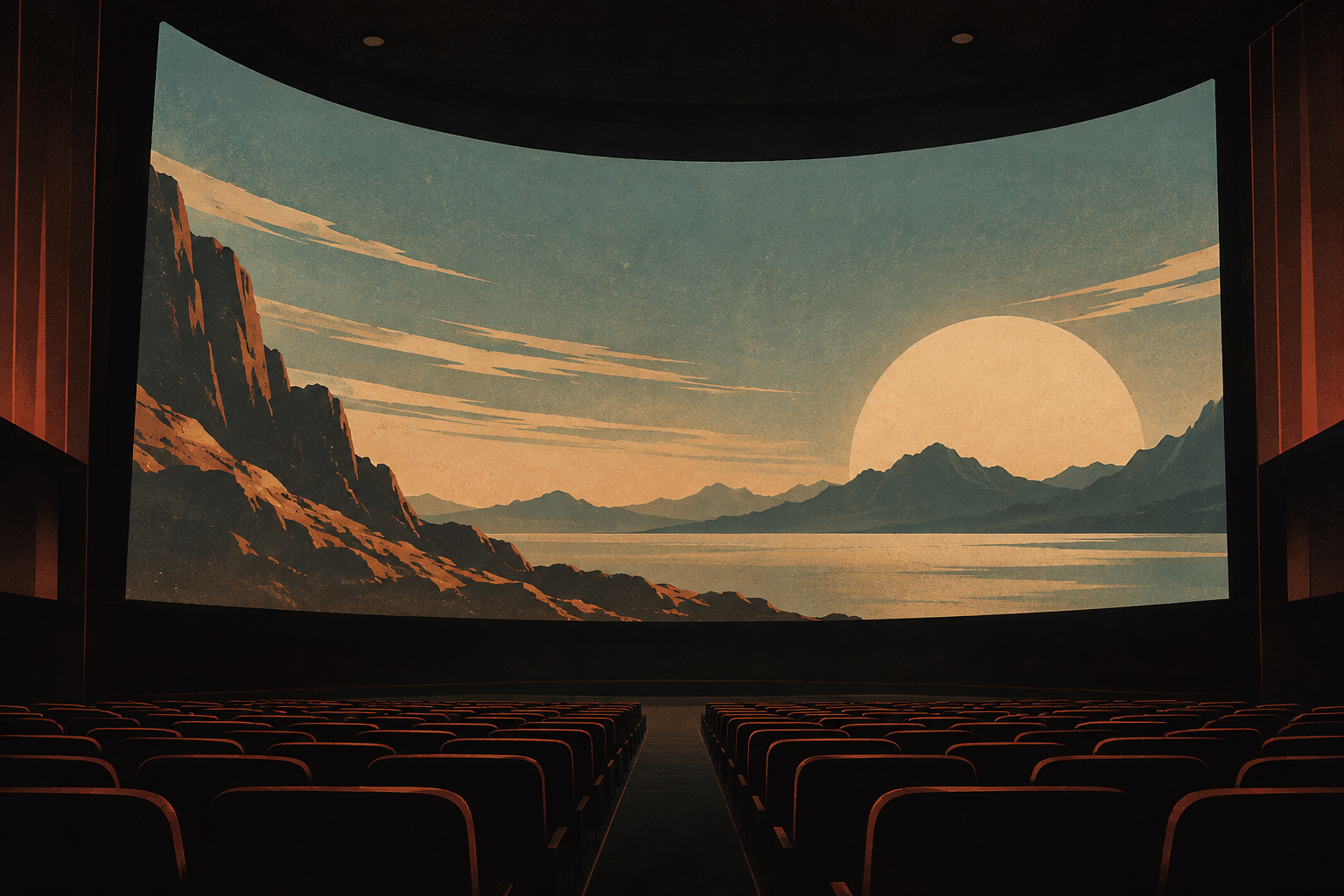
The 1970s were not just a period of narrative renewal in cinema, but a moment of profound transformation in the materiality of exhibition. While the industry consolidated its structures, the way audiences perceived the image was changing due to specific technological advances and a boiling cultural context. This article examines how the introduction of new projection formats and the evolution of visual expectations reconfigured the relationship between the viewer and the screen, a process that transcends the mere history of Hollywood studios.
The Impact of Scale on Perception
Historical evidence indicates that the introduction of formats like IMAX, projected on significantly larger screens, marked a milestone in the theater experience. Unlike standard projections, this technology altered viewer immersion by expanding the visual field. It was not merely a technical improvement, but a change in the sensory perception of cinema. The scale of the image became a narrative element in itself, conditioning how the projected content was received.
Cross-Influence Between Directors
In this scenario, the figure of George Lucas emerges as a key reference point. Records indicate that Lucas drew inspiration from Stanley Kubrick's special effects for works like Star Wars. This influence was not unidirectional or isolated, but part of a network of artistic exchanges that defined the aesthetics of the era. The redefinition of viewer visual expectations was a collective process, where one's technical innovation became another's visual language.
Beyond Narrative
Cinema reception in the 70s was not limited to plot or characters. It was deeply conditioned by projection technology and the cultural context of the time. Academic studies, such as those by Kristin Thompson and David Bordwell, underscore the importance of these technical and artistic changes. The materiality of exhibition, with its limitations and possibilities, was a determining factor in the cinematic experience, often as much as the script.
The Gestation of Home Video
Although home video was still in its infancy during this decade, it began to take shape as an alternative that would change the relationship between viewer and work. The transition to home consumption formats was not a sudden event, but a gradual process that would accelerate in the following decades. The theater experience, with its communal character and scale, faced the promise of broader and more personalized accessibility.
The Cultural Context of the Era
1970s cinema did not exist in a vacuum. It was immersed in a cultural context that valued experimentation and the breaking of previous conventions. The influence of directors like Kubrick and Lucas not only affected the industry but resonated in popular culture. The visual reconfiguration of the decade, as documented in other analyses, was a cross-cutting phenomenon that touched multiple aspects of cultural life.
Limitations of Available Evidence
It is important to note that the available information on this period has certain limitations. The data comes from secondary and academic sources that, while valuable, do not offer a complete view of all aspects of 1970s film exhibition. The relationship between projection technology and audience reception is a complex field of study that requires more research to be fully understood.
Conclusion
The 1970s laid the groundwork for the democratization of access to cinema, a process that would accelerate in the following decades. The materiality of theater exhibition, with its limitations and possibilities, was a key factor in this transformation. Understanding this period is not just an exercise in nostalgia, but an opportunity to reflect on how technology and culture intertwine to define our experience with art.
- Decade
- 1970s
- Region
- Global
- Level
- Enthusiast
- Entities
- No linked entities
Sources and references
- Capítulo cuarto. La «tercera vía» y el cine español middlebrow en la década de 1970doi.org · 2026-10-19
- Sobre Israel Rodríguez, El nuevo cine y la revolución congelada. Historia política del cine mexicano en los setentadoi.org · 2026-10-19
- CRONOLOGÍA DE LA HISTORIA DEL CINElas1000nochesyuna.com · 2026-10-19
- Películastranslate.google.com · 2026-10-19
- Las 50 mejores películas de los años 70, ordenadaswww.fotogramas.es · 2026-10-19
- Cine de terrores.wikipedia.org · 2026-10-19
- Festival Internacional de Cine de Mar del Plataes.wikipedia.org · 2026-10-19