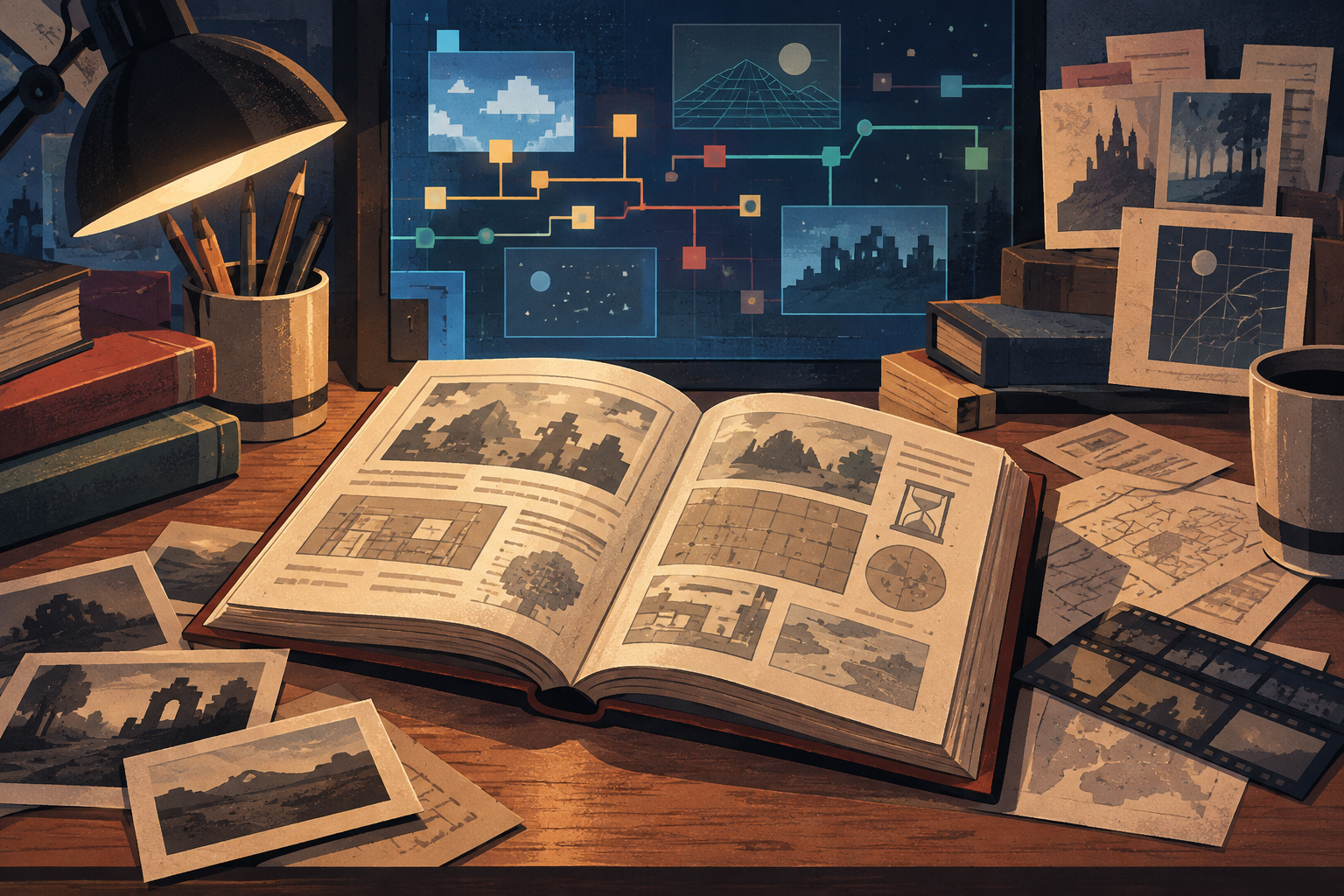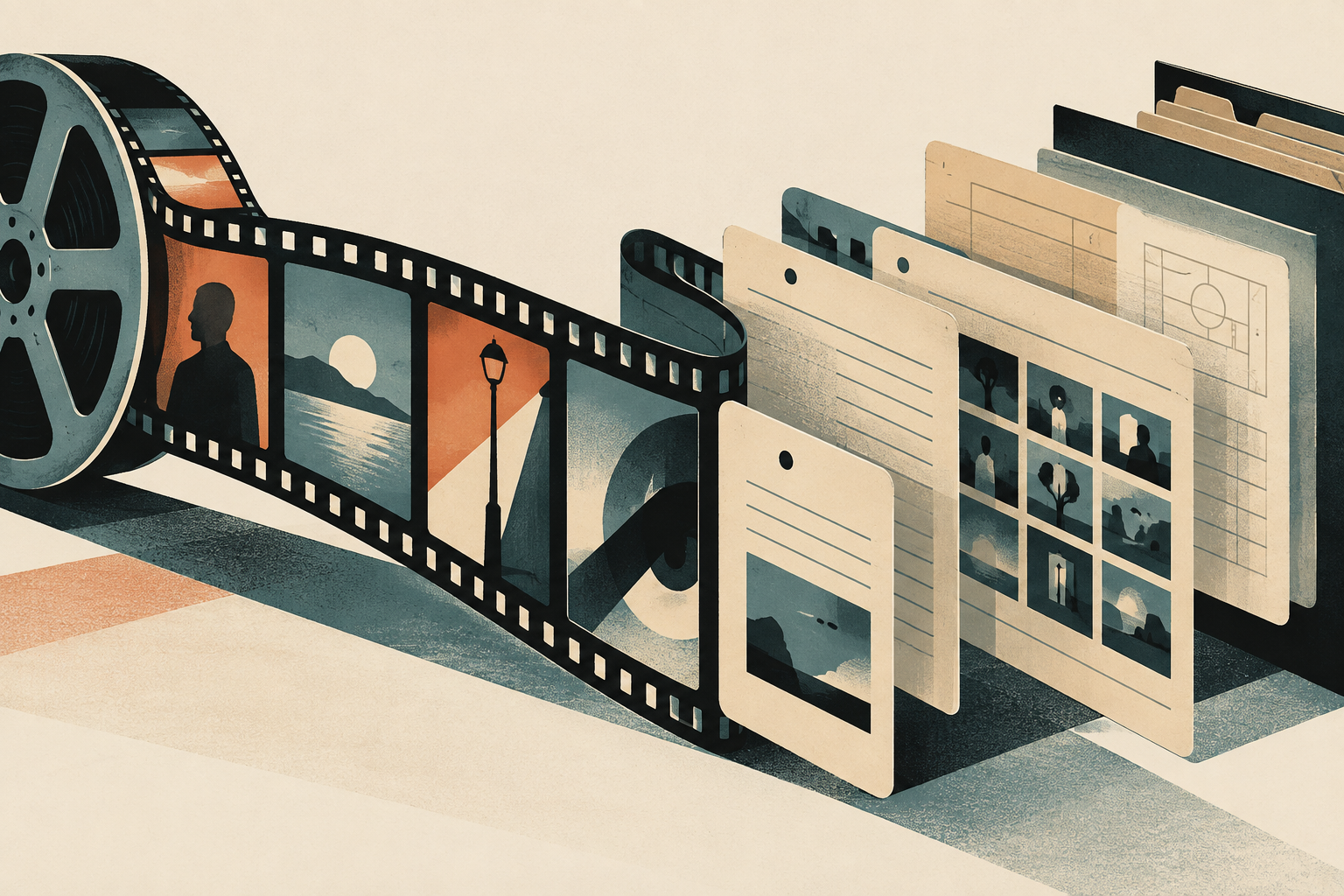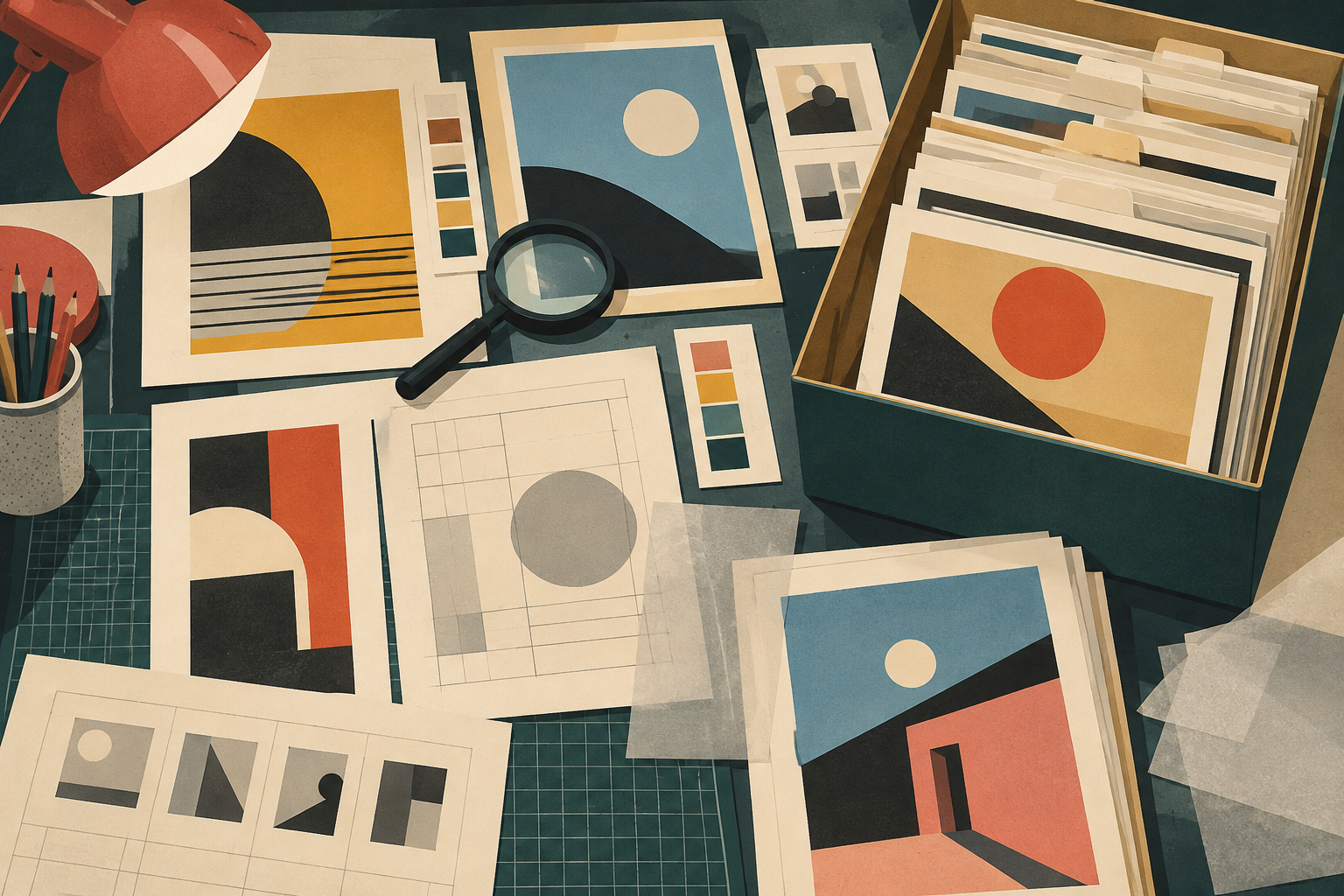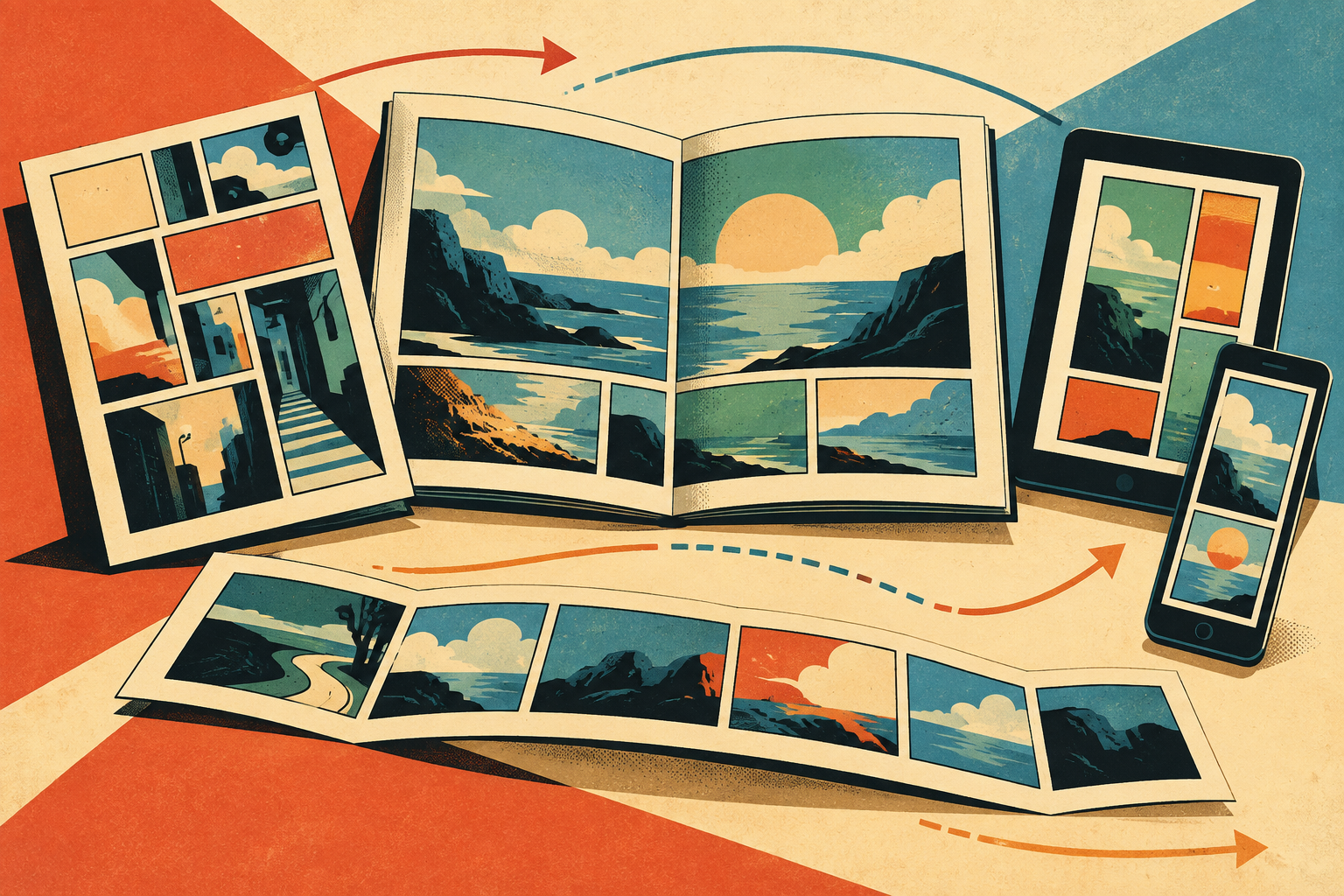
The format of a comic can recede from view while we read: we follow the panels and the story seems to take over. Yet a magazine, fanzine, mini-comic, album or graphic novel is also a distinct way of presenting printed material. A scholarly article by Rubén Varillas explicitly treats comics as a question of formats and lists these forms of publication. That list offers a useful starting point: rather than treating the medium as a neutral wrapper, ask what aspects of reading might be worth examining in each case. The available sources do not establish that a particular edition changed a story or its readers’ experience. They do, however, support questions that can be distinguished from conclusions requiring examination of the actual publications.
A material question
A comic page brings drawing, text and design together; reading it means attending to how they are presented. From that general description, one can investigate page size, panel arrangement and the relationship between one page and the next. These are analytical questions, not claims about a particular magazine or album. Varillas’s article title supports studying magazines, fanzines, mini-comics, albums and graphic novels as distinguishable formats, but the supplied bibliographic record does not include the full text or its detailed arguments.
Publishing also organizes
A change in format can be an important editorial question because it changes the object in front of the reader: a serial publication is not the same kind of object as an album. Without examining both, however, we should not assume what consequences that difference had for reading. To test it, researchers would need to identify comparable editions and examine pagination, dimensions, composition and sequence, distinguishing material changes from changes in content. The supplied material offers no matched examples that would justify claims that a change of format altered pacing, continuity or interpretation.
Circulation belongs to the context
A research record on the comics industry in Spain places the medium within popular culture and entertainment, while another scholarly text focuses on the context of comics. Their titles and summaries support considering publications within broader historical and cultural conditions. The information supplied here does not provide enough detail to reconstruct distribution channels, print runs or reading habits. That absence should not be turned into an assumed history of circulation. A focused study needs sources that describe the specific issue and its history.
From collection to access
A RetroPause article raises the transition of comics and magazines from ephemeral materials to collections, museums and digital access. This widens the question: preserving or digitizing a publication can make the object available for study, but does not by itself establish how it was originally distributed or read. A useful archive for comparing editions should make bibliographic details identifiable and allow pages to be consulted in context. The supplied summary presents the general problem; it does not specify which collections or digitization projects it documents.
What can be concluded
The evidence also includes a Museo del Prado notice about a comic by Sento consisting of seven stories. It is a documented example of a work connected to an institution, but the information provided does not describe its graphic decisions or make it evidence for a general rule about formats. Keeping that distinction prevents one individual case from being presented as a trend.
The conclusion, for now, is methodological: format deserves study alongside story, drawing and page design. The supplied bibliography supports that line of inquiry and identifies relevant publication categories; it does not by itself show which editorial changes modified reading. Answering that precisely requires comparing identified editions and describing what actually changed. This caution does not diminish the importance of the medium. It defines what can be claimed and turns an intuition about the printed object into a verifiable question.
- Decade
- 2000s
- Region
- Spain
- Level
- Enthusiast
- Entities
- Rubén Varillas
Sources and references
- El cómic, una cuestión de formatos (2): revistas de cómics, fanzines, mini-cómics, álbumes y novelas gráficasdoi.org · 2026-10-06
- Cuando una revista pasa a ser archivo: el cómic entre colecciónwww.retropause.com · 2026-10-06
- (PDF) Las exposiciones de cómics. Historia y contexto globalwww.researchgate.net · 2026-10-06
- El contexto de la historietarevistascientificas.us.es · 2026-10-06
- HISTORIETAS del MUSEO DEL PRADO, un cómic de ...www.museodelprado.es · 2026-10-06
- La industria del cómic en España: radiografía de ¿un mito ...arbor.revistas.csic.es · 2026-10-06