An advertisement often appears as a finished image: a message to be seen and understood, or remembered only partly. In an archive, the situation changes. The item sits alongside others, documents and decisions about cataloguing or display. This new company does not automatically reveal how it was made or what effect it had, but it does make another question possible: what does the image organise so that someone can read it?
From message to visual structure
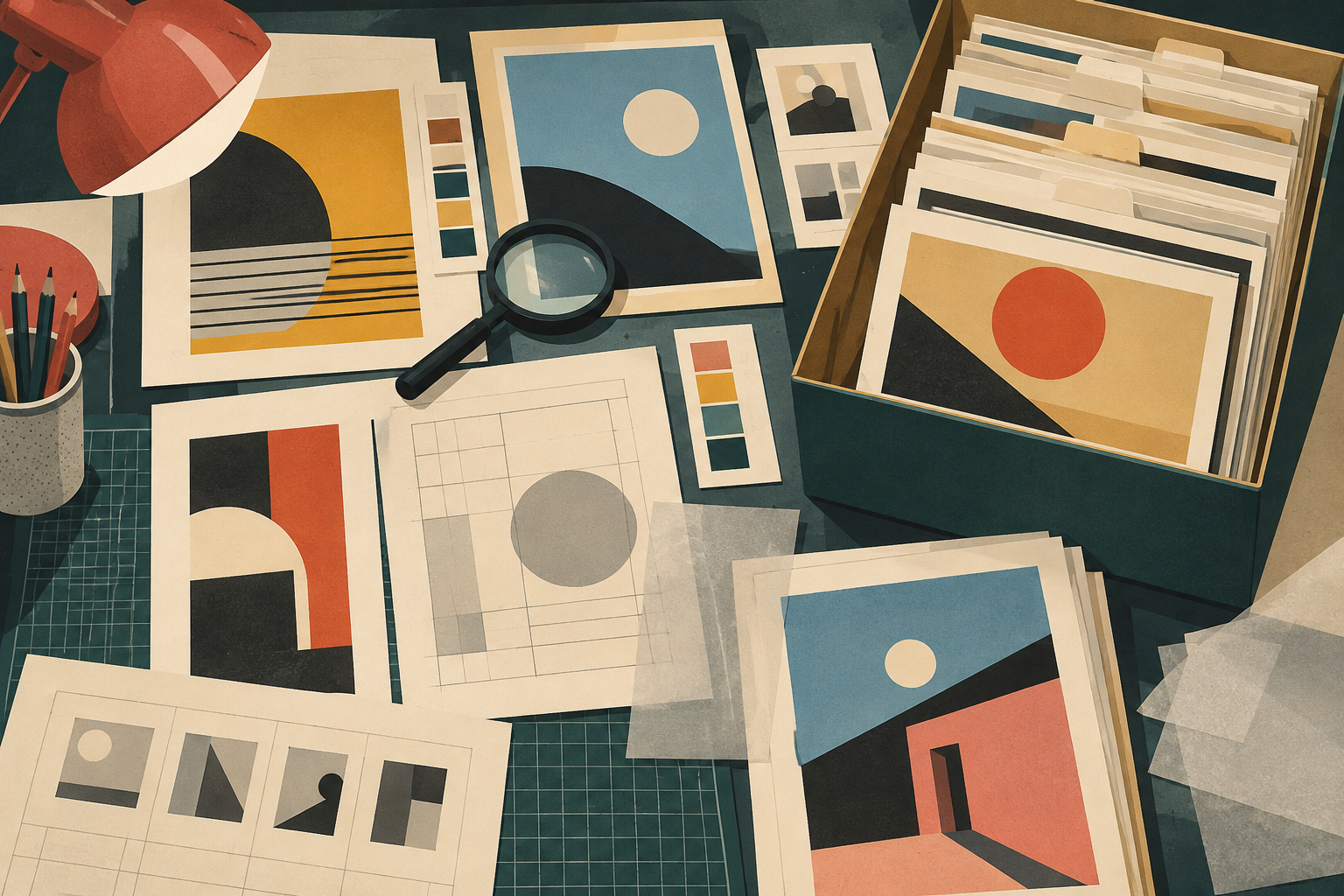
The general definition of advertising in the supplied evidence describes it as visual, written or auditory communication intended to inform, disseminate or persuade. That identifies a communicative intention, but it cannot by itself explain the specific choices in any one item. For that, we can attend to its visual language: which elements appear, how they are ranked, and how the composition relates text to image. These are analytical questions, not answers that can be attributed to a designer without evidence.
The source on outdoor advertising lists varied supports: posters, billboards, illuminated signs, banners and street furniture. The list matters because it reminds us that an item is not simply an image detached from use. Its support and location shape the reading experience. The same source identifies a shopfront as part of a business’s outdoor advertising. This does not establish a universal rule for the design of every storefront; it does show that the setting can form part of the message.
What changes when an item enters a museum
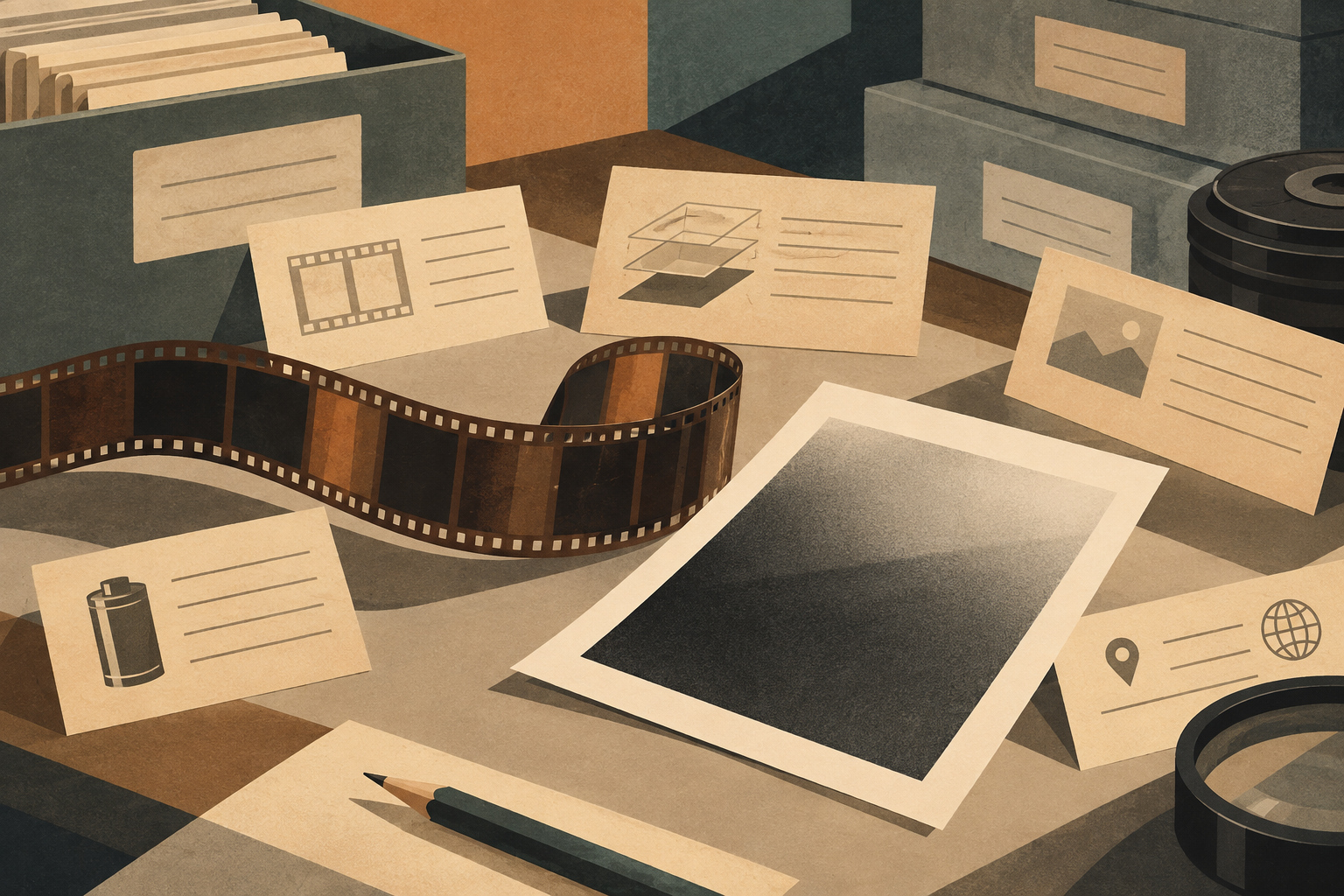
The MUVAP, described in an academic publication from the Complutense University of Madrid, was a virtual museum documenting the history of Spanish advertising and graphic design in Spain. This description helps us understand documentation and display as related but distinct operations: documentation preserves and presents material; display proposes a route through it. Selection and order can support comparisons, but should not be mistaken for a definitive account of an item’s production or reception.
A publication from Spain’s National Research Council on documentary advertising heritage discusses the value of that heritage and cites research on the MUVAP. Another source describes a centre devoted to preserving advertising heritage. Together, these sources support the importance of documents as research material. The supplied excerpts do not identify a particular campaign or, on their own, establish its commission, printing or circulation history.
Reading decisions without turning them into certainties
The functional question—what choices explain a given item—requires care. We can observe a hierarchy of elements or ask how a support relates to reading, but we cannot claim that a choice was made for a particular reason unless the archive provides evidence. A composition may look striking to a viewer today; that alone does not prove what its original purpose was. Description and interpretation should remain distinct.
The label “advertising” should not flatten differences either. Material can belong to different supports and situations. An outdoor advertisement, a graphic item shown in an exhibition and a document preserved in an archive share a broad field, but are not necessarily equivalent in function or context. Comparing them is useful when the comparison rests on observable features and makes missing information explicit.
The account has a design, too
A museum does not simply place objects together. The source on company museums presents design as a symbol of creativity and as cultural, social and economic testimony. A study of cultural marketing in museums, meanwhile, discusses the practice’s background and characteristics. These perspectives remind us that institutional presentation also creates a framework for reading. They do not prove that every exhibition has the same purpose or that a museum narrative is neutral.
The safest interpretation is specific: order, selection and context affect what we can compare. If documents about authorship, production or circulation are missing, the text should state that limit rather than cover it with an appealing but unsubstantiated story. This keeps the analysis useful: it makes visible the questions an item allows us to ask and those the archive has not yet answered.
One image, several readings
The archive shifts attention from the isolated advertisement to its relationships: with other supports, with documented history and with the way it is displayed. This reading helps distinguish observable choices from aesthetic labels and conjecture. It also restores design’s functional dimension: organising information and proposing a way to use or navigate an item.
What can be established here is limited but relevant. The sources describe advertising documentation initiatives, documentary heritage and museum presentation; they do not provide enough detail to assign intentions to particular advertisements. Taking that limitation seriously does not impoverish the reading. It makes it more precise: look at how an image is organised, ask for whom and on what support it is presented, and leave open the answers that the available evidence cannot settle.
- Decade
- 2000s
- Region
- Spain
- Level
- Introduction
- Entities
- Museum, MUVAP
Sources and references
- Evolución y aplicación del marketing cultural en los museosbid.ub.edu · 2026-10-05
- Los Museos de Empresasevemuseografia.com · 2026-10-05
- MUVAP (2001- 2016): museo virtual que documenta la ...revistas.ucm.es · 2026-10-05
- Centro de Documentación Publicitariawww.lahistoriadelapublicidad.com · 2026-10-05
- Diseño y publicidad en el museo: cuando el archivo también ...www.retropause.com · 2026-10-05
- Museos en la encrucijada entre negocio, espectáculo, ...www.cultura.gob.es · 2026-10-05
- Perspectivas sobre el patrimonio documental publicitario. Un ...redc.revistas.csic.es · 2026-10-05