Format is not a neutral label
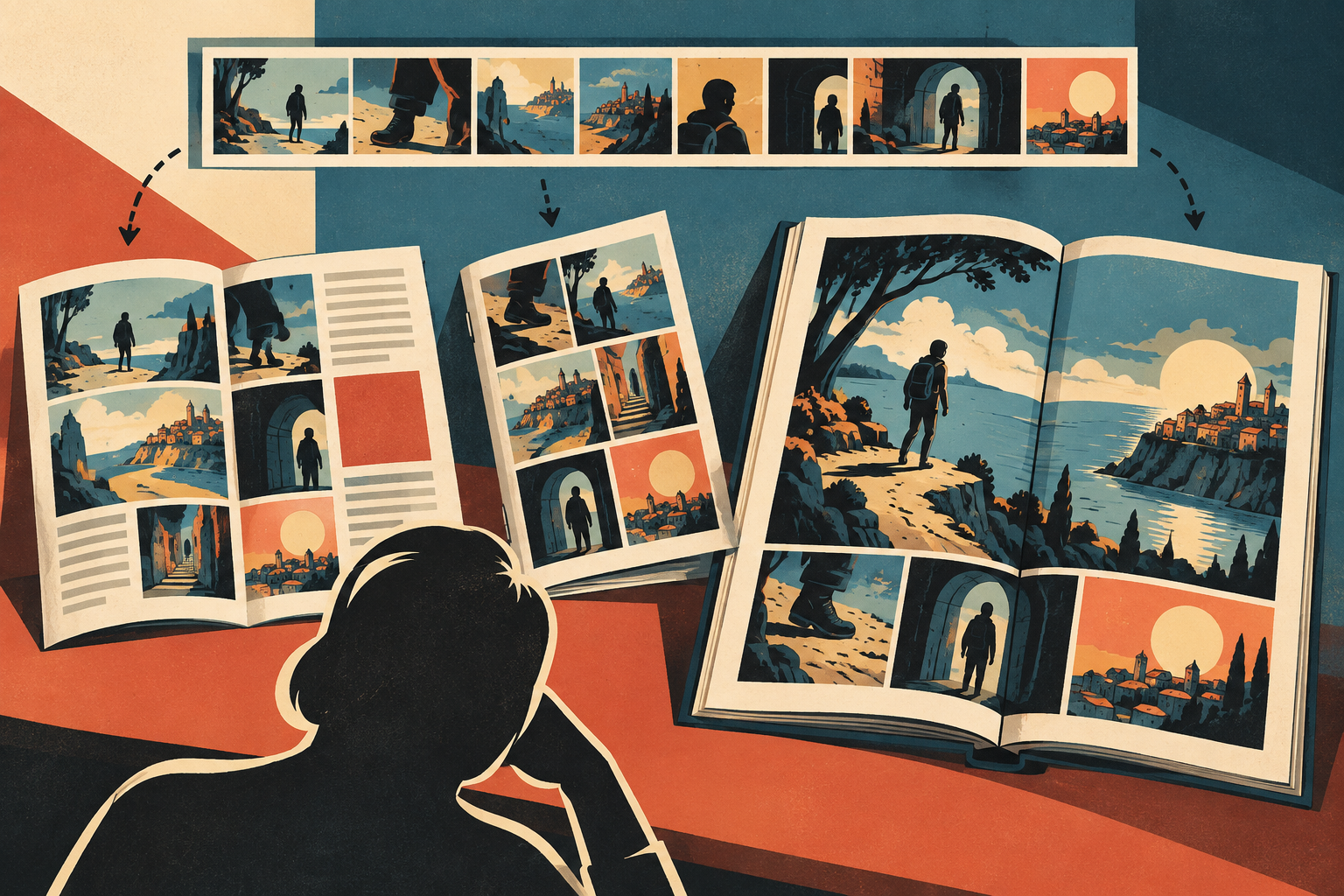
A graphic story does not reach its reader in the abstract. It comes in an object, within an editorial sequence and under particular conditions of circulation. Format can shape the reading experience before the story begins: it affects how a work is encountered, how its pages are organized and which unit seems meaningful—a part, a short publication or a volume. This does not mean that a medium dictates the narrative. It means that format deserves to be considered alongside drawing, text and page design.
Rubén Varillas’s article “El cómic, una cuestión de formatos (2)” offers a specific starting point. It distinguishes comic magazines, fanzines, mini-comics, albums and graphic novels as categories for analysis. The list alone does not reconstruct their histories or describe the features of each one. It does, however, suggest a useful question: what changes in reading when a work is published or encountered in a different format?
The unit of reading can change
A work may be read as a sequence of pages, as part of a periodical publication or as a volume considered as a whole. These are possibilities worth investigating, not automatic conclusions about every title in a category. Without specific examples and publishing documentation, it would not be rigorous to claim that a magazine always fragments a story, that an album always brings it to a close, or that a fanzine follows one single pattern.
The distinctions between formats instead help us frame precise questions. Where does the unit in front of the reader begin and end? Does the publication bring together different materials, or present a work as a whole? How important are size, pagination and page layout? Answering requires examining copies and publication records. A study’s title and bibliographic record can guide research, but they cannot replace material examination.
Circulation is a history that also needs evidence
Format connects a work to its circulation, but it does not explain circulation on its own. To understand how something reached readers, each case would need to be investigated: who published it, the context in which it circulated, which copies survive and what testimony or records support its history. The evidence available here does not provide those details for the formats named. It therefore cannot establish print runs, prices, audiences or distribution channels.
This caution does not make the subject less interesting; it makes it more verifiable. A collection, catalogue or digitization project can provide information about which materials have survived and how they are described. RetroPause has already explored this intersection in an article about magazines as archives, collections and objects of digital access. The approach is relevant to the study of format, provided that a publication’s history is distinguished from the history of its preservation: what survives in a collection does not necessarily represent everything that circulated.
Looking at the page without mistaking it for the whole object
Comics bring together narrative, drawing and page design. To study editorial change, we should examine how information is distributed across a page, while also recording each copy’s material context: format, sequence, completeness and verifiable publication details. A digital reproduction makes images and sequences available for inspection; it does not always preserve every feature of the printed object. Conversely, possessing a physical copy does not automatically reveal its reception or circulation.
Research on comics in museums and museum art publications about comics opens another line of inquiry: how these works are described, preserved and presented when they enter an institutional collection. The academic reference on museological and exhibition challenges, alongside information about comics in museum publishing catalogues, supports treating preservation and access as part of the context. Neither source, by itself, documents how a particular title was exhibited or preserved.
What the sources allow us to say
The supplied sources support a limited proposition: Varillas’s named formats can be used to compare editorial conditions and raise questions about reading, circulation and preservation. They also show that comics are discussed as collection and museum materials. They do not provide a comparative chronology of formats, document specific changes to a particular work or establish universal effects of an editorial decision.
That limit matters. Further research would need to compare identifiable publications, editions and copies, and add sources that establish when and how their variants appeared. Until then, it is more accurate to present format as one dimension of analysis than as a complete explanation of comics. Moving from magazine to album, from fanzine to mini-comic or from printed page to digital access can prompt different questions; the specific answer depends on the works and evidence available. Format participates in reading, but to understand exactly how, we have to return to the pages and their records.
- Decade
- Contemporary
- Region
- Global
- Level
- Enthusiast
- Entities
- Museum
Sources and references
- El cómic, una cuestión de formatos (2): revistas de cómics, fanzines, mini-cómics, álbumes y novelas gráficasdoi.org · 2026-10-02
- El cómic en los museos de arte. Retos museológicos y museográficosopenalex.org · 2026-10-02
- Cuando una revista pasa a ser archivo: el cómic entre colecciónwww.retropause.com · 2026-10-02
- Del archivo al lector: el valor de las colecciones de cómiclaregenta.org · 2026-10-02
- Cómics de museos españoles, publicaciones de artelaculturasocial.com · 2026-10-02