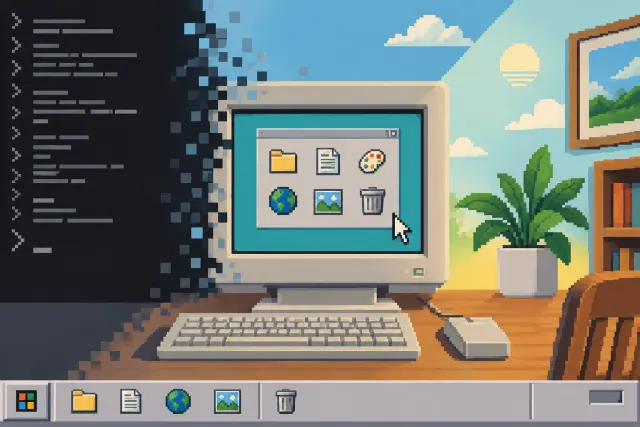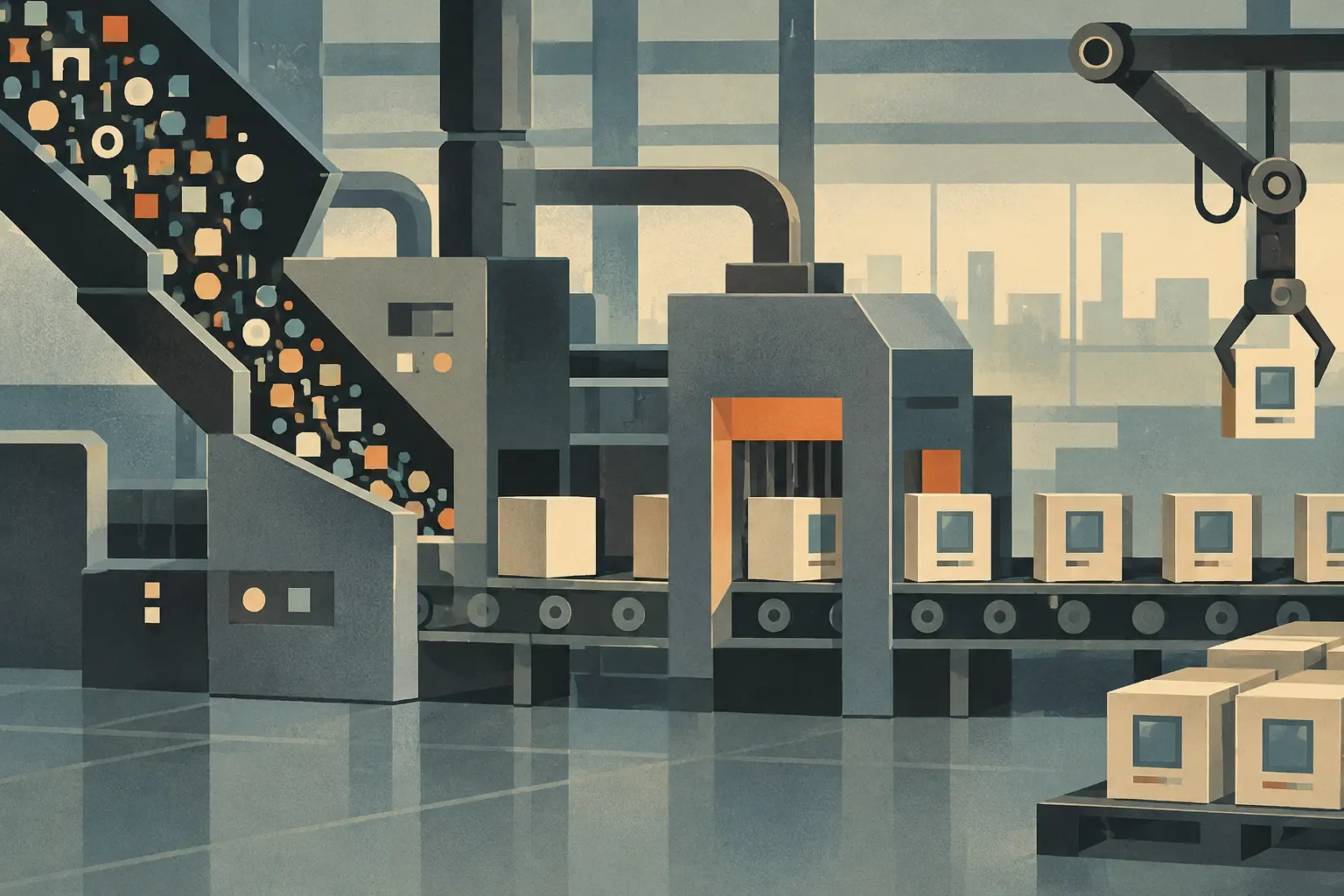
The 1990s marked a turning point in personal computing history, not just due to available hardware, but because of how software reached users. Product launches ceased to be isolated events and became an industrialized life cycle. This process, encompassing development, testing, and distribution, defined the quality and market strategy standards of the era. Understanding this dynamic is key to grasping how the tech industry professionalized and how the closed-license business model consolidated itself against free software alternatives.
The Structure of the Life Cycle
The software release life cycle was defined as the comprehensive process of creating, validating, and delivering a product. In the 1990s, this structure became more rigid and predictable. Tech companies began standardizing their workflows to ensure that each version, whether an operating system or an office application, met specific stability criteria before reaching the market. This industrialization allowed companies to scale operations and better manage risks associated with increasing program complexity.
The Dominance of Proprietary Software
In this context, proprietary software became the dominant standard. Defined as closed-source and non-free software, this model established that users acquired a usage license but not the right to modify or redistribute the source code. This legal and technical structure contrasted sharply with free software licenses, such as the GNU GPL, which promoted transparency and collaboration. The prevalence of the proprietary model reflected a business strategy centered on product control and revenue generation through license sales, an approach that drove the expansion of major tech corporations.
Contrast with Free Licenses
While the commercial sector moved toward closure, the free software movement gained ground in technical and academic communities. The GNU General Public License positioned itself as a philosophical and practical alternative, allowing users to access, modify, and share code improvements. This duality created an ecosystem where two opposing views of intellectual property coexisted. Proprietary software offered support and stability guaranteed by a corporate entity, while free software offered freedom and adaptability, though often requiring more technical effort from the end user.
Impact on Program Architecture
Technical limitations of the era, such as memory constraints and specific file formats, directly influenced the architecture of programs developed under this life cycle. Engineers had to optimize every line of code to run on limited hardware, resulting in more efficient but also more complex-to-maintain software. The standardization of file formats facilitated interoperability between applications, a crucial aspect for productivity in office and creative environments. This hardware-forced optimization contributed to the technical maturity of the tools that defined the personal computer era.
The Home User Experience
For the home user, the release process translated into a gradual adoption experience. Emerging interfaces, transitioning from command lines to graphical environments, required a learning curve that companies attempted to smooth through documentation and support. Physical distribution, via CD-ROM and floppy disks, was an integral part of the cycle, creating an installation ritual that reinforced the perception of software as a tangible product. This educational process was fundamental to the mass adoption of computing, transforming users from technical enthusiasts into habitual consumers of digital tools.
Industry Professionalization
The adoption of this industrialized life cycle was a key factor in the professionalization of the software industry. Companies began treating software development not as an individual art, but as an engineering discipline with defined phases and quality metrics. This paradigm shift allowed for the hiring of specialized teams and investment in testing infrastructure. The expansion of tech companies during the 1990s was closely linked to their ability to manage this life cycle efficiently, ensuring timely launches and reliable products that generated market confidence.
Legacy and Current Relevance
Although release dynamics have evolved toward subscription models and continuous updates, the foundations established in the 90s remain present. The distinction between proprietary and free software remains relevant in debates on privacy, security, and intellectual property. The industrialized life cycle laid the groundwork for industry scalability, allowing software to become a central component of the global economy. Understanding this historical period allows us to appreciate how design and business decisions from three decades ago continue to shape the current digital experience.
- Decade
- 1990s
- Region
- Global
- Level
- Introduction
- Entities
- No linked entities
Sources and references
- Ciclo de vida de lanzamiento de softwaretranslate.google.com · 2026-10-22
- Por Qué el Software Se Está Comiendo el Mundoa16z.com · 2026-10-22
- Momentos destacados en la historia de Microsoftnews.microsoft.com · 2026-10-22
- Proprietary softwaredbpedia.org · 2026-10-22
- GNU General Public Licensedbpedia.org · 2026-10-22