Storage is not closure
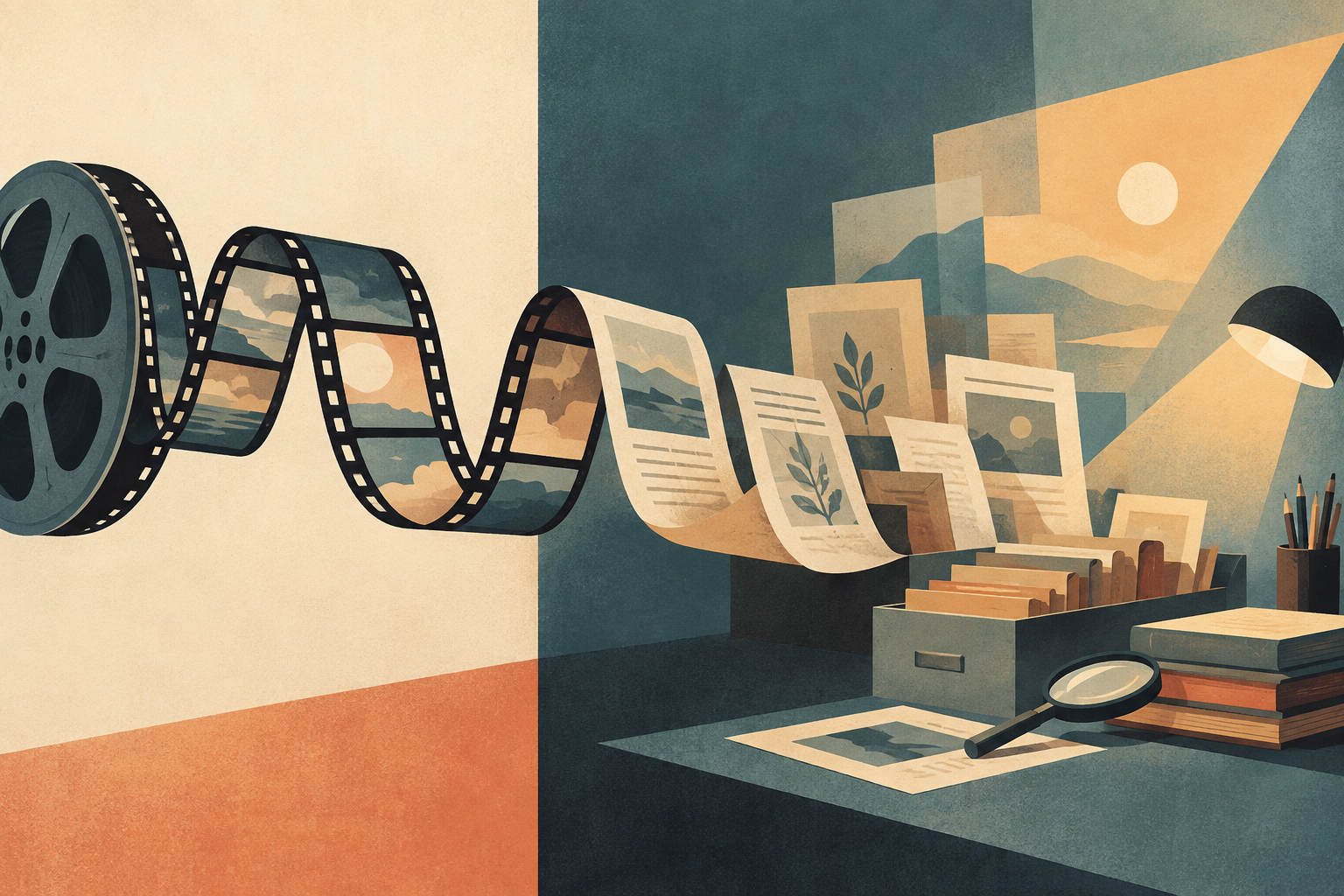
The word “archive” can suggest a repository where films are kept safe and still. Yet the materials gathered here on cinema and archives point to a wider framework: preservation, research and creation appear in relation to one another, not necessarily as separate stages but as different ways of engaging with cinematic remains and documents. The dossier Cine y el Archivo: Investigación, preservación, creación places precisely this intersection at the centre of debate.
That idea does not justify claiming that every archive produces new works, or that every creative use constitutes preservation. It does offer a useful question: what changes when material is considered not only something to be safeguarded, but also an object of study, circulation or interpretation?
Archival material as a question
A session described in the UNAM publication was titled “Los usos y potencias del material de archivo en el cine” (“The uses and potential of archival material in cinema”). The available summary mentions a proposed conceptualisation related to the “erotics of the archive” and to theorising developed from practice. The supplied information does not allow us to reconstruct the full argument or assign a precise definition to the participants.
The title does, however, indicate a shift in emphasis: the archive is not presented simply as a store of available images, but as something that requires thought about how its materials are found, interpreted and brought into relation. This is a reading of the session’s stated emphasis, not an exhaustive account of its contents.
Preservation means distinguishing supports
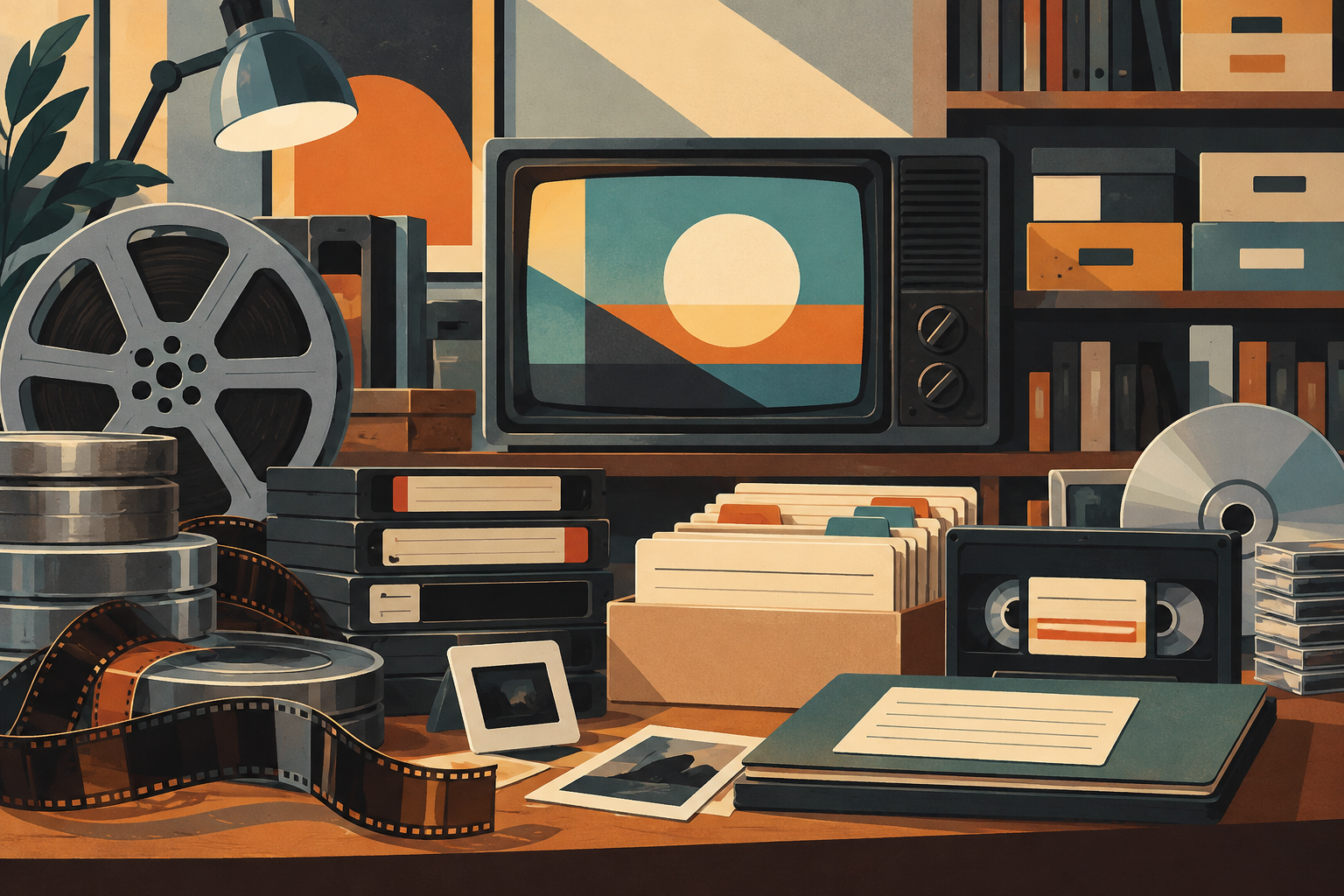
The conservation excerpts stress the importance of keeping original negatives and having a screening copy, as well as caring for both. They also mention learning about analogue and digital dimensions. These details point to an essential distinction: preserving a film does not necessarily mean keeping only one version or resolving every question of access once and for all.
The introduction to La conservación del patrimonio cinematográfico en los museos places preventive conservation and direct intervention within a field that includes film and audiovisual heritage, alongside other cinema-related cultural objects. The excerpt does not give specific procedures, so it should not be turned into a technical manual. It does help show that “cinema heritage” may encompass more than the projected print.
Memory, history and appropriation
The volume Archivo, memoria y presente en el cine latinoamericano brings together keynote lectures and papers from a meeting of film researchers held in Bogotá from 31 October to 2 November 2012. Its title and description place the archive in relation to memory and the present; one identified contribution examines cinema in the educational and cultural project of the Liberal Republic, from 1930 to 1946.
Another cited chapter addresses latent images, remains and spectres in Argentine and Chilean films; another considers post-dictatorship Chilean cinema through Archipiélago and Amnesia. These titles document specific lines of research but are not enough to summarise the chapters’ arguments. Taken together, they do show that archival material can be studied in relation to political history, memory and cinematic forms, rather than reduced to a neutral collection of images.
What the archive cannot settle
The existence of debates about preservation does not prove that all materials survive, that they are accessible, or that conditions are the same across institutions and countries. Nor does it reveal which images are missing. Such questions require catalogues, institutional policies and documented testimony not included here.
Caution matters because the word “archive” can imply completeness: it may suggest that what has been kept represents everything that happened. The cited material supports a more limited and more productive claim: the archive is also a field of research and discussion, and the publications connect its study with preservation, memory and creation.
An open-ended practice
Thinking about cinema through its archives means attending both to the supports and to the questions asked about them. Preserving originals and copies, studying the uses of archival material, and placing images in historical debates are related tasks, but they are not interchangeable. The archive does not bring a film’s life to a close: it can open new readings, provided we distinguish what is documented from what is interpreted, and what has been preserved from what remains unknown.
- Decade
- Contemporary
- Region
- Latin America
- Level
- Enthusiast
- Entities
- No linked entities
Sources and references
- EL CINE EN EL PROYECTO EDUCATIVO Y CULTURAL DE LA REPÚBLICA LIBERAL, 1930-1946doi.org · 2026-09-29
- Archivo, memoria y subversión. El cine chileno de postdictadura: Archipiélago y Amnesiadoi.org · 2026-09-29
- Archivo, cine, política: imágenes latentes, restos y espectros en films argentinos y chilenosdoi.org · 2026-09-29
- Cine y el Archivo: Investigación, preservación, creaciónconcentrica.cua.uam.mx · 2026-09-29
- Cine y archivo: de la difusión de su preservación a la ...udir.humanidades.unam.mx · 2026-09-29
- 0B - La conservación del patrimonio cinematográfico en los ...trea.es · 2026-09-29