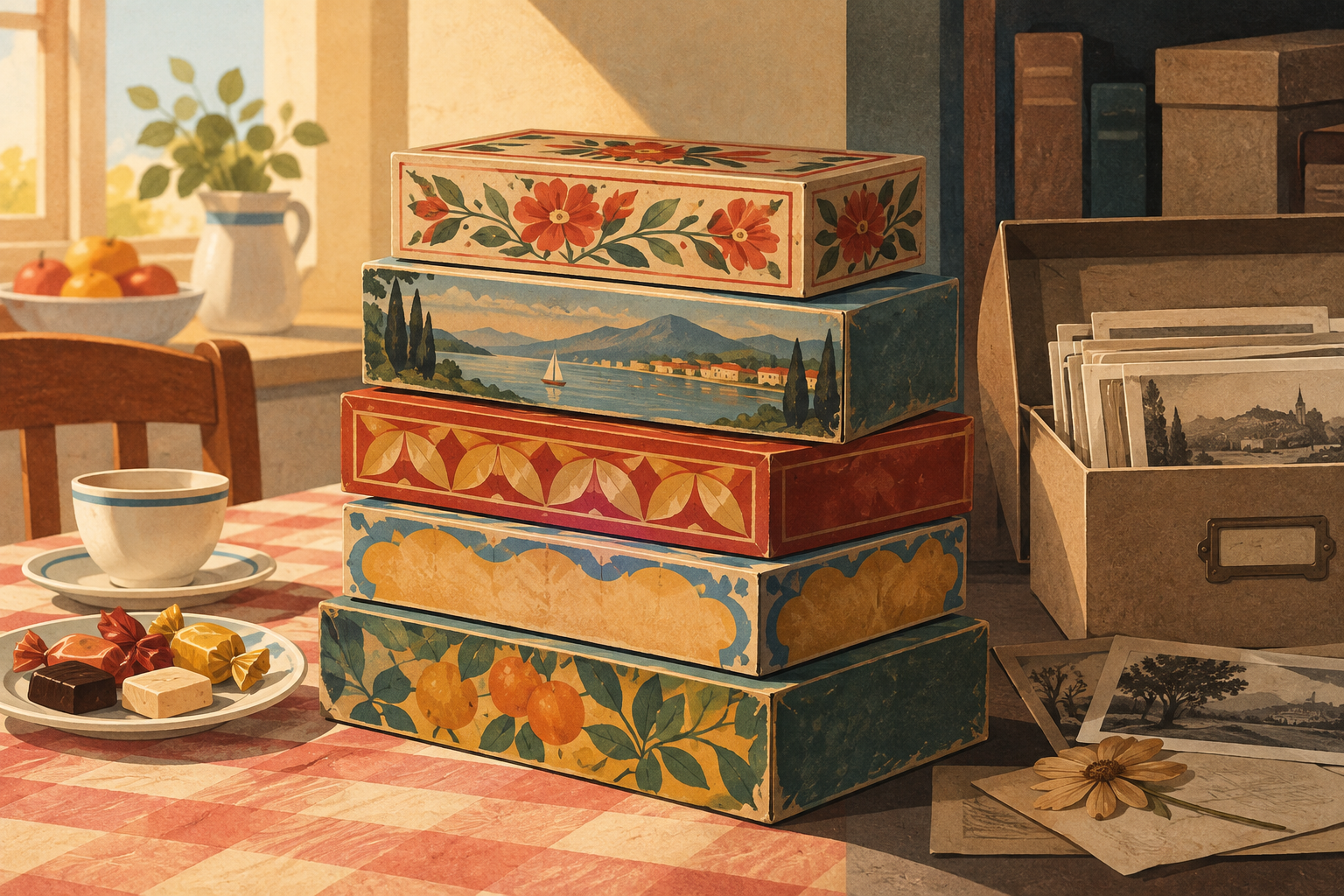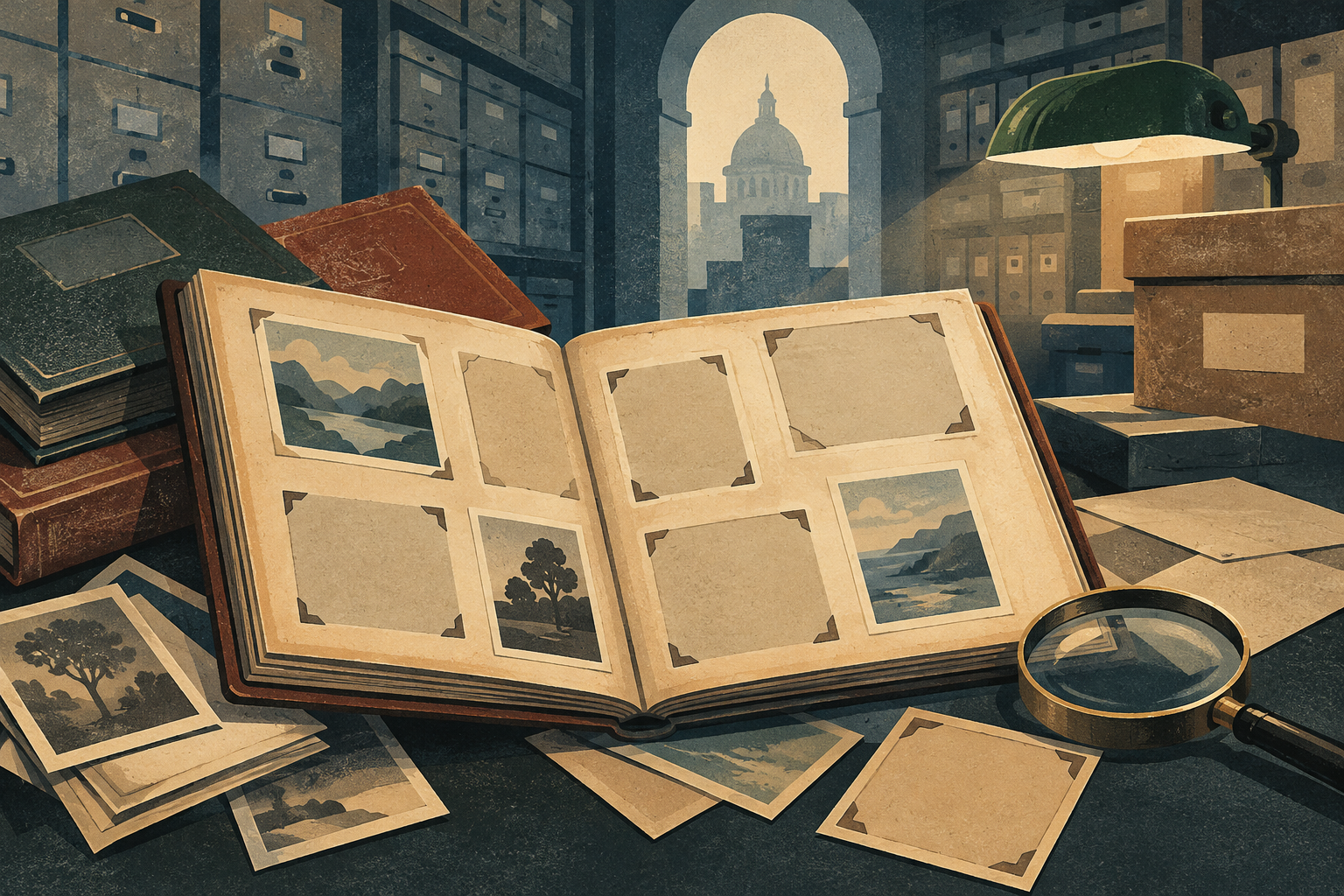
When a sticker album leaves the kitchen table or the shelf of a child's room to enter a museum deposit, its nature changes radically. It ceases to be an object of everyday use, marked by the hands of its collectors and the conversations of exchange, to become a research artifact. This transition is not neutral; it implies a recontextualization that, while allowing physical preservation, often strips the object of the network of social practices that gave it meaning. The archive, in this case, is not just a container of pieces, but a system of interpretation that decides which aspects of the collectible are relevant and which remain in the shadows.
The Transformation of the Everyday Object
The sticker album, especially in the Spanish context of the 1980s and 1990s, was much more than a pastime. It was a social ritual that structured school life and neighborhood relationships. Available evidence suggests that these objects, when cataloged, lose that relational dimension. Institutional records tend to focus on physical identification: the series, the year, the state of conservation. However, the history of collecting also resides in the practices of exchange, in the informal economy of school hallways, and in the way children negotiated the value of each piece. Upon entering the museum, the album becomes a static document, a photograph of a moment, but loses the ability to tell the living dynamic that surrounded it.
The Role of Digital Catalogs
Platforms like CER.es (Collections in a Network) represent a significant advance in the accessibility of these objects. They allow researchers and collectors to visualize pieces that would otherwise remain hidden in warehouses. However, digitization has its limits. A catalog identifies series and variants, but rarely captures the complexity of local editions or undocumented reprints. Searching for a 'sticker album' in these systems returns results that, while precise in their metadata, may omit crucial nuances for identifying specific variants. The catalog is an identification tool, not a source of complete cultural context.
Visual Documentation and Its Gaps
The visual documentation of collections, as described in museum protocols, has as its main purpose the identification and recording of the state of objects. High-resolution photographs allow the study of wear, stains, or repairs. But this technical gaze, while necessary, is insufficient to understand the object in its entirety. A photograph of an album does not show who used it, how it was completed, or what it meant to its owner. Visual documentation is a mirror that reflects the surface, but not the depth of the human experience associated with the collectible. In many cases, what is missing in the image is what matters most for the social history of the object.
Conservation as an Act of Selection
Conserving a sticker album involves making decisions about what is kept and what is discarded. Paper, the support for stickers, is fragile and susceptible to degradation. Conservation protocols, such as those applied in Jesuit or institutional museums, prioritize physical integrity. However, this priority may conflict with the authenticity of use. An album that has been handled, folded, or exposed to light has a history that strict conservation might erase by trying to 'clean' or 'stabilize' the object. Conservation is not just a technical process, but an ethical choice about which aspect of the past we want to preserve. Sometimes, imperfections are the most valuable proof of the object's authenticity.
Cultural Context and Collective Memory
Sticker albums are mirrors of the culture of their time. They reflect fashion brands, popular sports, television series, and the social values of the era. In Spain, for example, albums from the 80s and 90s are intrinsically linked to the democratic transition and the explosion of mass consumption. When studying these objects in an archive, it is crucial not to lose sight of this context. The album is not just a collectible object, but a document of everyday life. Ignoring this aspect reduces the object to an aesthetic curiosity, losing its potential as a source of social history. Collective memory is built through these objects, and the archive must be aware of its role in that construction.
Limitations of Available Evidence
It is important to recognize that the evidence available for this analysis is limited. There is no specific data on exchange practices in Spanish schools in the 80s, nor detailed studies on paper degradation in sticker albums. The cited sources, such as visual documentation protocols or museum catalogs, offer a general view, but do not allow a detailed reconstruction of collecting practices. This limitation does not invalidate the analysis, but it obliges us to maintain epistemological caution. We cannot assert with certainty how these albums were used in all contexts, or what variants existed without record. Future research should focus on the recovery of oral testimonies and the material analysis of objects to complete the picture.
Conclusion
The sticker album, upon entering the archive, becomes a document that reveals both what is preserved and what is lost. Digital catalogs and visual documentation are essential tools, but they are not sufficient to capture the complexity of these objects. Conservation must balance physical integrity with the authenticity of use, and analysis must go beyond identification to explore the cultural context. Only then can we fully understand the value of these collectibles not only as collection pieces, but as witnesses to an era. The archive is not an end, but a starting point for deeper and more nuanced research.
- Decade
- 1990s
- Region
- Spain
- Level
- Collector
- Entities
- Museum, Televisión
Sources and references
- Conservación y Restauración del Patrimonio Cultural en soporte Papel - Museo Jesuítico Nacional de Jesús Maríadoi.org · 2026-10-13
- CER.es Colecciones en Red - Ministerio de Culturaceres.mcu.es · 2026-10-13
- ARCHIVOS DE LOS MUSEOS ESTATALESwww.cultura.gob.es · 2026-10-13
- Archivos de Museo: Funcionamientoevemuseografia.com · 2026-10-13
- protocolo-documentacion-visual.pdfwww.ibermuseos.org · 2026-10-13
- MACVE. Museo del Álbum de Cromos Villa de Estadillaculturadearagon.es · 2026-10-13