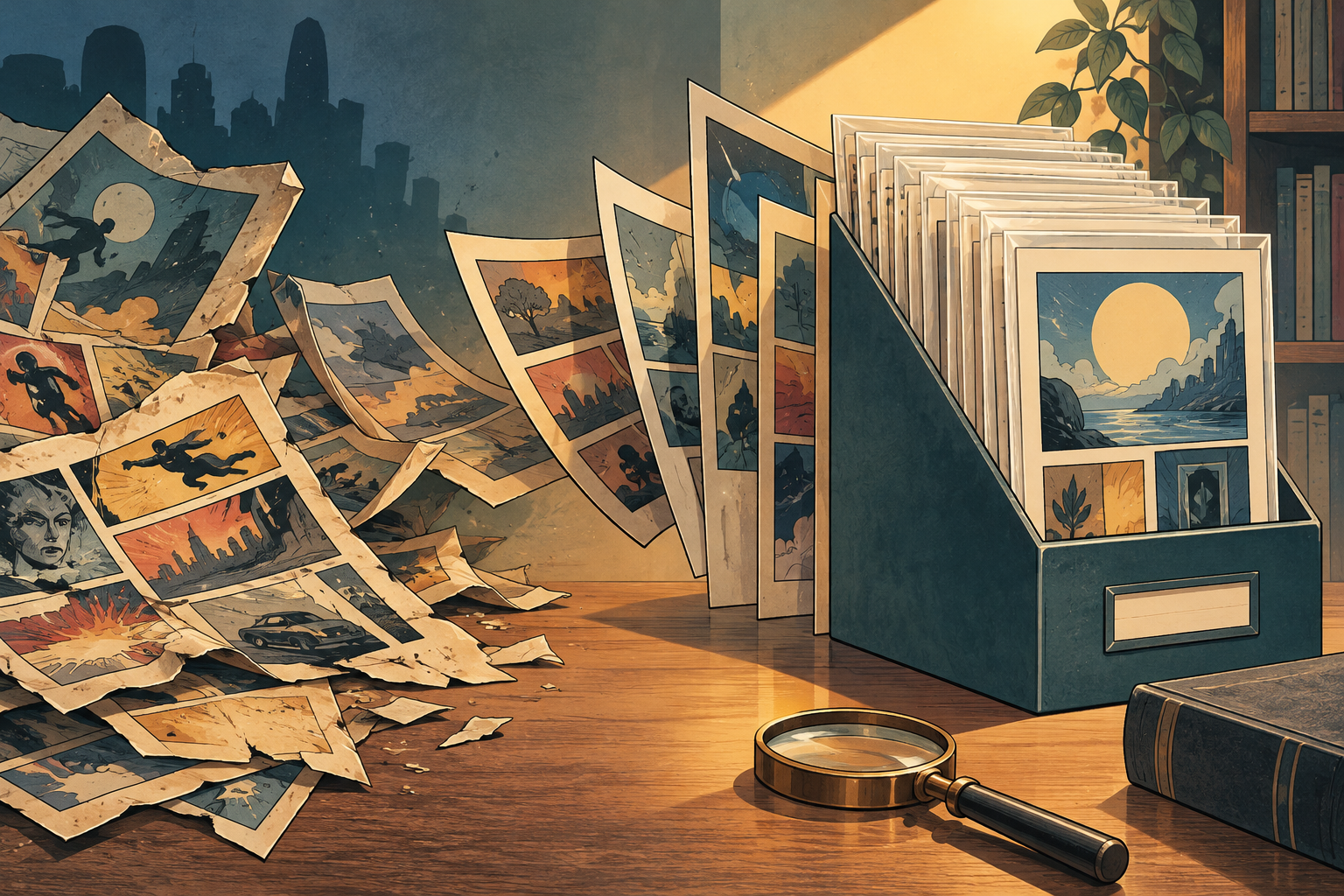
For a long time, much of comics publishing circulated as reading for immediate consumption. A magazine could pass from hand to hand, be read and then left behind; its physical fragility reinforced the idea that the story was in the pages, not in the particular copy. The move from newsstand to archive changes that perspective. Once a collection is preserved, comics become more than narrative or entertainment: they are also objects through which publishing formats, editorial choices and production contexts can be studied.
This shift neither erases comics’ popular origins nor requires replacing everyday reading with solemn contemplation. Rather, it invites us to recognize that print culture has several layers. Narrative sequence matters, but so does the format that carries it, the edition that reached readers and the conditions under which the material survived. Treating comics as cultural heritage expands the question: not only what a work tells, but what traces it retains of its circulation.
From quick reading to material memory
Research on comics collecting and conservation describes early comics as publications conceived to be read and discarded. That account helps explain why many copies need care, but it should not become a universal rule for every comic or every period. The available evidence indicates an originating tendency, not a complete history of every market or format.
Material form carries information that plot alone cannot. A magazine, fanzine, minicomic, album and graphic novel are not interchangeable containers: Rubén Varillas’s research on comics formats points to precisely this diversity. A particular edition can itself be an object of study. Preserving copies keeps open the possibility of examining how stories were presented and organized, rather than reconstructing them only through summaries.
Cultural recognition and its mediators
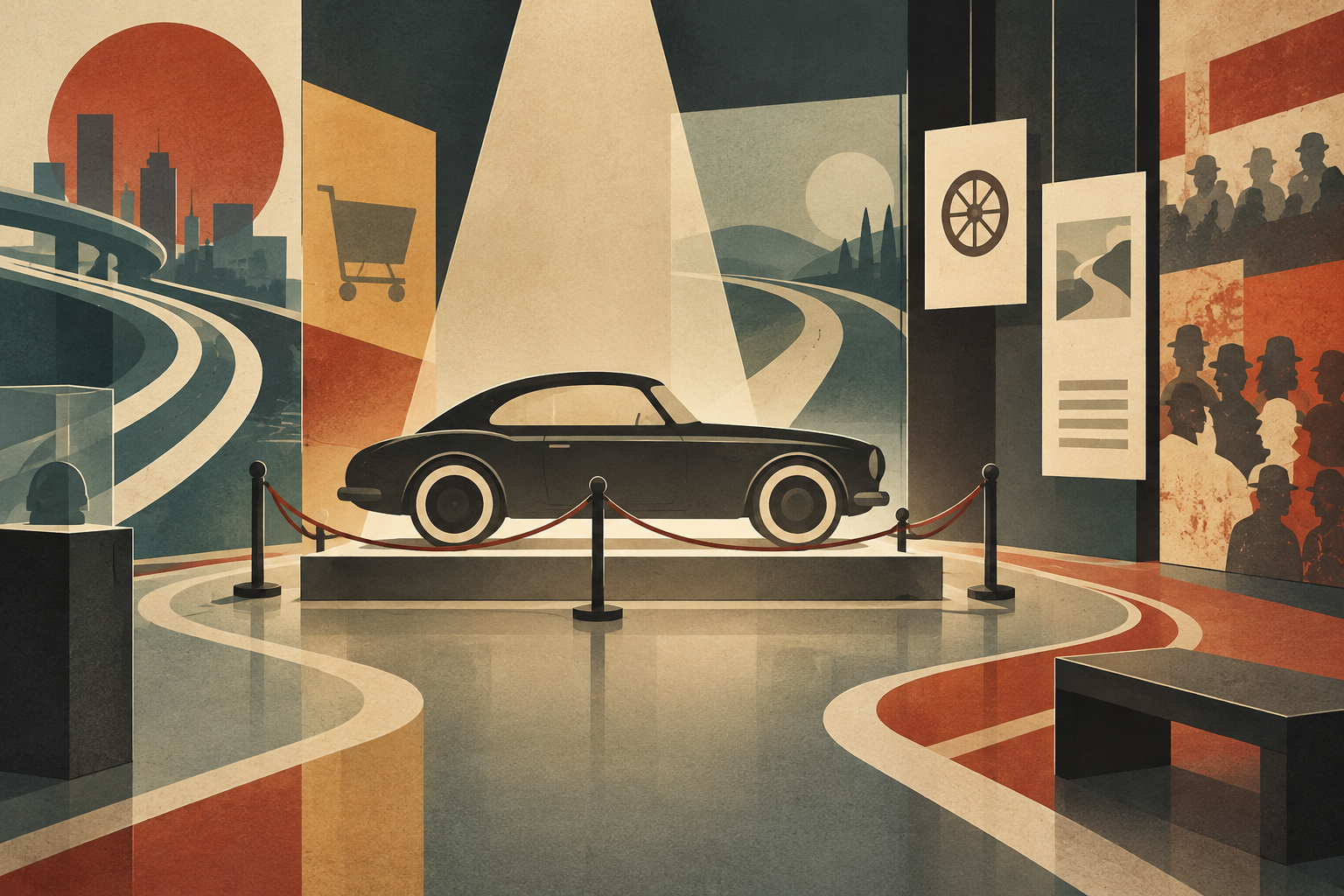
Comics have been exhibited since their early history, although that continuity can seem recent. Research into the history and global context of comics exhibitions highlights a useful paradox: presenting comics publicly is not new, but placing them within institutional narratives can make their artistic and historical value more visible. An exhibition can serve both as a space for reading and as a framework for recognition, though a show alone does not guarantee the preservation of a collection.
Research and heritage institutions also play a part. In an event devoted to the value of comics collections, scholars Álvaro Pons and Julio Gracia were announced as discussing comics as cultural and artistic heritage and the importance of preserving them. The evidence supports that description of the event, but not specific conclusions beyond what was announced. In Spain, the institutional declaration cited in the materials recognizes the value of comics, their history and diversity, and their importance in the present. It signals a shift in status, not a detailed account of conservation measures.
Collections make the scale visible
One example in the materials comes from the Barrio Yungay area of Santiago, Chile. A post about a cultural exhibition says that a collection there included more than 400 original works by various artists and an archive of 3,000 magazines. Those figures suggest the possible scale of a collection, but the available information does not establish its current condition, ownership, storage arrangements or full scope.
The example matters without being treated as a universal model. It reminds us that comics preservation involves different objects: printed publications and original works, whose needs and histories may not be the same. Collections make consultation and research possible, but they require decisions about cataloguing, access and physical care. Without specific documentation, it is not possible to say what protocols any given institution or archive follows.
Preservation means more than storage
Preservation requires attention to the vulnerability of paper and inks, as well as environmental factors such as humidity and light. These risks show why an archive is not a passive storehouse: conservation means maintaining conditions that limit deterioration and keep objects available for consultation. The evidence gathered identifies these general challenges but does not specify the techniques, materials or standards used for individual collections.
Digitization and academic databases can widen access and make materials easier to locate. A digital reproduction, however, does not preserve every property of the printed copy. It cannot replace the physical support, its characteristics or the opportunity to study a particular edition in its original form. Access and preservation are therefore not opposing choices to be settled in favor of one or the other. The task is to facilitate consultation without mistaking the copy for the original.
A heritage still being documented
The transformation of comics into heritage is not a uniform journey from neglect to recognition. The available materials point to several routes—research, exhibitions, institutional declarations and collections—but do not provide a complete chronology or comparable measures of their reach. Nor can they establish how many copies have been lost, which conservation policies are most common or how circumstances differ between countries. These limits matter: they prevent a cultural trend from being presented as a settled history.
What can be said is that preservation shapes what future generations will be able to study. If publications and their material contexts survive, comics can be read as narrative and as a history of formats, editions and circulation practices. The move from newsstand to archive does not turn every magazine into an untouchable artifact. It recognizes that even objects made for a short life may carry cultural information worth keeping available.
- Decade
- 2000s
- Region
- Global
- Level
- Enthusiast
- Entities
- Rubén Varillas
Sources and references
- El cómic, una cuestión de formatos (2): revistas de cómics, fanzines, mini-cómics, álbumes y novelas gráficasdoi.org · 2026-10-15
- Del archivo al lector: el valor de las colecciones de cómiclaregenta.org · 2026-10-15
- (PDF) Las exposiciones de cómics. Historia y contexto globalwww.researchgate.net · 2026-10-15
- 🎨 Ven al Centro Cultural Las Condes a conocer la muestra ...www.instagram.com · 2026-10-15
- Ministerio de Culturawww.facebook.com · 2026-10-15
- coleccionismo y conservación del cómic en estados unidos ...riull.ull.es · 2026-10-15