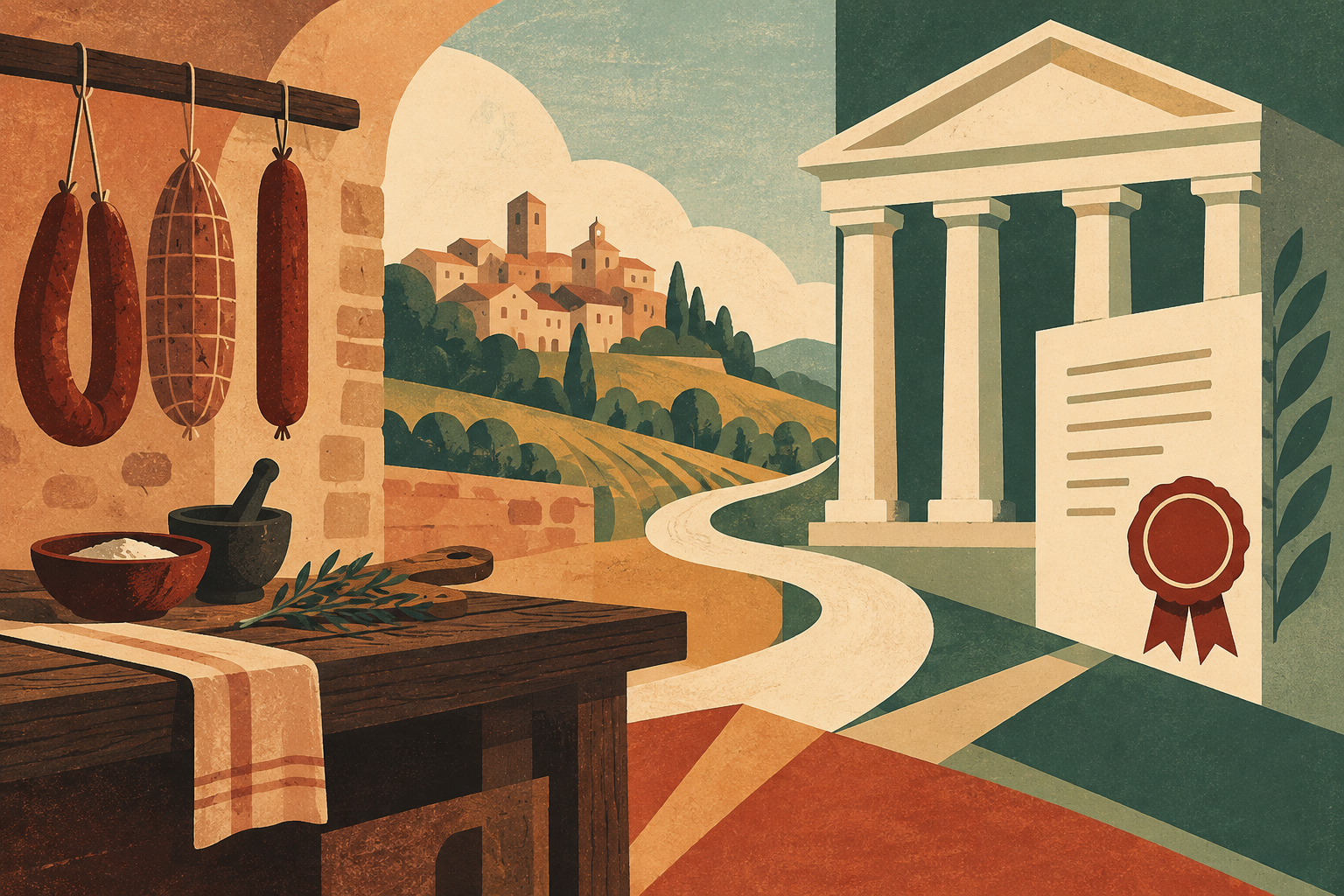
The production of cured meats in Requena is not an isolated phenomenon, but the result of a long relationship between pig farming and domestic meat transformation practices. What began as a necessity for preservation and utilization of slaughter has evolved into a central element of local identity, supported by specific institutional structures. This formalization process allows us to observe how a food product acquires the status of cultural and economic heritage, ceasing to be merely a consumer good to become a symbol of territory.
Roots in the domestic economy
Historically, pig farming in the Requena area was linked to subsistence and the family economy. Slaughter was not an industrial event, but a community and domestic practice that determined the protein supply for months. Products like longaniza and morcilla were the direct result of this activity, integrated into the daily diet and local celebrations. This artisanal base laid the premises for what would later become a recognized tradition, where the elaboration technique was as important as the quality of the raw material.
The emergence of the Regulatory Council
The step from custom to norm is materialized by the existence of the Council for the Regulation of Artisan and Quality Cured Meats of Requena. This institutional body seeks to standardize and protect the identity of these products, ensuring they meet certain criteria of elaboration and origin. The creation of this council indicates an effort to define what is understood as authentic Requena cured meat, differentiating it from other similar productions. This regulatory mechanism is key to understanding the transition from a local product to one with recognized quality guarantees.
The Fair as a space for consolidation
The Artisan and Quality Cured Meats Fair of Requena acts as the main stage where this tradition is made visible. Reaching its XXXI edition, the event demonstrates a temporal consolidation that goes beyond a simple market fair. It is held in early February, coinciding with traditional dates for the consumption of these products. The fair is not just a sales point, but a space for tourism and cultural promotion, sponsored by entities such as the Provincial Tourism Board of Valencia, Terra i Mar. This institutional collaboration reinforces the idea that cured meats are a strategic asset for the province.
Playful and cultural dimension
Documents indicate that the fair has a playful, cultural, and gastronomic program. This suggests that the visitor experience is not limited to tasting, but includes activities that contextualize the tradition. The combination of festive and educational aspects allows the public not only to consume the product but to understand its origin and social meaning. This cultural dimension is fundamental for attracting an audience seeking authentic experiences linked to the territory, beyond mere culinary interest.
Tension between authenticity and commercialization
There is a narrative of authenticity that attracts visitors and consumers, but evidence suggests that the separation between commercial advertising and domestic habits has blurred. The fair functions as a space where tradition is exhibited and sold, creating an image of authenticity that may be, in part, constructed for commercial purposes. This tension is inherent to the patrimonialization of food products, where originality becomes a market value. Understanding this dynamic is essential to evaluate the real impact of regulation and promotion on traditional practice.
Geographic and economic context
Requena, with an origin dating back to the 7th century BC, has a long history that includes agriculture and livestock. Cured meats are framed in a broader context of local products, such as the IGP Manchego Onion, which also integrate traditional harvesting. The presence of these regulated products in the area indicates a local development strategy based on quality and identity. The relationship between cured meats and other local products reinforces the image of Requena as a territory with a differentiated and protected gastronomic offer.
Legacy and future perspectives
The transformation of Requena cured meats into a regulated and promoted product has a clear legacy in the local economy and cultural identity. The existence of a regulatory council and a consolidated annual fair ensures the continuity of the tradition, although it also subjects it to the logics of the market and tourism. The future of this tradition will depend on the ability to balance the protection of authenticity with adaptation to current demands. The available evidence shows a model that has managed to institutionalize the tradition, but which must continue working to maintain the relevance of its artisanal practices in a globalized world.
- Decade
- 2000s
- Region
- Spain
- Level
- Introduction
- Entities
- Embutido artesano, Requena, Embutido Artesano y de Calidad de Requena
Sources and references
- La XXXI Muestra de Embutido Artesano y de Calidad ...www.facebook.com · 2026-10-20
- | Diputación de Valenciadival.es · 2026-10-20
- Requena (España) - Wikipedia, la enciclopedia librees.wikipedia.org · 2026-10-20
- Requenawww.xn--pateandoespaa-tkb.es · 2026-10-20
- X CONGRESO SEAEorgprints.org · 2026-10-20
- ADCUSPPYMAusuaris.tinet.cat · 2026-10-20