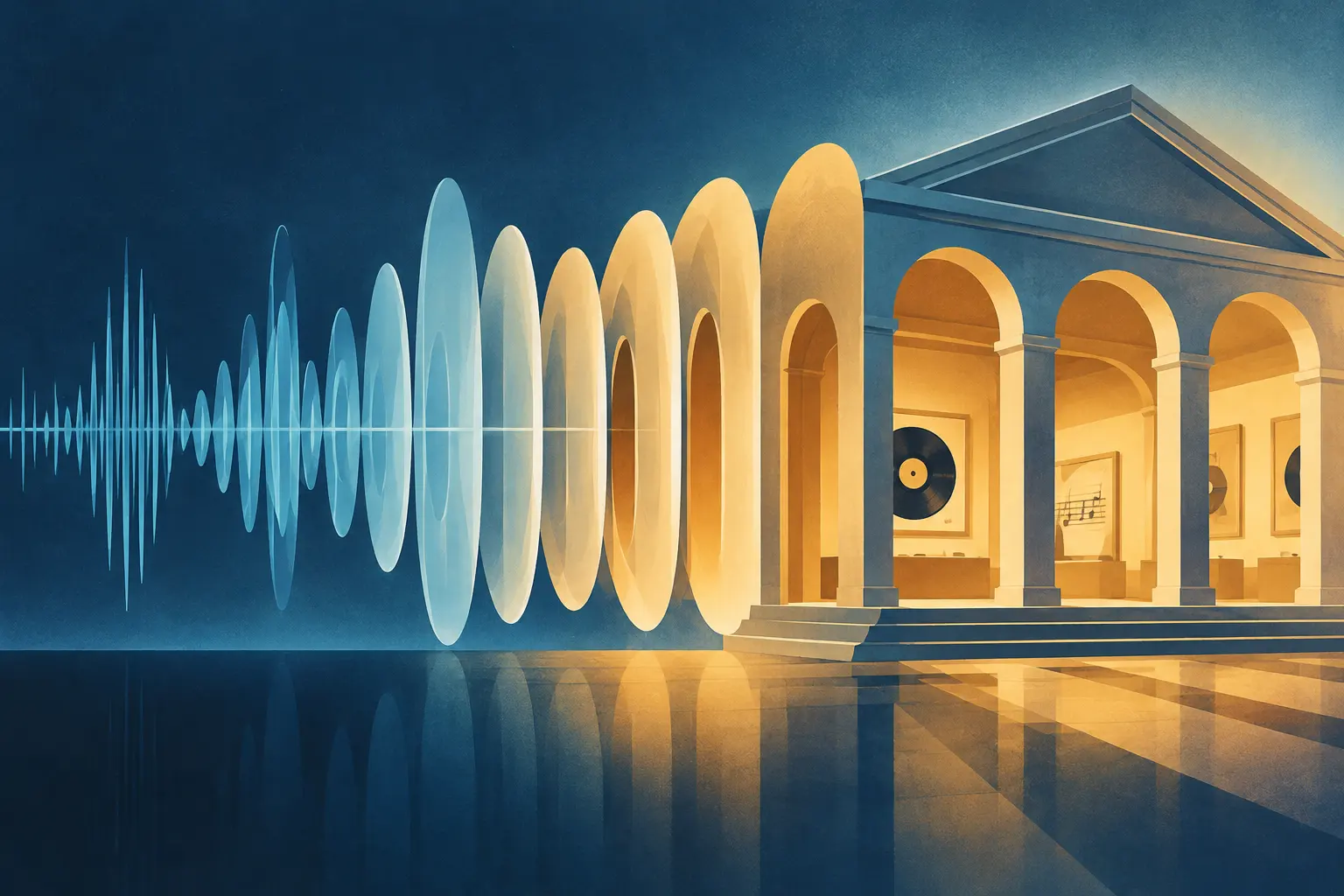
The management of musical heritage has evolved from mere object custody to a practice that integrates the auditory experience as a central element of conservation. Traditionally, the focus was on the physical integrity of supports and instruments, but recent research suggests that true preservation occurs when sound is activated in a meaningful cultural context. This paradigm shift implies that the archive is not a static depot, but a dynamic space where sound memory is reinterpreted for the current public.
The duality between object and experience
The fundamental challenge in musical conservation lies in balancing the protection of physical material with the vitality of the sound experience. An instrument or a recording is not only an object of study but a vehicle for a cultural experience that needs to be activated. UNESCO guidelines on the conservation of musical instruments emphasize this dimension, noting that the general atmosphere of the museum and the way collections are interpreted are as important as the conservation state of the objects. This perspective forces cultural managers to consider how the environment influences the perception of sound and, therefore, the understanding of heritage.
The ARIA project and public accessibility
To overcome the barrier separating the general public from specialized archives, initiatives like the ARIA project propose the use of augmented experiences. This approach aims to create engaging interactions that allow visitors to connect with musical heritage without prior technical knowledge. By transforming static documentation into an immersive experience, the ARIA project illustrates how technology can serve as a bridge between academia and civil society. This strategy not only democratizes access but also redefines the role of the archive as an active cultural meeting place.
Cultural contexts and the management of authenticity
Conservation is not a neutral process but is conditioned by intellectual agendas and transnational connections. A study on the Peruvian folkloric archive between 1949 and 1952 reveals how ideas about folk music and institutional challenges influenced the management of what was considered an authentic sound. This case demonstrates that the selection and preservation of sound materials respond to specific cultural contexts and power dynamics. Understanding these influences is crucial to avoid a simplistic view of authenticity and recognize the complexity of heritage construction.
Cultural valuation as a management tool
Integrating cultural criteria into the management of music archives allows for more meaningful preservation. The valuation of collections should not be limited to technical or financial aspects but must include the cultural and social value of the materials. This approach facilitates informed decision-making regarding what to preserve, how to present, and whom to direct the collection to. By incorporating cultural valuation, managers can ensure that musical heritage reflects the diversity and relevance of the communities that created it.
The archive as a space in motion
The 'Listening to a Country' project by the Reina Sofía Museum proposes a vision of the archive that transcends the retrospective. Instead of presenting the past as something fixed, this initiative invites us to think of the archive as a space in motion, where the past is heard in the present. This dynamic perspective allows historical recordings to dialogue with the present, offering new interpretations and connections. By doing so, the museum not only preserves sound but activates it as a living element of contemporary culture.
Implications for modern curation
Available evidence suggests that modern conservation of musical heritage requires an integration of technology, curation, and accessibility. Curation must go beyond technical classification to include cultural interpretation and the creation of meaningful experiences. Technology, for its part, should be used to facilitate access and interaction, not as an end in itself. This combination allows listening to be an active act of cultural preservation, where the public participates in the construction of the meaning of heritage.
Limitations and pending challenges
Despite advances, there are limitations in verifying the authenticity and integrity of sound materials. Digitization and manipulation of archives can alter the original experience, raising questions about the fidelity of reproduction. Furthermore, reliance on technology poses risks of obsolescence and long-term loss of access. Managers must address these challenges through robust digital preservation strategies and detailed documentation of curation processes, ensuring that musical heritage remains accessible and understandable for future generations.
- Decade
- Contemporary
- Region
- Global
- Level
- Enthusiast
- Entities
- Museum, Museo Reina Sofía
Sources and references
- La valoración de colecciones como herramienta para la ...revistas.javeriana.edu.co · 2026-10-21
- Música en los museos: el caso del Guggenheim de Bilbaoopenalex.org · 2026-10-21
- La Conservación de instrumentos musicalesunesdoc.unesco.org · 2026-10-21
- Diseño de una experiencia aumentada para un archivo ...translate.google.com · 2026-10-21
- Escuchar un paíswww.museoreinasofia.es · 2026-10-21
- La accidentada gestión de sonidos auténticos: Agendas ...www.cambridge.org · 2026-10-21