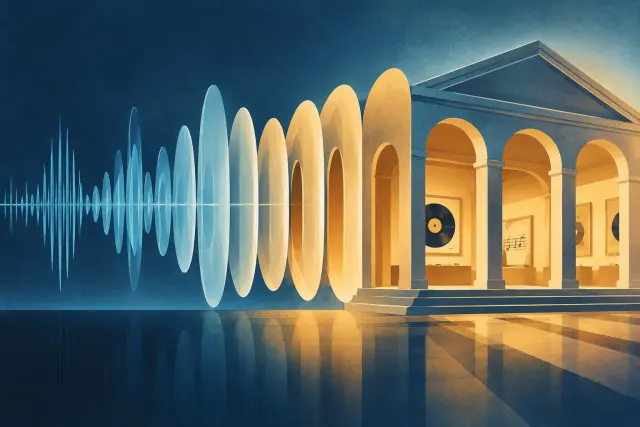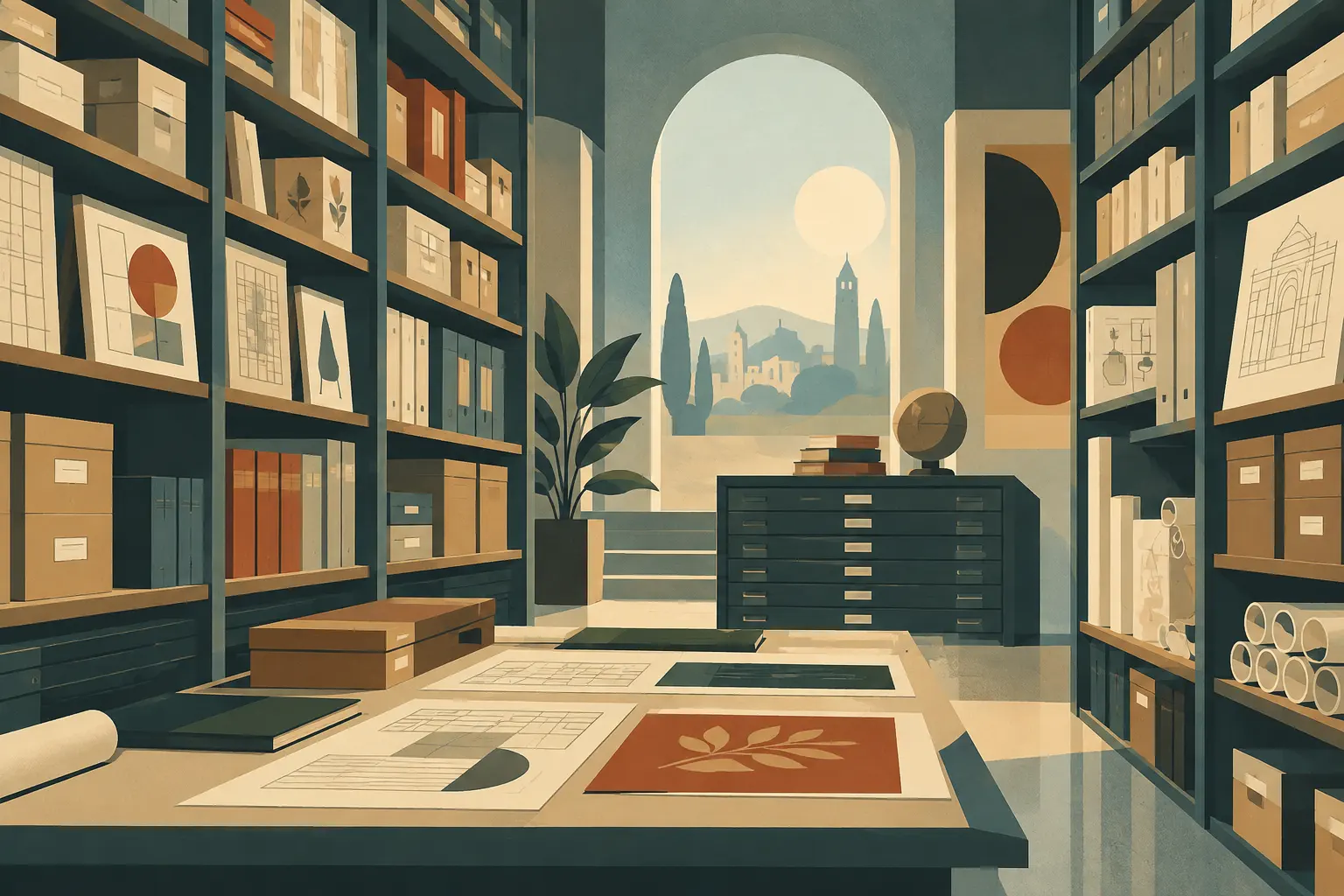
The preservation of design archives is not limited to the physical custody of documents, but operates as a cultural decision that determines how heritage is interpreted. This process transforms technical objects into pieces of collective memory, establishing a bridge between historical production and contemporary understanding. Available evidence suggests that this work is fundamental to keeping the identity of design practices alive over time.
The function of the archive in design culture
Recent academic studies, particularly those focused on the Valencian context, identify the preservation of memory as the main function of the design archive. This perspective goes beyond the traditional view of the archive as a simple data warehouse. Instead, it is conceived as an active space where the narrative of the discipline is constructed. Ester Alba Pagán's research highlights how these archives ensure the continuity of the ideas and practices that have shaped the everyday environment.
From technical document to heritage piece
The transition from a technical document to a cultural heritage piece requires a contextualization process. It is not enough to digitize or store; it is necessary to integrate each element into its historical and functional framework. This approach allows raw information to become accessible knowledge. Musealization, as discussed in specialized literature, involves integrating the museographic script with architecture and cultural context to facilitate this understanding.
The museum as cultural mediator
The museum acts as an essential intermediary between the original document and the viewer. Its role is not passive, but transforms information into experience. Through exhibition and communication, the museum allows the public to understand the functional and aesthetic decisions of each era. This mediation is crucial for heritage not to be relegated to an academic niche, but to become an educational and cultural resource for society as a whole.
Conservation as a communication tool
Conservation thus becomes a communication tool that facilitates the legibility of design proposals for future generations. Design, by organizing information and proposing ways of using objects, leaves a trace that must be preserved. Collaboration between academic institutions and museums is key to ensuring that this process is rigorous and accessible. This alliance ensures that the interpretation of heritage is coherent and well-founded.
Context and contemporary relevance
In a world where technological obsolescence is rapid, the preservation of design archives acquires particular urgency. These archives do not only store objects, but they preserve the memory of humanity, as UNESCO points out. Each manuscript, photograph, or archive contains more than information; it preserves the history of how we have organized our lives. The relevance of this work extends beyond the aesthetic field, touching social and economic aspects of cultural production.
Limits of verification and access
Although the importance of conservation is clear, there are limits to what can be verified and accessed. Digitization, although useful, does not replace the experience of the physical object or the complete context of its creation. Moreover, the accessibility of these archives depends on institutional collaboration and available resources. It is important to recognize that not all archives are equally preserved or accessible, which poses challenges for the construction of a complete and equitable memory.
Conclusion
The conservation of design archives is a cultural act that defines how we understand our past and our present. By transforming documents into heritage, museums and academic institutions play a crucial role in disseminating design memory. This process is not only technical, but involves an active interpretation that seeks to make the history of design legible for future generations. Collaboration between different actors is essential to ensure that this memory is preserved and shared in a rigorous and accessible manner.
- Decade
- Contemporary
- Region
- Global
- Level
- Introduction
- Entities
- Museum
Sources and references
- Diseño y patrimonio cultural: cómo asegurar la conservación, estudio y difusión de los archivos profesionales o empresariales del diseño valencianoopenalex.org · 2026-10-21
- Diseño y patrimonio cultural: cómo asegurar la conservación ...turia.uv.es · 2026-10-21
- Cada manuscrito, fotografía, película o archivo conserva ...www.facebook.com · 2026-10-21
- Technological Tools for the Conservation and ...www.mdpi.com · 2026-10-21
- Diseñar Exposiciones que Funcionanevemuseografia.com · 2026-10-21
- La musealización del patrimonio natural para su ...www.redalyc.org · 2026-10-21