A band cited among those various authors consider part of the post-punk avant-garde.
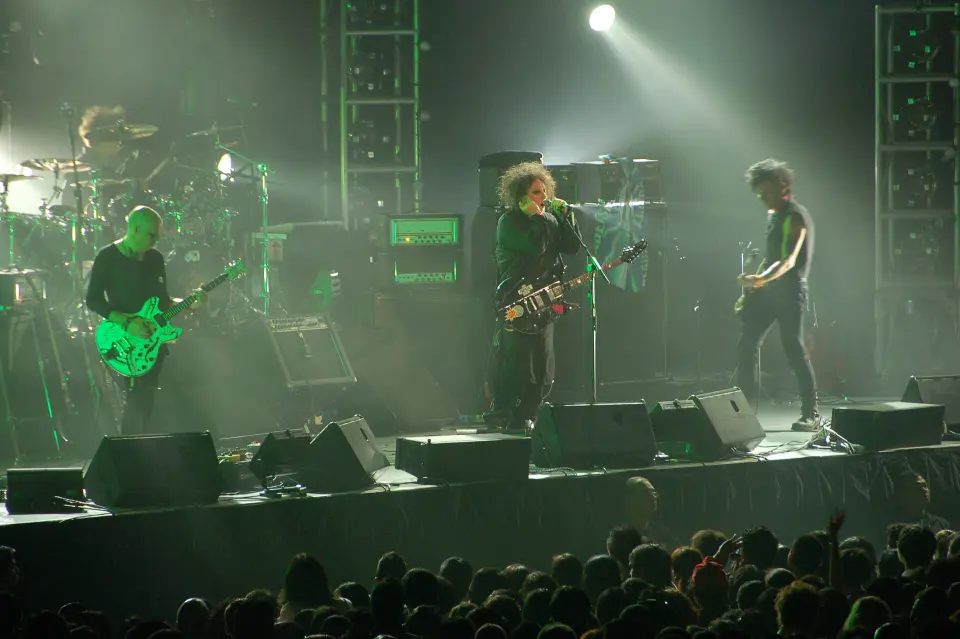
Selected excerpts from our archive offer more context on this subject. Each reading links to the original article and its sources.
The Cure before the gothic label
The Cure emerged in Crawley, England, in 1978, around Robert Smith and at a moment when punk still had a strong presence in the British scene. Yet describing their early years simply as a passage toward gothic rock obscures a less linear story: the band developed a sound that moved away from punk conventions and is now understood as part of post-punk. Released in April 1980, “A Forest” offers a particularly clear point of entry. Its hypnotic bass and enveloping guitars create an atmosphere distinct from punk’s familiar urgency, though the available evidence does not support reducing the group’s entire development to a single song.
The Cure appeared in a British context where punk remained prominent. That connection helps situate the band, but it is not enough to describe its musical identity. The group’s early trajectory, according to the available information, did not yet match either the sound later associated with the band or the gothic label. The change is better understood as a search for new melodic structures and darker textures shared with other groups of the period, rather than as a sudden break.
Released in April 1980, “A Forest” brings into focus features that would become central to The Cure’s sonic image: a persistent bass line and guitars that create an enveloping atmosphere. The song is often described as a decisive moment, but that claim has limits. It can serve as a milestone in an account of the band’s development; on its own, it does not establish how it was recorded, which specific technical decisions were made, or that the whole later aesthetic was already fixed within it.
Here, post-punk is not a label that erases the band’s connection to punk, but a field in which that inheritance changed form. The available evidence places The Cure within a wider movement of bands exploring new melodic shapes and darker atmospheres. This perspective avoids presenting the shift as an isolated metamorphosis and makes it possible to understand it as part of a scene. It also reminds us that musical categories are tools for organizing history: they cannot replace listening or fully describe the differences between groups.
KEY FACTS
- Type
- Artist
References
- Post-punkes.wikipedia.org