A compressed-audio format associated in the available evidence with reducing music-file size and playing song collections on small devices. The source places Fraunhofer IIS and Thomson Multimedia’s announcement of patent licensing related to the technology in 1998.
Selected excerpts from our archive offer more context on this subject. Each reading links to the original article and its sources.
1970 or 1979: The Date Worth Revisiting in Walkman History
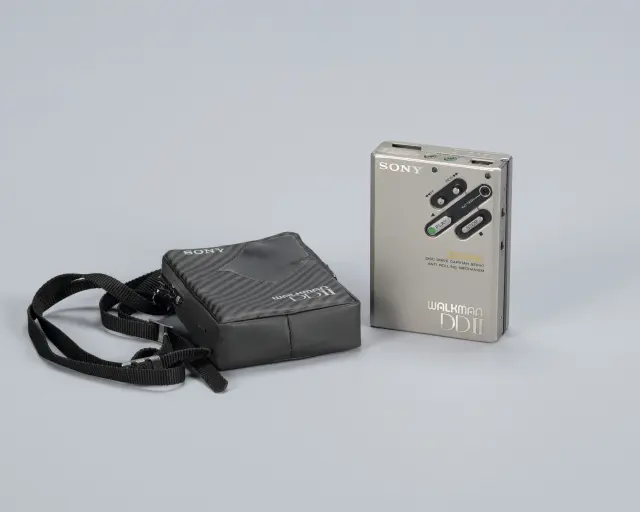
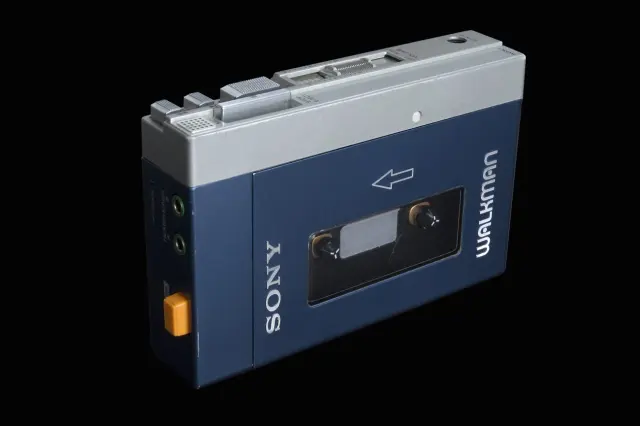
Hoyesarte covers an exhibition on the history of music recording at Espacio Fundación Telefónica in Madrid. In a route that mentions the phonoautograph, phonograph, tape recorder, compact cassette, Discman and MP3 players, it attributes leadership in device miniaturisation to Japan. Its Walkman sentence, however, places the change in 1970. The chronological conflict is explicit when read beside the July 1979 dating.
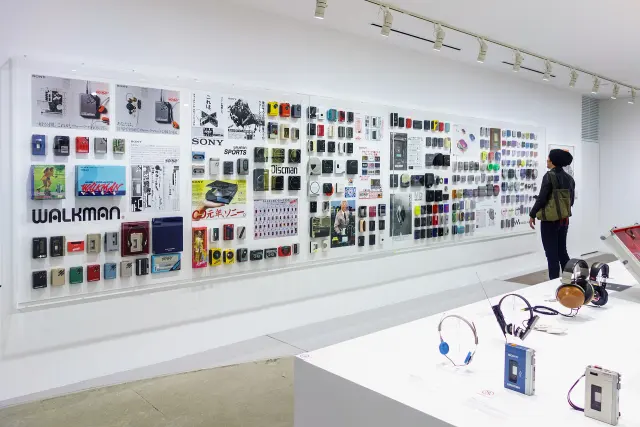
The exhibition described by Hoyesarte traces a route from early sound recording to MP3 players. This helps avoid another simplification: the Walkman did not emerge outside technical and cultural history. It belongs to a narrative involving different recording mechanisms, formats and modes of playback.
Yet the evidence does not permit that sequence to be turned into a proven chain of causes. The fact that an exhibition includes tape recorders, compact cassettes, Walkman, Discman and MP3 players does not itself prove direct technical links between every stage. What is verifiable is that these objects and technologies belong to the described curatorial route, and that portability and miniaturisation are central concerns.
From Phonograph to Walkman: How Portable Listening Changed
The exhibition “1, 2, 3... Recording! A History of Musical Recording,” covered by Hoyesarte, similarly offers a chronological route from Scott de Martinville’s phonautograph and Thomas A. Edison’s phonograph to the magnetophone, compact cassette, Discman, and MP3 players. The breadth of that selection cautions against treating one machine as the sole origin of sonic modernity: music playback emerged through a succession of technical solutions.
Hoyesarte’s account extends to MP3 players and mentions SoundCloud in 2007, the first iPhone that same year, and Spotify between 2008 and 2009. These references are useful for showing that the exhibition’s story does not end with the cassette or the portable player. Yet the supplied material does not provide detailed documentation on territorial launches, models, catalogues, or conditions of use for these platforms and devices. Those details should not be added.
KEY FACTS
- Type
- Format
References
- Historia del MP3 (1977-2026) - ACUSMATICAacusmatica.net
- Los inicios de la música online (Infografía)malavida.com