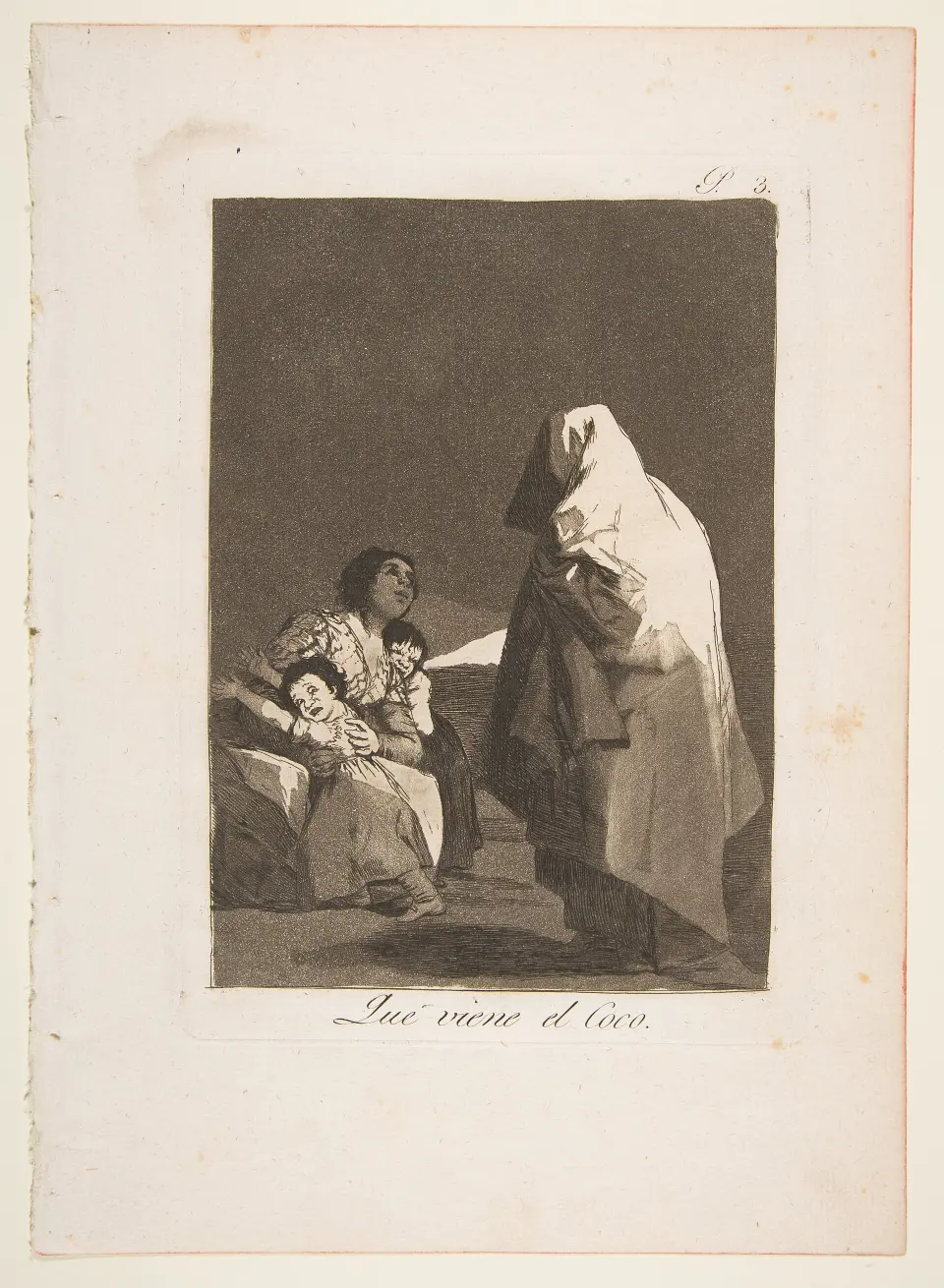
An anthropomorphic figure from Iberian and Latin American folklore, used as a deterrent mechanism to induce obedience in childhood. Its origins date back to the 15th century, with testimonies in the Cancionero de Antón de Montoro, and its etymology is linked to the shape of the coconut fruit or the inquisitorial cap. It lacks a defined physical form, allowing it to adapt to various cultures, from the Coca of Portugal to the Cucuy of Mexico. It has influenced literature, art (such as Goya's painting), and contemporary popular culture.
KEY FACTS
- Type
- Film
- Year
- 1445
- Country or region
- Spain
References
- Coco (folclore) - Wikipedia - Coco (folclore)es.wikipedia.org
- Coco (folclore) - Wikipedia, la enciclopedia libre - Coco (folclore)es.wikipedia.org
- Coco (folclore)es.wikipedia.org
