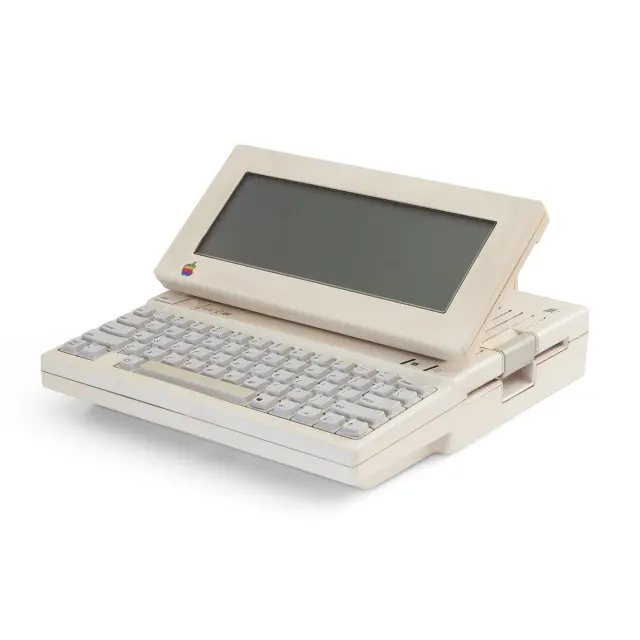
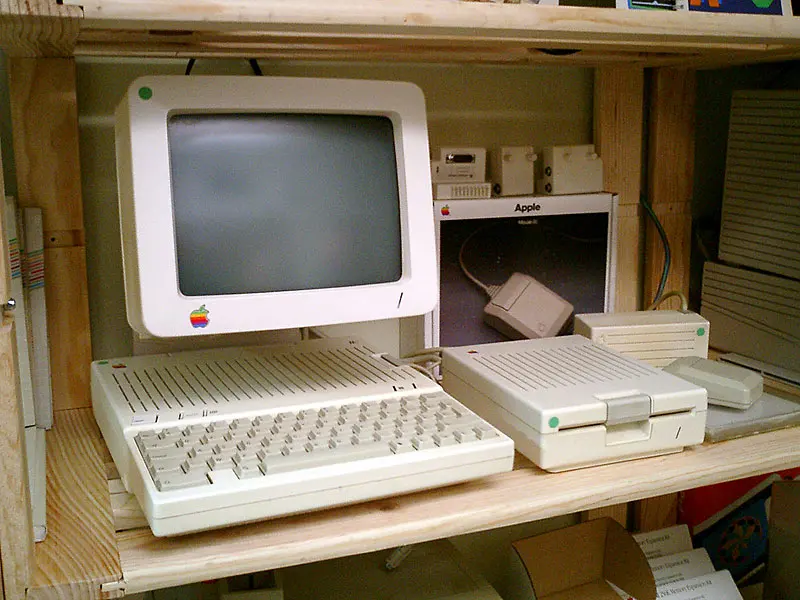
A personal computer in the Apple II series. The evidence describes its built-in 5¼-inch floppy drive on the side, peripheral ports integrated into the motherboard, and compact design intended to make setup easier.
Selected excerpts from our archive offer more context on this subject. Each reading links to the original article and its sources.
The Apple IIc and the Disk Drive Built into the Computer
The Apple IIc raises a specific question about the home computer: what changes when storage is not presented as a separate external unit but is part of the machine itself? The available description identifies a 5¼-inch disk drive built into the computer and integrated peripheral ports. It also says the model had no internal expansion slots. This is a useful basis for discussing design and documentation, but it does not establish how every household used the machine.
The source describes the Apple IIc as a compact version of the Apple II series, bringing a complete configuration into a small case apart from the display and power supply. It identifies the disk drive on one side. For this discussion, the important point is not a claim about performance but the physical arrangement: the storage device and the computer are presented together.
A diskette can be described as an information carrier, but cataloguing an electronic document also requires recording where it is stored. The Catalan archival standard listed among the sources names diskettes and other physical media when discussing that descriptive unit. The Spanish National Library’s cataloguing rules also cover local-access computer files held on physical devices, including diskettes. These standards do not describe the Apple IIc specifically, but they help explain why documentation should identify both a medium and the computer associated with it.
The model description identifies integrated peripheral ports at the rear and the absence of internal expansion slots. It supports the claim that the design included built-in peripheral connections and, according to that source, did not retain the internal expansion arrangement of earlier Apple II models. It does not identify which particular devices an owner connected, how often they were used, or in what order. A photograph or specification sheet alone would not establish those habits.
The Apple IIc and the promise of domestic portability
In May 1984, Apple launched the Apple IIc to the market, explicitly positioning it as the first portable Apple II. This designation was not merely technical but a statement of intent regarding how hardware should integrate into everyday living spaces. The device sought to reduce the physical footprint of personal computing, moving away from the bulky towers of the era to offer an integrated unit that fit on a work desk or home office. Available evidence allows for a clear line to be drawn between what is known about its launch and what remains uncertain due to the scarcity of quantitative data in the consulted sources.
The Apple IIc was part of the first generation of products to adopt the aesthetic known as Snow White. This design, characterized by clean lines and a whitish cream color, marked a significant visual change in computing history. According to industrial design records, the computer and its peripherals were the first to carry this visual identity. The integration of the power supply and other internal components into a compact chassis not only facilitated transport but also defined a new relationship between the user and the machine. Aesthetics ceased to be an accessory and became part of perceived functionality, suggesting that technology could be orderly and discreet in a domestic environment.
Advertising materials from 1984, compiled in historical archives, show how Apple articulated the utility of the IIc. Advertisements from that year presented scenarios where the equipment controlled buildings or was directly compared with the IBM PCjr. These campaigns did not just sell a processor, but a connected lifestyle. References to telecommunications in the advertising suggest that connection capability was a fundamental pillar of the value proposition. The message was clear: portability did not mean isolation, but the possibility of managing information from any point in the home. Advertising functioned as a map of the possibilities imagined by the company, although it did not necessarily reflect the technical reality of all users.
A relevant technical aspect was the availability of an optional flat panel, the Apple IIc Flat Panel Display. Sources indicate that only approximately ten thousand units of this monitor were produced. The reason for its limited adoption seems to reside in visibility issues; users reported the need for strong light to read the screen content. This technical detail reveals the boundaries of innovation of the era. Although the design was avant-garde, the limitations of 1980s materials prevented the experience from being optimal. The scarcity of production of this peripheral underscores that total portability was still an ideal rather than a massive reality.
KEY FACTS
- Type
- Computer
References
- Apple IIces.wikipedia.org