The 1990s and the New Map of Board Games
A careful reading of the transformation board games underwent in the 1990s: an expanding catalogue, the importance of European design, and The Settlers of Catan as a frequently cited landmark.
Open storyArchive of technology, entertainment and everyday life
A careful reading of the transformation board games underwent in the 1990s: an expanding catalogue, the importance of European design, and The Settlers of Catan as a frequently cited landmark.
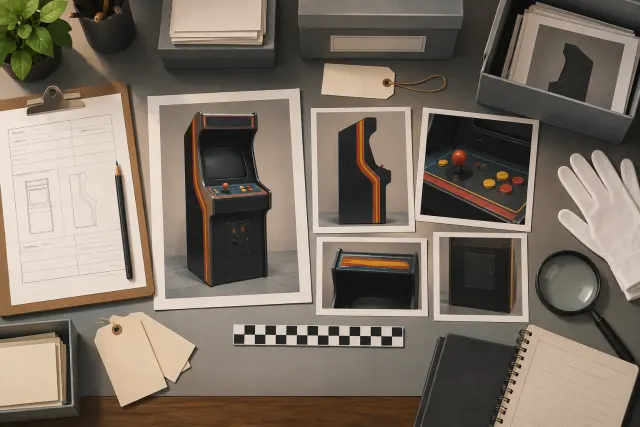
Open storyAn editorial guide to approaching an arcade machine through documentation and preventive conservation: identify what is known, record its condition and context, and separate verifiable data from memories.
Open storyAn editorial guide to approaching the history of everyday life through sources, contexts, and verifiable limits rather than isolated memories or grand historical narratives.
Open storyBetween 1970 and 2009, several Spanish institutional examples reveal a decisive shift: restoration ceased to be understood only as an intervention on an object and increasingly required documentation, professional coordination, and a historical reading of spaces.
Open storyThe 2006 creation of Mexico City’s Museo Archivo de la Fotografía provides a way to examine a central question: an image is not only what it depicts, but also who produced it, why, how it was preserved, and what information makes it accessible.
Open storyA guide to understanding the computer as a museum-documentation tool: not as a replacement for objects, but as a means of linking provenance, conservation condition, images, movements and institutional history.
Open storyA reading of the early Internet through ARPANET and its documented uses: email, file transfer, and remote access. Rather than simply anticipating the Web, these practices reveal a technical working network whose history remains incomplete.
Open storyA journey through the changing focus of Spain’s National Museum of Decorative Arts: from its early support for industrial products and technical education to a later reading centred on objects, their uses, and their contexts of production and consumption.
Open storyA critical reading of the comics-magazine format: its role as a periodical, its relationship with serialization, and the documented reasons for its transformation alongside albums and the internet.
Open storyAutomobile museums do not merely display vehicles: they also preserve engines, components, manuals and evidence of use to explain the relationship between technology, society and material culture. A look at documented cases in Torrejón de Ardoz, Turin and Galicia.
Open storyAndrew Warkentin’s project brings together more than 1,700 installations of over 600 operating systems for more than 250 platforms in a museum that runs on current computers. Its importance lies in turning software archiving into a usable experience, although the available evidence leaves questions about provenance, licensing, and specific coverage unanswered.
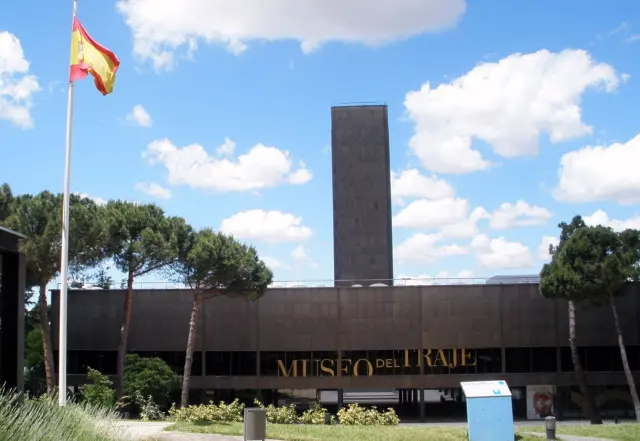
Open storyThe Museo del Traje collection brings together regional dress, jewellery and accessories, works by Mariano Fortuny y Madrazo, and holdings representing Cristóbal Balenciaga and Pedro Rodríguez. Using the available institutional information, we examine what this concentration of objects allows us to say and the limits of a collection description.
Open story