Photographing Vieques during militarization
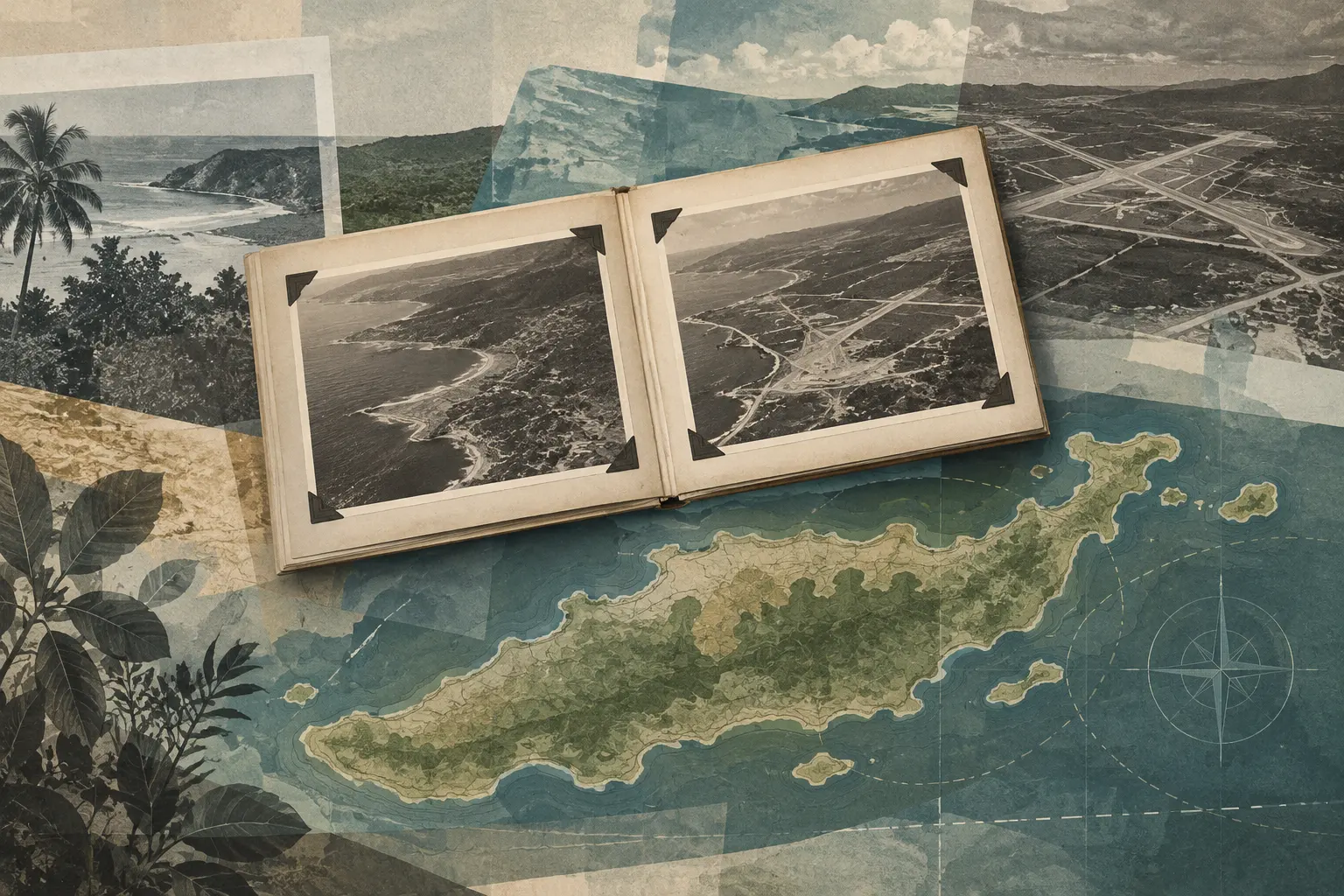
Between 1941 and 1942, members of the Catanzaro family took more than 700 photographs in Vieques. The images include scenes from island residents’ lives as well as records of the military base and its personnel. They are not a complete chronicle of the community, but they offer a distinctive way into a period when militarization profoundly reshaped the territory and everyday life.
The collection is preserved by the Vieques Historical Archive and can be consulted digitally through the Digital Library of the Caribbean (dLOC). Its history adds a political dimension to the photographs: according to the student reflection discussed by Ivelisse Rivera Bonilla and Nadjah Ríos Villarini, they were confiscated when the Catanzaro family returned to the United States. The researchers’ article records the question that episode prompts: why were images documenting the process of militarization prevented from circulating?
An island transformed by occupation
Vieques cannot be treated as a neutral backdrop to these photographs. In 1941, the United States Navy occupied two-thirds of the island to establish a military base. The occupation displaced thousands of Viequenses from their communities and changed the conditions in which local life unfolded. The base’s construction and the presence of military personnel formed part of a territorial and social transformation that the photographs allow us to view at an everyday scale.
The images make aspects of residents’ lives and military activity visible, but they cannot, on their own, explain the causes, consequences, or individual experiences of the occupation. They were made by one family under particular circumstances and should be read as a situated perspective. Understanding the experiences of those pictured—and those left outside the frame—requires placing them alongside other documents and testimony.
From family photographs to a community archive
The photographs’ passage into a public archive does not erase their family origins. On the contrary, knowing who made them and how they reached their current repository is part of their historical interpretation. The Catanzaro collection brings together a private history, a visual record of Vieques in the early years of militarization, and a trajectory marked by confiscation and later preservation.
Rivera Bonilla and Ríos Villarini explain that the Vieques Historical Archive is a community initiative that preserves physical and digital materials and makes them available for consultation. Its holdings include photographs, local newspapers, historical and audiovisual records, and materials related to the island’s social and environmental struggles. Students, residents, and volunteers take part in preservation, digitization, and cataloguing; collaboration with dLOC makes some of the materials accessible online.
The archive matters not only because it safeguards documents, but also because it makes sources available for studying local histories that are often absent from more widely circulated accounts. In the case of the Catanzaro photographs, digitization helps bring images that might otherwise remain scattered or difficult to consult into research, teaching, and public discussion, while keeping their connection to Vieques in view.
Learning to look and share memory
In their 2022 article, Rivera Bonilla and Ríos Villarini describe a university activity in the University of Puerto Rico at Humacao’s Society and Culture of Puerto Rico course. Students explored digitized materials from the Vieques Historical Archive and produced audio reflections on selected documents. One reflection focused on the Catanzaro photographs and their ability to record life on the island in 1941 and 1942.
The activity connected the search for primary sources with analysis and public sharing. In studying the collection, the student drew attention to images of living conditions and military presence, as well as the confiscation that followed the family’s return to the United States. The student also considered what it meant for personal photographs to become a record of an era and why historically significant materials might be donated to a community archive.
The exercise shows how a collection can prompt new forms of access and interpretation without the archive prescribing a single reading. An audio reflection, a catalogue description, or a research project can open paths to the documents; none replaces the photographs or settles the debate over their meaning.
A valuable source, not a complete portrait
The more than 700 images do not represent every family or experience in Vieques. Their value lies in what a specific collection can help us study: scenes of everyday life and military presence in particular years, viewed through a family archive whose own history also calls for critical attention.
Preserving the photographs makes a personal archive part of the community’s documentary heritage, but it does not remove the need for context. Their interpretation gains depth when they are read alongside other records and the voices of people who lived through those years. The collection does not offer a total picture of Vieques; it offers a documented point of entry into a history of militarization, daily life, and shared memory.
- Decade
- 2000s
- Region
- Latin America
- Level
- Introduction
- Entities
- No linked entities
Sources and references 5
- Los archivos resguardan la memoria, la historia y ...www.facebook.com · 2026-11-17
- Aprendizaje del patrimonio cultural en museos - PMC - NIHtranslate.google.com · 2026-11-17
- Museos vivos donde cultura y biodiversidad crecen juntaswww.acciona-cultura.com · 2026-11-17
- archipelagos | Archivística y sonoridadarchipelagosjournal.org · 2026-11-17
- Patrimonio inmaterial Archivesevemuseografia.com · 2026-11-17