Format is a condition of reading
A page does not reach its reader apart from its support. Size, sequence, publication frequency, and the way instalments are gathered or separated can shape reading; describing how they do so in a particular work, however, requires copies and publishing data not available here. The useful question is not whether one format is better, but what each lets us observe—and what it leaves out—when studying a comic.
An article by Rubén Varillas puts this comparison in its title: “comic magazines, fanzines, minicomics, albums and graphic novels.” The list offers a map of formats to investigate, not proof that they all work in the same way in every period or market. This analysis therefore starts deliberately modestly: it considers the categories named by the source and distinguishes them from conclusions that would require examining the publications themselves.
From category to evidence
Naming a format helps frame questions. Was a story published all at once or in instalments? Did a publication gather several comics or focus on one work? What information did the cover, contents page, editorial pages and numbering provide? These are research questions, not facts that can be answered automatically by labels such as “magazine,” “album” or “fanzine.”
According to the supplied excerpt, Alberto Albarrán’s visual history of comics, graphic novels and manga notes that some series are dated by a character’s first appearance or creation, and that this approach is not always applied consistently. That is a useful caution for any chronology: a character’s date, a publication date and the date of a particular edition may be different facts. Without examining the publishing objects, they should not be collapsed into one date or used to claim specific changes in reading experience.
The magazine as a serial object
The evidence includes material about comic magazines, including a popular article on publications from the 1950s onwards and a scholarly work whose title groups magazines, fanzines, minicomics, albums and graphic novels. This is enough to recognise the magazine as a format and a publishing object worth studying. It is not enough to state its print runs, frequency, readership or effect on the composition of particular works.
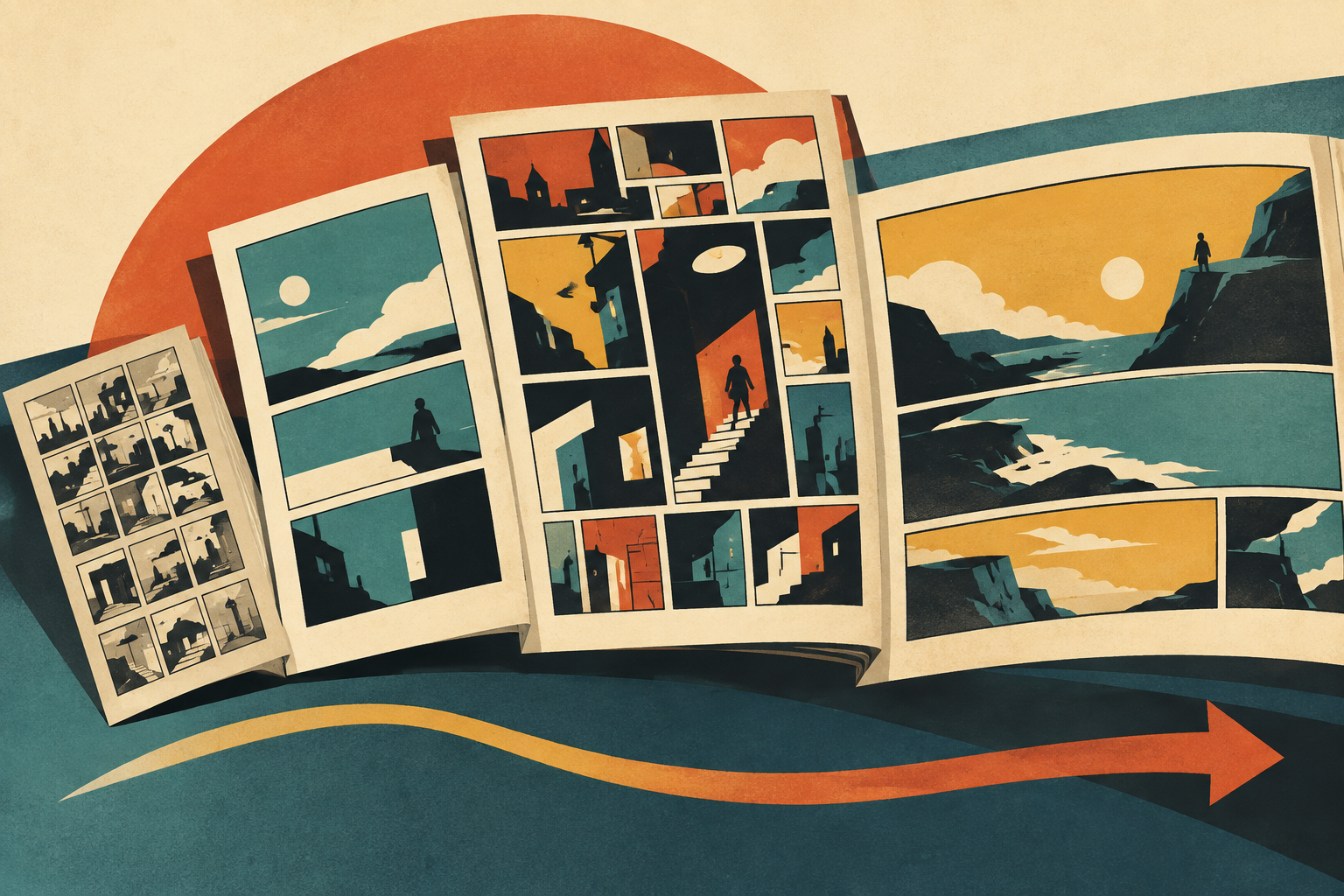
To investigate a specific magazine, researchers would need to compare issues, identify whether a story continues across instalments, and examine the material surrounding the comics. Covers, the ordering of contents and editorial text could help reconstruct how a comic was presented, provided these features are documented in the copies. Claims about reading rhythm would also need to be grounded in panel layout and the transition from one instalment to the next; the supplied excerpts do not report the results of such a comparison.
Circulation, collecting and access
Circulation matters because an edition is more than a sequence of images. The availability and preservation of issues, and the possibility of consulting them, shape what researchers can reconstruct. A story dispersed across instalments is not studied in the same way as a collected edition, but the specific difference must be checked work by work: the available sources do not document a case that would allow it to be measured here.
Material on cataloguing comics in Spain, alongside a RetroPause article about collections, museums and digital access, suggests another line of inquiry: how to describe publications and make them accessible without erasing differences between editions. Catalogues, collections and digital access are mediations. A catalogue record may identify a publication, but it cannot replace examination of its pagination, sequence or material form. Nor can it establish on its own that a reproduction preserves every condition of reading the original copy.
From copy to museum
Exhibitions and museums offer another perspective on comics. MP Méndez’s study, available through an academic journal and a Dialnet record, is titled “Comic Exhibitions: History and Global Context.” The supplied excerpt mentions, among other precedents, “Bande Dessinée et Figuration Narrative” and a 1971 reference to “Los cómics en el museo,” published in BANG! Información y estudios sobre la historieta.
These details establish that exhibiting comics and discussing their place in museums have a documentable history. They do not describe the display of a particular exhibition, which pages were shown, how they were lit, or what interpretations were offered. For research into format, an exhibition can make covers and pages visible as objects, but it should be checked against the copies and their records, not treated as a substitute for the complete work.
What can be concluded
The evidence supports a limited but useful conclusion: comparing magazines, fanzines, minicomics, albums and graphic novels offers a way to study comic publishing and reading; it does not prove that each category alone determines a narrative form. The scholarly titles identify questions for investigation, while the sources on cataloguing, visual history and exhibitions broaden the context. The excerpts do not provide enough information to quantify circulation, describe print runs or attribute page-design decisions to a particular edition.
The editorial change that matters should therefore not be inferred from the format’s name alone. It must be traced by comparing editions: what is serialised, what is collected, what changes in sequence, and what publication information accompanies the pages. Such comparison can better explain how a work is read and circulated, while keeping material evidence distinct from critical interpretation.
- Decade
- 1970s
- Region
- Spain
- Level
- Enthusiast
- Entities
- Museum, Rubén Varillas, BANG! Información y estudios sobre la historieta
Sources and references
- El cómic, una cuestión de formatos (2): revistas de cómics, fanzines, mini-cómics, álbumes y novelas gráficasdoi.org · 2026-10-05
- Cuando una revista pasa a ser archivo: el cómic entre colecciónwww.retropause.com · 2026-10-05
- (PDF) Las exposiciones de cómics. Historia y contexto globalwww.researchgate.net · 2026-10-05
- Las exposiciones de cómics. Historia y contexto globalerevistas.publicaciones.uah.es · 2026-10-05
- Catálogo de la historia de España a través del cómic (1940 ...www.comares.com · 2026-10-05
- Historia visual del cómic, la novela gráfica, el manga y los ...www.albertoalbarran.com · 2026-10-05
- Las exposiciones de cómics: historia y contexto global - Dialnetdialnet.unirioja.es · 2026-10-05
- Las mejores revistas de historietas de los años 50 a hoywww.pixartprinting.es · 2026-10-05