The work and its traces
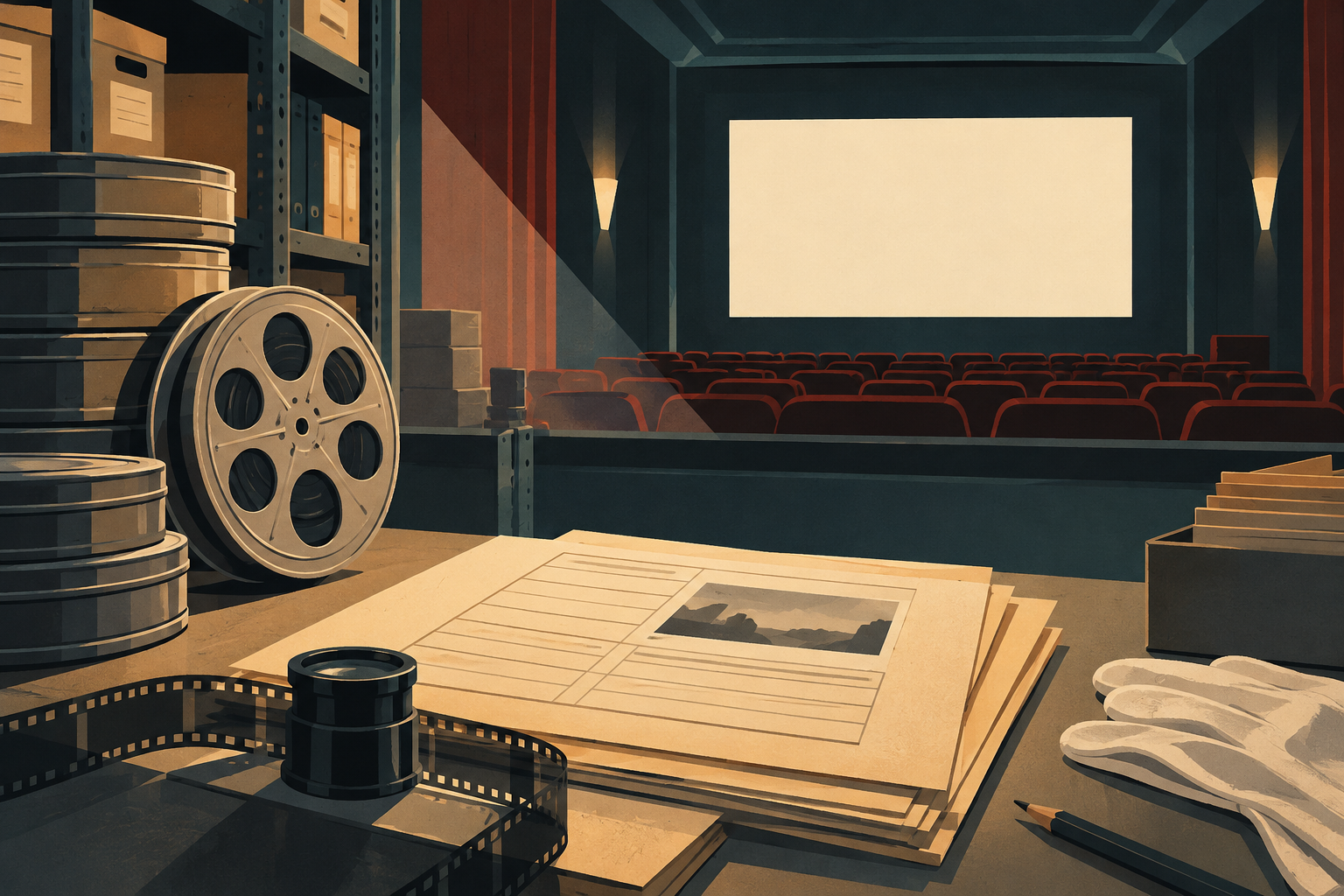
A cinema museum can bring together films, documents, equipment and other forms of evidence. But gathering traces is not the same as preserving a complete experience. UNESCO describes the work of film museums and archives as the conservation and exhibition of moving-image artefacts within their social context. That final qualification matters: objects gain meaning in relation to the conditions of production, circulation and exhibition that sources can document.
The journal PH frames the question of how to think about film heritage through recent reflections from archives and museums. This is useful because it shifts attention from the film as an isolated object to the decisions that make it possible to preserve, catalogue and present it. It does not mean that every document explains a work. Rather, it requires us to ask what each item can substantiate and what remains beyond its reach.
Context is not a substitute
The Museu del Cinema in Girona describes its institutional mission and states that it opened on 8 April 1998, after four years of preparation. This places a specific institution in the history of cinema museology in Spain. It does not, by itself, show how a particular film was received or what its viewers thought of it.
That distinction is essential when reading exhibitions and archives. A machine, document or piece of publicity may reveal aspects of cinema’s material culture, but it should not be presented as a substitute for the work or as automatic proof of its reception. Claims about audiences require sources that document reception; the references available here do not provide enough testimony or comparative data to establish how reception changed between theatrical exhibition and video.
Preserving, cataloguing and making accessible
The Film Archive of the Institut Valencià de Cultura lists acquisition, preservation, cataloguing, restoration and dissemination of audiovisual heritage and culture among its functions. This list shows that preservation is not a single operation. A film that has been kept but not identified, described or made accessible presents different issues from a restored copy or a catalogued document.
The academic article “Cine en el Museo,” listed by OpenAlex as a 2012 publication, and the Museo Arqueológico Nacional’s activity of the same name offer points of reference for considering cinema in museum and educational settings. The MAN’s description highlights cinema’s ability to evoke other periods and prompt reflection on historical events, people and contexts. This describes uses of cinema in a museum; it does not make a reconstruction direct evidence of what happened, nor does it allow an educational screening to stand in for the historical reception of a film.
The question of the move to video
How did reception change between the cinema and video? It is a worthwhile question, but the existence of a copy or an archive does not answer it. The sources consulted explain responsibilities for preservation, cataloguing, restoration and dissemination, and emphasise the need to place artefacts in their social context. They do not, however, provide a documented comparison of audiences, viewing practices or critical responses across the two media.
Further research would require attributable material that makes comparison possible: for example, reviews and advertisements connected to identifiable screenings, documentation of video editions, and other sources recording circulation and reception. That is a research programme, not a conclusion that can be attributed to the sources cited here. Posters and editions could indicate how a film was presented; by themselves, they would not demonstrate how audiences received it.
What a museum can establish
UNESCO, the IVC and the other institutions consulted support a more limited conclusion: film heritage includes the practices, objects and contexts that make it possible to preserve and study moving images. A museum can organise this evidence and make its relationships visible. Its task is not to fill archival silences with nostalgia, but to identify them.
It is therefore useful to approach each exhibit with two questions: what can this item help us know, and what can it not prove? The film remains at the centre of cinema history; the documents around it help explain its journey, provided we do not ask them to say more than they record. The evidence gathered here leaves the question of changing reception between cinema and video open for further research.
- Decade
- 1990s
- Region
- Spain
- Level
- Enthusiast
- Entities
- Museum, Museo Arqueológico Nacional
Sources and references
- Cine en el museoopenalex.org · 2026-10-11
- Pensar el patrimonio desde los museos del cine | revista PHwww.iaph.es · 2026-10-11
- Museos y archivos del cineunesdoc.unesco.org · 2026-10-11
- Cine en el Museo - | Ministerio de Culturawww.man.es · 2026-10-11
- Origen, missió, equip, premis i guardons | Museo del Cinemuseudelcinema.girona.cat · 2026-10-11
- musealización y puesta en valor del patrimonio cinematográficodigibug.ugr.es · 2026-10-11
- Patrimonio audiovisual: archivo fílmico - IVCivc.gva.es · 2026-10-11