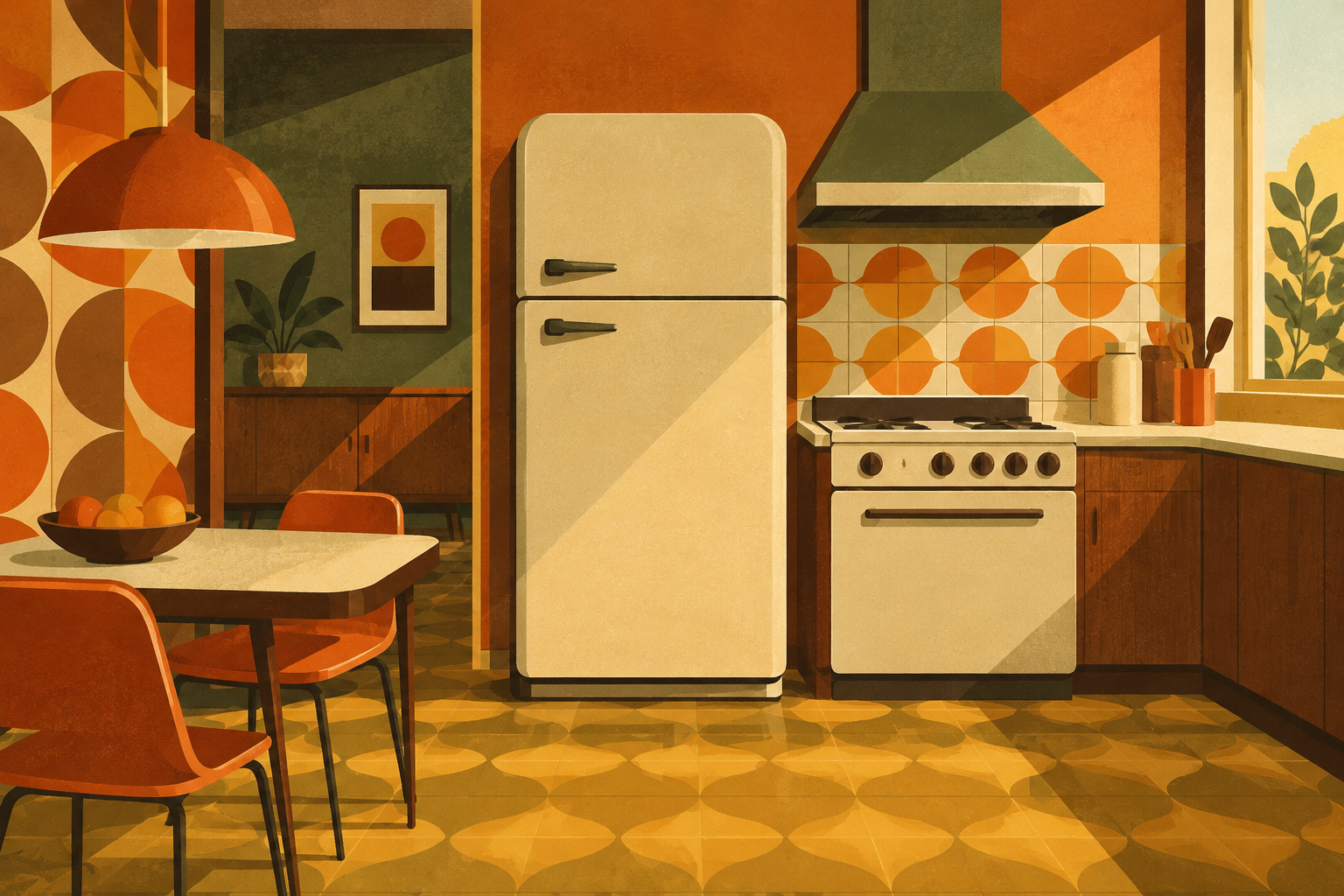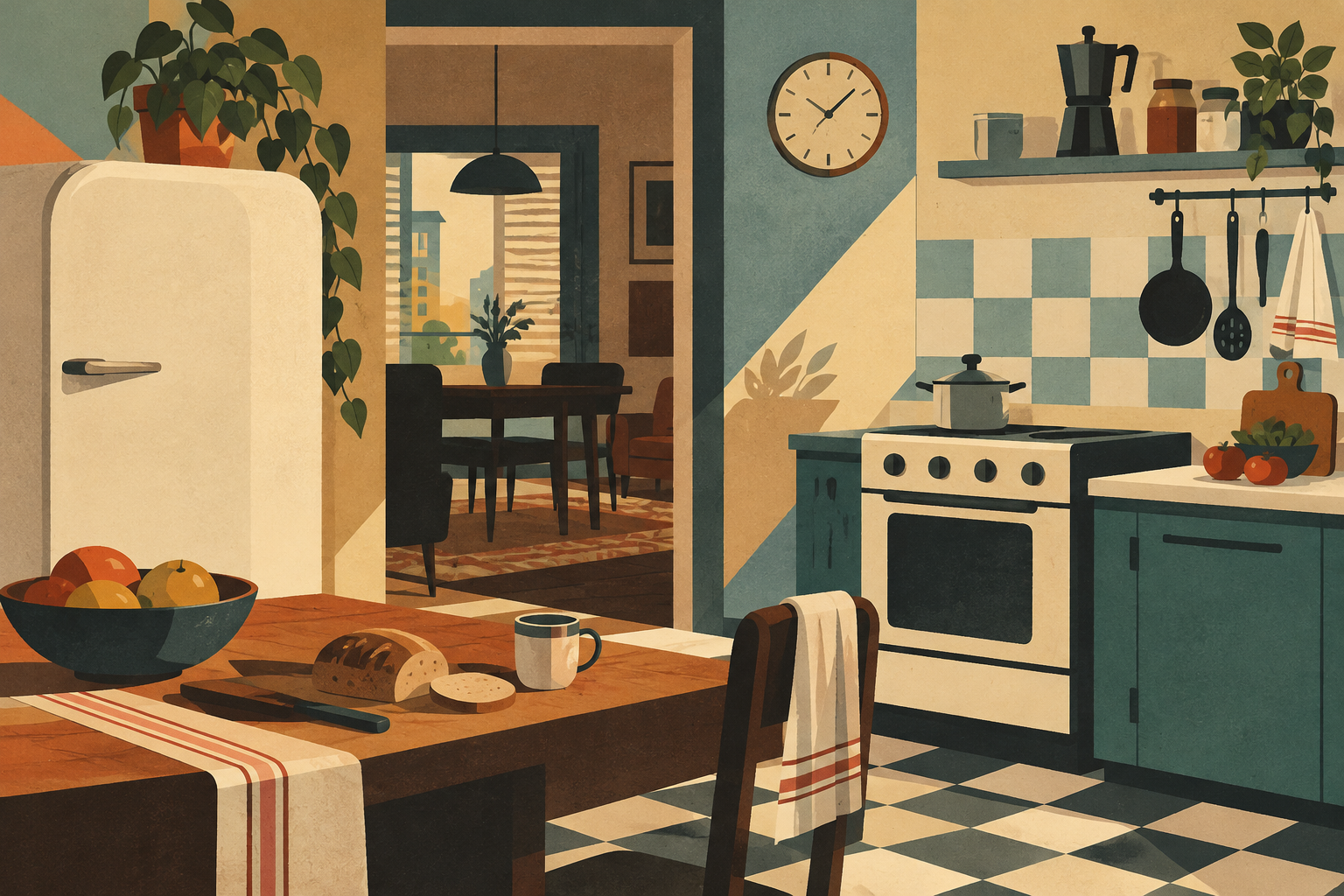
From 1920 to 1970, electric refrigerators and gas stoves provide the focus for an account of Argentine life that treats domestic appliances as more than technical novelties. In a 2022 academic article, Fernando Rocchi examines the changing consumption of these durable goods and places them within broader shifts in everyday life. The study’s value lies in that scale: tracing particular objects makes it possible to ask how food, household organization, and material conditions changed, without assuming that every family experienced those changes in the same way.
History through household objects
A history of consumption need not stop at noting which goods appeared or were purchased. By selecting two technologies associated with cooking, Rocchi’s study offers a way to examine how material culture relates to daily practice. An electric refrigerator and a gas stove are different objects, but both belong to recurring tasks of preserving and preparing food. Their adoption can therefore be studied as part of changing routines, rather than simply as the arrival of appliances.
This perspective connects the home to wider social processes. The household becomes a place where material conditions are lived through ordinary actions: storing food, cooking, and organizing domestic work. In this approach, durable goods matter not only because they are present, but because they open questions about the lives built around them.
Five decades, not one moment
The period from 1920 to 1970 encourages a view of change as an evolution rather than a single moment of modernization. The available evidence identifies the timeframe and the goods under study, but does not detail each phase, the pace of adoption, or regional differences. It would therefore be misleading to turn five decades into a uniform sequence or to attribute an identical domestic experience to the whole country.
The broad span is meaningful as a research frame: it allows changes in durable-goods consumption to be considered over half a century. But a wide chronology cannot replace specific evidence about who could acquire these appliances, when they became more common, or what constraints shaped their use. Keeping that distinction clear prevents context from being mistaken for a claim about every household.
Cooking, food, and household organization
The research places refrigerators and gas stoves in relation to food, cooking, and material living conditions—subjects also identified in the available summary as areas of growing academic interest. That connection does not, on its own, prove that the appliances caused a particular change in diet or in the division of domestic work. It does point to a productive way of framing the problem: studying household technology alongside the practices it might reorganize.
The kitchen is therefore a useful scale for social history. Rather than isolating an appliance, analysis can attend to the relationship between the availability of goods and household routines. The idea of a “social frontier” should be used carefully: objects may help investigate differences in access and material conditions, but the supplied information neither quantifies those differences nor identifies specific groups.
Consumption and inequality: what cannot be assumed
Adoption does not mean that everyone bought or used the same appliances. The available material provides no sales figures, penetration rates, prices, testimony, or breakdowns by class or region. Nor does it establish what proportion of households had access to electricity or gas. These gaps limit any detailed reconstruction of everyday experience.
Such caution does not diminish the approach; it defines its scope. Durable goods can serve as indicators for investigating social change, but they are not automatic proof that routines changed in the same way for everyone. The relationship between availability and household organization is a line of inquiry that needs specific evidence before it can become a general conclusion.
A historiographical contribution, not a regional template
The article belongs to a wider interest in consumption, material life, food, and cooking. Its Argentine case may suggest questions for research elsewhere, but it cannot describe other settings by itself. Access, services, and local practices would require their own documentation. Applying its conclusions directly to all of Latin America would erase differences that the supplied material does not allow us to assess.
The clearest contribution is methodological: using everyday objects to connect consumption with social transformation, without separating technological history from the history of practice. Electric refrigerators and gas stoves define a set of questions about Argentine households between 1920 and 1970. What can be stated securely is that this is the study’s subject and that it treats durable goods as part of everyday history. Establishing who adopted them, how routines varied, and what inequalities shaped their use requires evidence not available here.
- Decade
- 1970s
- Region
- Latin America
- Level
- Introduction
- Entities
- Heladera eléctrica
Sources and references
- La transformación de la vida cotidiana: la evolución de los bienes durables en Argentina, 1920-1970openalex.org · 2026-10-18
- la evolución de los bienes durables en Argentina, 1920-1970journals.openedition.org · 2026-10-18
- la evolución de los bienes durables en Argentina, 1920-1970www.scielo.org.co · 2026-10-18
- la evolución de los bienes durables en Argentina, 1920-1970www.researchgate.net · 2026-10-18
- Introducción a la historia de la. vida cotidianawww.memoriapoliticademexico.org · 2026-10-18
- Historia de lo cotidiano. La casa, la calle y la ciudad en ...portal.amelica.org · 2026-10-18