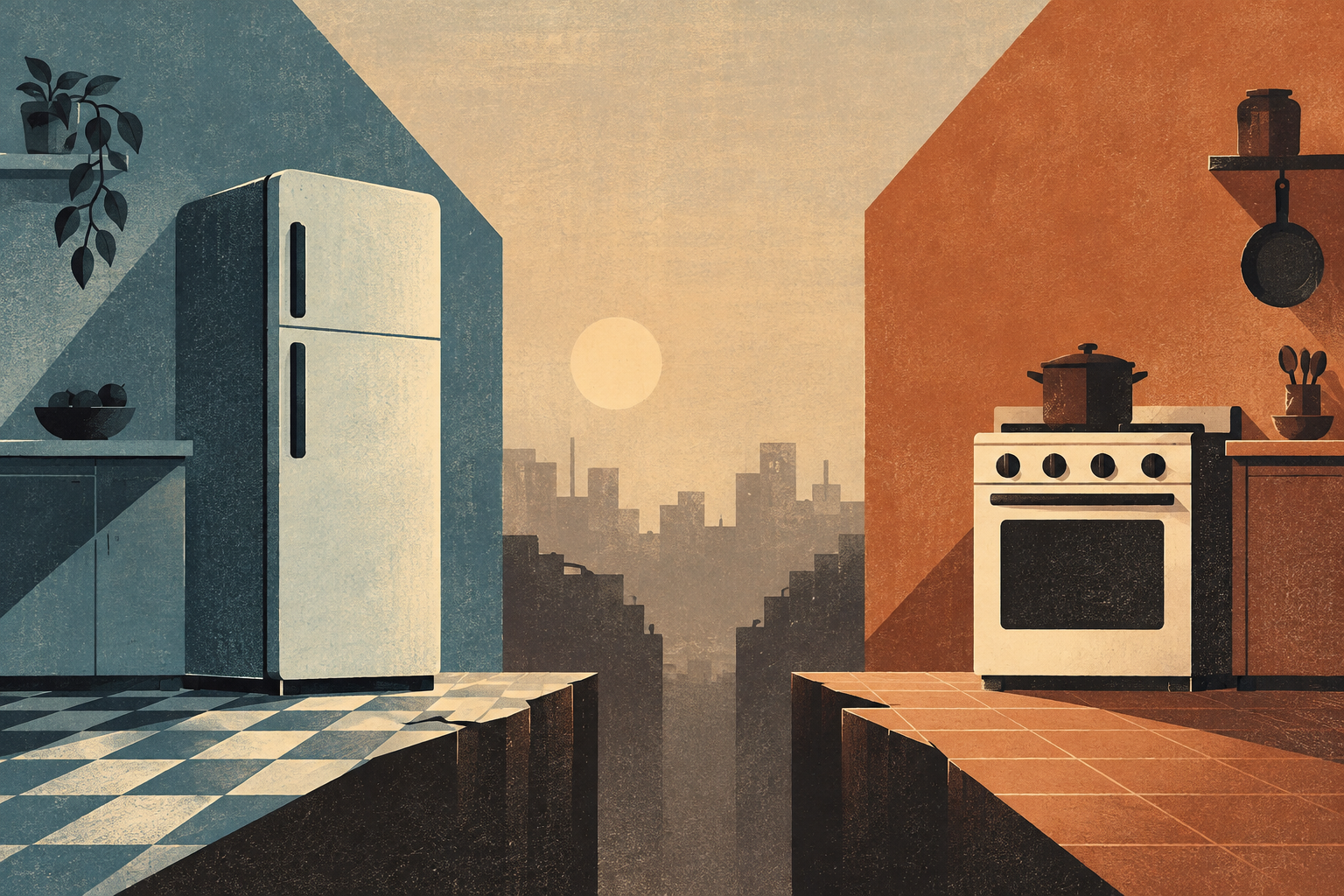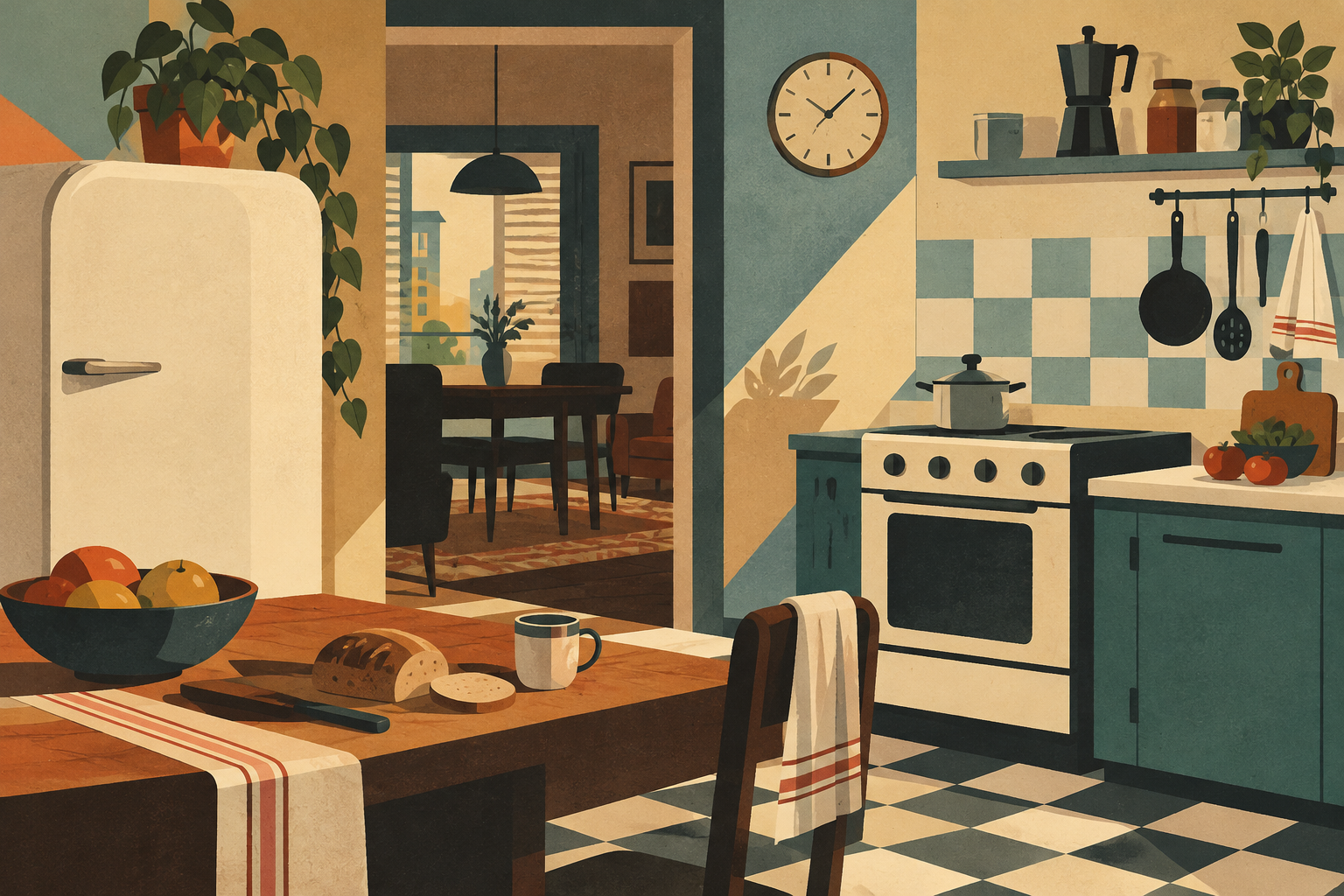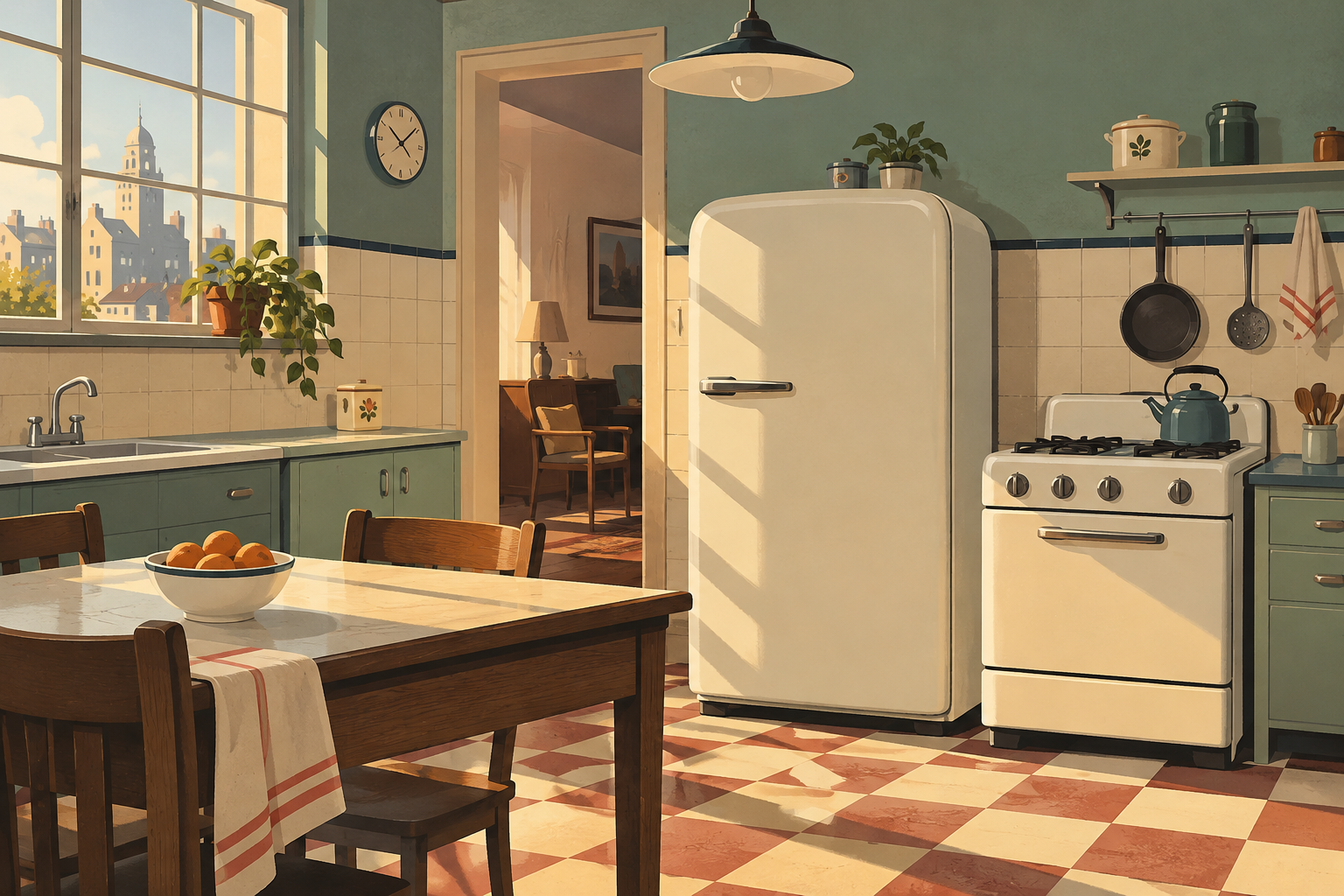
The incorporation of electricity and gas into Argentine homes was not limited to the installation of new appliances. Between 1920 and 1970, these elements redefined the structure of domestic time and the relationship of families with food. The study by F. Rocchi, published in 2022, examines this transition not as a simple technological advance, but as a cultural process that altered everyday practices. Evidence suggests that modernity did not arrive homogeneously, but filtered through the barriers of social class and urban infrastructure, creating a material gap between those who could access these goods and those who could not.
Materiality as a status marker
In the context of mid-twentieth-century Argentina, the presence of an electric refrigerator or a gas stove functioned as a visible indicator of belonging to modernity. These objects were not neutral; they carried a symbolic value that differentiated middle and upper-class households from those in more popular sectors. The history of everyday life, a field that gained strength in the 1960s and 1970s, helps understand how these durable goods became tools of social distinction. It was not just about having, but how the possession of these artifacts reconfigured the identity of the home within its community environment.
Reconfiguration of domestic time
One of the deepest impacts of electric refrigeration was the alteration of food purchasing and preparation cycles. Before the refrigerator, food shopping was a daily or near-daily activity, dictated by the need to consume fresh food before it spoiled. With the arrival of artificial cold, families could store larger quantities of food, reducing the frequency of market visits. This change freed up time, especially for women, who traditionally assumed the management of the pantry. However, it also introduced new responsibilities for maintenance and organization of the interior space of the kitchen, transforming the shopping routine into a more planned and less urgent activity.
Gas and hygiene in the kitchen
The adoption of gas stoves represented another frontier in domesticity. The shift from wood or coal to gas not only improved thermal efficiency but also changed the perception of cleanliness and health in the home. Gas allowed for more precise temperature control and reduced the smoke and dust that previously permeated kitchens. This technical transition aligned with hygiene and modernity discourses that promoted the kitchen as a clean and orderly space. Historical evidence indicates that this change was not immediate or universal; it depended on the availability of the gas network in each neighborhood and the economic capacity of families to make the installation.
Regional and class inequalities
The spread of these durable goods did not follow a linear or uniform pattern. Large cities, such as Buenos Aires, had early access to electrical and gas infrastructure, while rural areas and small towns experienced these changes decades later. Within the cities themselves, social class determined the pace of adoption. Working-class households, for example, often relied on wood or kerosene stoves well into the twentieth century, while the middle classes adopted electricity and gas as part of their modernization project. This disparity created an internal geography of modernity, where the presence of certain objects in the kitchen revealed the social position of its inhabitants.
The role of the history of everyday life
The approach of the history of everyday life, which emerged with force in Europe and Latin America in the 1960s and 1970s, offers a distinct lens for analyzing these processes. Unlike macroeconomic narratives that focus on industrial growth or state policies, this perspective is interested in the subjective experience of individuals. It examines how people negotiated, adapted to, and resisted changes imposed by technology. In the Argentine case, this approach allows us to see beyond consumption statistics and understand how families lived the transition to domestic modernity, with its tensions, adaptations, and cultural meanings.
Limitations of historical evidence
Although studies like Rocchi's provide a solid basis for understanding the evolution of durable goods, there are limitations in the available evidence. Historical sources often reflect the perspectives of the middle and upper classes, silencing the experiences of the most marginalized sectors. Additionally, documentation on the everyday practices of low-income families is scarce, making it difficult to achieve a complete understanding of the diversity of domestic life. It is important to recognize these gaps and avoid generalizations that do not capture the complexity of historical reality. The history of everyday life must be cautious in interpreting data, recognizing that the domestic experience was always diverse and contextual.
Conclusion
The transformation of the Argentine kitchen between 1920 and 1970 was a multifaceted process that combined technical, social, and cultural changes. The adoption of electric refrigerators and gas stoves was not an isolated event, but part of a broader reconfiguration of domestic life. These objects redefined time, space, and power relations within the home, while serving as markers of social status. Understanding this history requires going beyond the simple chronology of technology and exploring the human experiences that surrounded it. The kitchen, as a frontier between the private and the public, the traditional and the modern, remains a key space for understanding the evolution of Argentine society.
- Decade
- 1970s
- Region
- Latin America
- Level
- Introduction
- Entities
- Buenos Aires, Heladera eléctrica, Argentina
Sources and references
- la evolución de los bienes durables en Argentina, 1920-1970journals.openedition.org · 2026-10-18
- la evolución de los bienes durables en Argentina, 1920-1970www.researchgate.net · 2026-10-18
- la evolución de los bienes durables en Argentina, 1920-1970www.scielo.org.co · 2026-10-18
- Introducción a la historia de la. vida cotidianawww.memoriapoliticademexico.org · 2026-10-18
- La historia de la vida cotidiana, ofrece una perspectiva ...www.facebook.com · 2026-10-18
- Vida Cotidiana a mediados del siglo XXestampasdebsas.wordpress.com · 2026-10-18