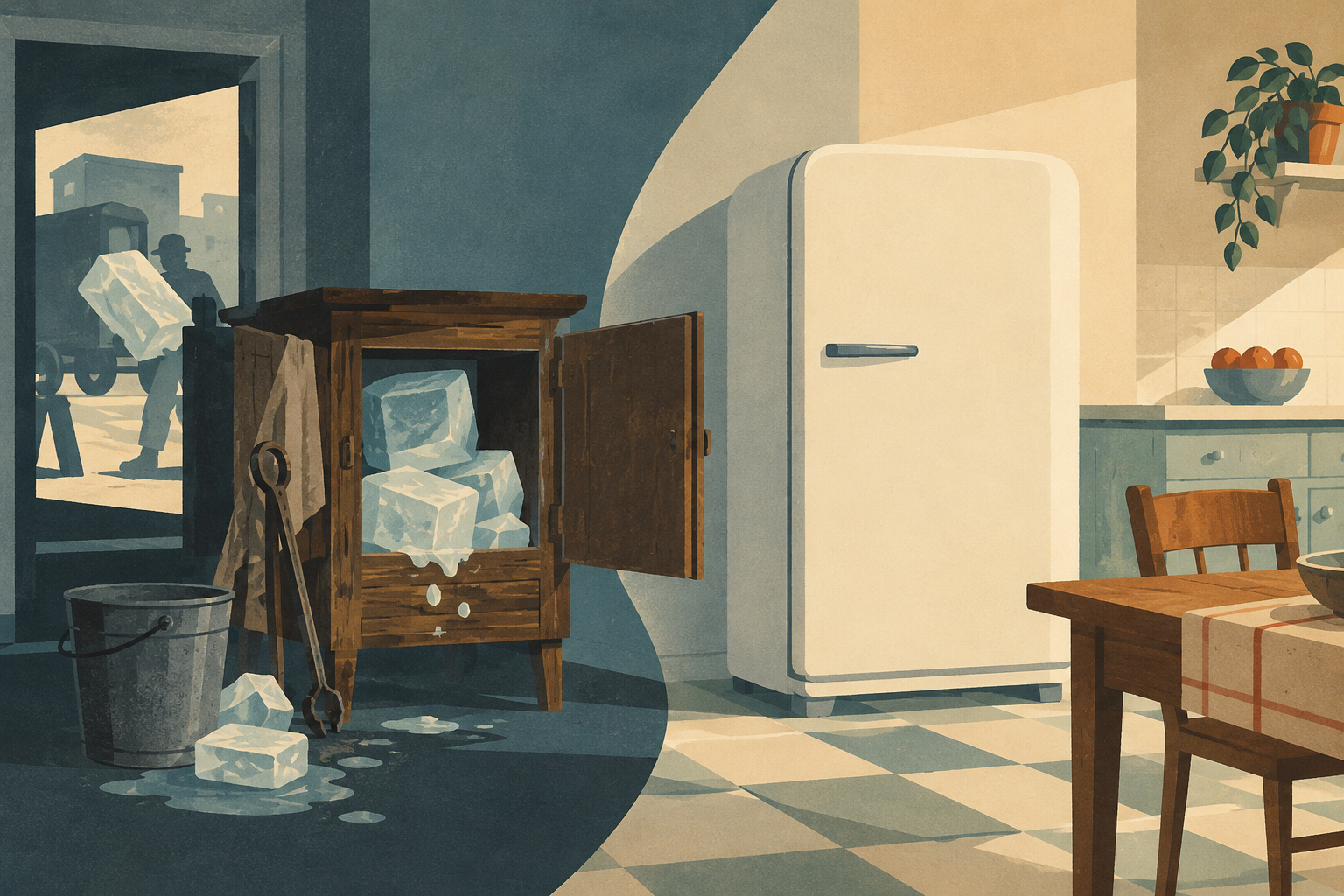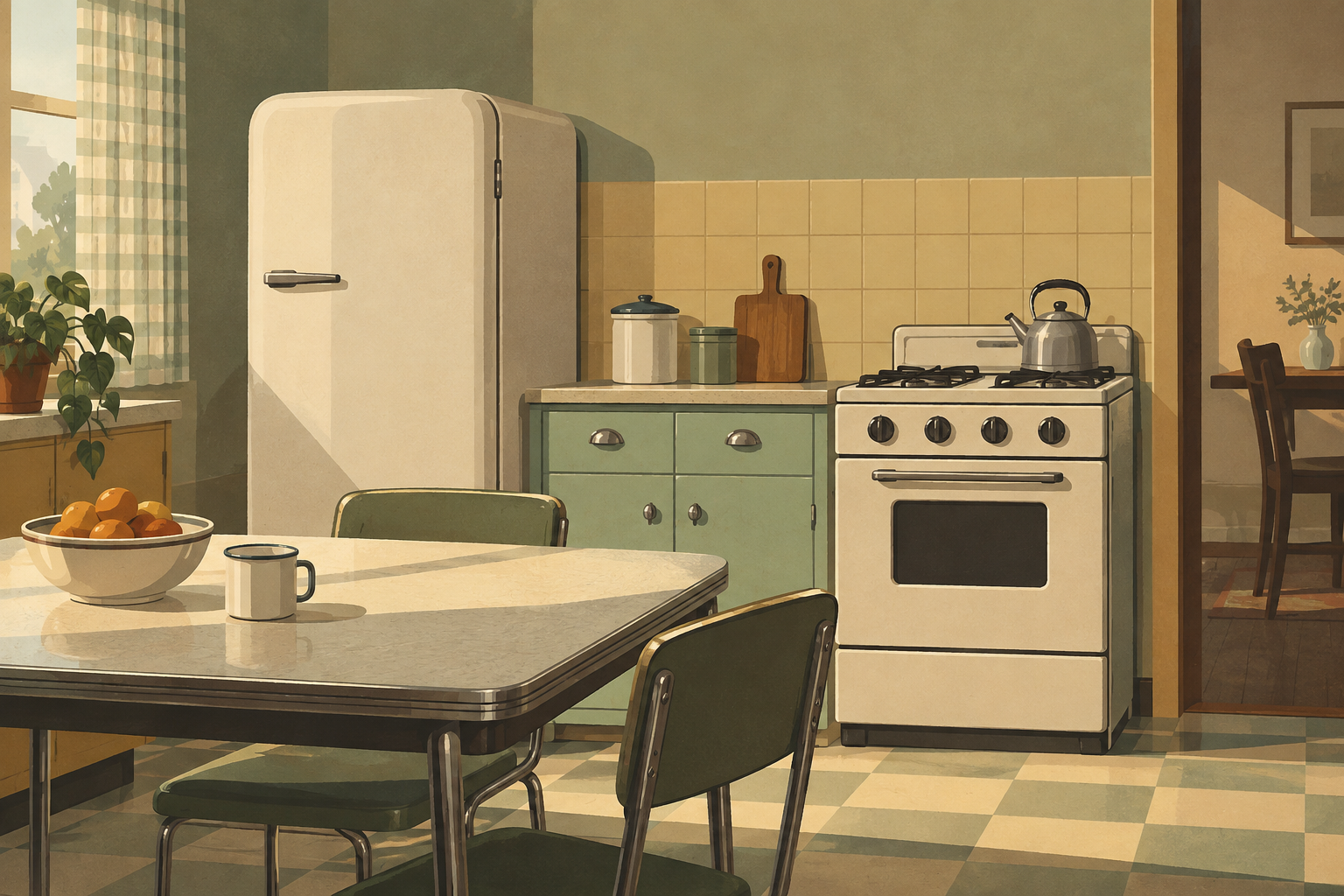
The history of consumption is not limited to tracking prices or sales volumes, but investigates how objects reconfigure routines, spaces, and social relations. In the Argentine context, the incorporation of appliances between 1920 and 1970 marked a profound change in household organization. Fernando Rocchi's work, published in 2022, addresses this transformation through two specific objects: the electric refrigerator and the gas stove. By focusing on these durable goods, the study allows for an analysis of the materiality of everyday life without falling into hasty generalizations about the domestic experience.
The framework of material history
The research is inscribed in an academic tradition that has proliferated in recent years, focusing on the conditions of material life, food, and cooking. Rocchi situates his analysis within this current, using appliances as entry points to understand how consumption influences social structure. It is not a simple chronology of inventions, but an exploration of how these objects integrated into the daily lives of Argentines. The choice of the refrigerator and the stove is not arbitrary; both appliances imply a direct transformation in food management and family dynamics, central aspects for understanding the modernization of the home.
The distinction between market and home
A crucial aspect of the article is the distinction between the expansion of a product in the market and its effective presence in homes. The availability of a good does not guarantee its universal or uniform adoption. Rocchi warns against the assumption that all households accessed these appliances in the same way or at the same time. This differentiation is vital to avoid a homogeneous narrative that ignores social and regional inequalities. The study suggests that the adoption of these goods was a gradual and unequal process, influenced by economic, cultural, and geographic factors that are not exhaustively detailed in the available summary, but are fundamental for a rigorous understanding.
Limitations of available evidence
It is important to recognize the limits of the information provided in secondary sources. The article summary does not specify who owned these appliances, how their distribution varied by social class or region, or which testimonies allow for the reconstruction of their specific uses. Therefore, any claim about the detailed impact of these appliances on domestic labor or food routines requires direct verification of the full academic text. Caution is necessary to avoid inventing data or relationships that are not supported by the provided evidence. The focus must remain on what can be inferred from the existence of these objects as markers of change, without attributing specific effects without more data.
The kitchen as a space of transformation
The gas stove represents a significant change in food preparation, substituting previous methods and altering the workflow in the home. However, the study does not provide details on how this change affected the division of domestic labor or gender relations. The mention of the stove in the context of food and material life suggests that its impact was multidimensional, but specifications on its everyday use remain outside the scope of current evidence. Interpretation should focus on the object as a symbol of modernization and its role in the reconfiguration of domestic space, without speculating on undocumented social dynamics.
The refrigerator and food management
The electric refrigerator introduced a new way of preserving food, which in turn modified purchasing and consumption patterns. The ability to store fresh products for longer changed the relationship of households with the market and the seasonality of food. Rocchi identifies this object as central to the evolution of durable goods, but does not detail how this capacity altered diets or purchasing practices in different social strata. The cultural relevance of the refrigerator lies in its ability to mediate between production and consumption, an aspect the study addresses from the perspective of consumption history, without entering into specific nutritional analyses.
Historical context and cultural relevance
The period 1920-1970 covers an era of accelerated industrialization and urbanization in Argentina. The adoption of these appliances is framed within this broader process of modernization. Rocchi's study contributes to the understanding of how everyday life was affected by these structural changes. The cultural relevance of this analysis lies in its ability to illuminate the connections between consumption, food, and household organization. By avoiding generalization, the article offers a solid basis for future research that may delve into the local and social variations of this process.
Conclusion: a basis for future research
Fernando Rocchi's article offers a valuable perspective on the evolution of durable goods in Argentina, highlighting the importance of distinguishing between market supply and domestic reality. By focusing on the refrigerator and the gas stove, the study provides a starting point for exploring how material objects transform everyday life. The caution in interpreting the available evidence underscores the need for rigorous and contextualized analysis. This work not only documents the presence of these appliances but also raises fundamental questions about inequality, modernization, and material culture, inviting a deeper exploration of Argentine social history.
- Decade
- 1960s
- Region
- Latin America
- Level
- Enthusiast
- Entities
- Heladera eléctrica, Argentina
Sources and references
- FAMILIA Y VIDA COTIDIANA, II.doi.org · 2026-10-18
- LOS PROTAGONISTAS DE LA VIDA COTIDIANA, IV.doi.org · 2026-10-18
- la evolución de los bienes durables en Argentina, 1920-1970journals.openedition.org · 2026-10-18
- la evolución de los bienes durables en Argentina, 1920-1970www.scielo.org.co · 2026-10-18
- la evolución de los bienes durables en Argentina, 1920-1970www.researchgate.net · 2026-10-18