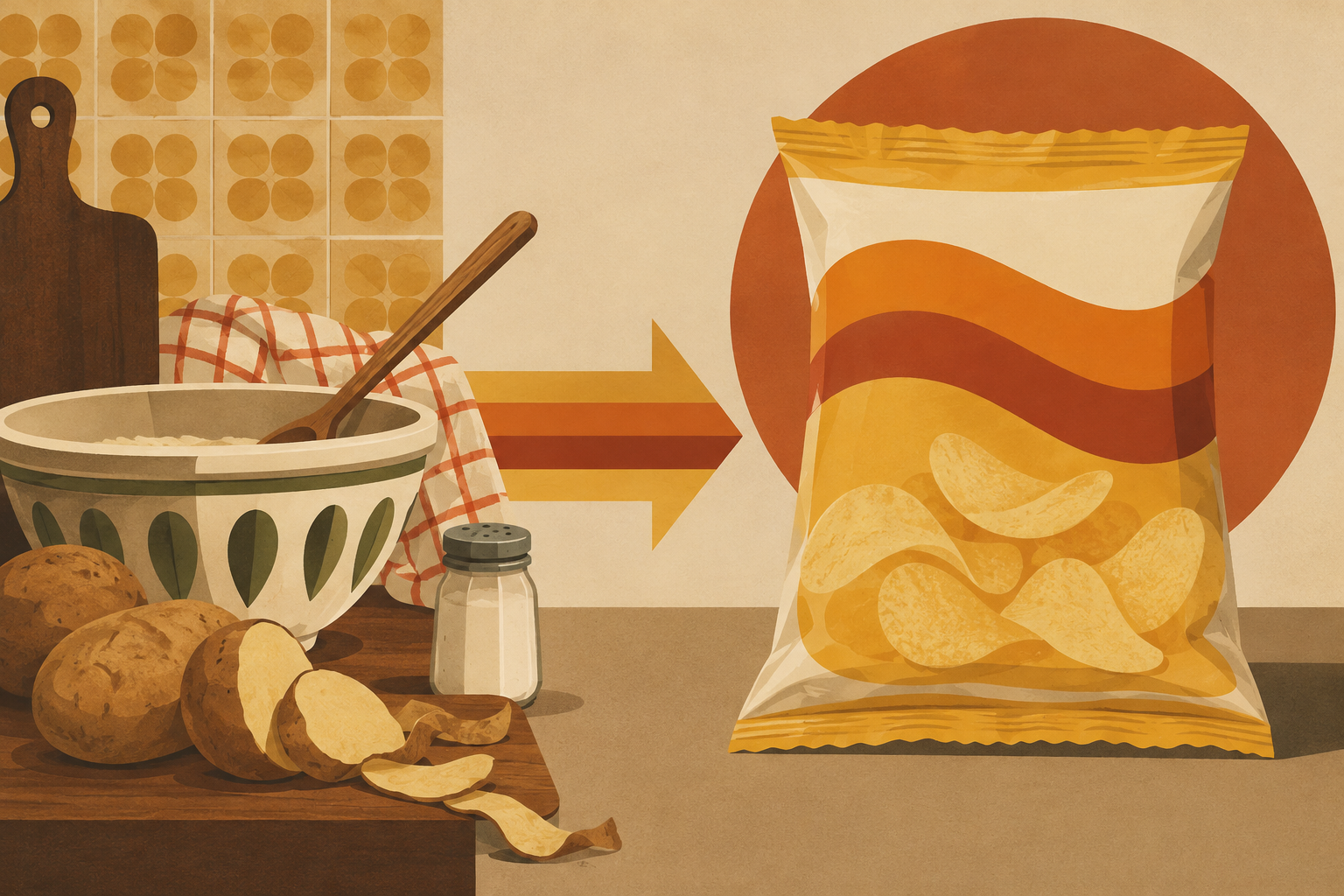
The transition of the 1970s was not just a change in ingredients, but a restructuring of the relationship between the individual and food. The snack ceased to be a domestic object to become a branded product, a process that redefined table rituals. This article examines how the industrialization of products like gourmet popcorn and branded candies created a new consumption aesthetic, separating family practice from commercial promotion. Through historical sources and corporate records, it explores the role of packaging as a document of a culture that prioritized convenience over culinary tradition.
The 1970 Inflection Point
The year 1970 marks a milestone in the history of American food. According to the Food Timeline, it was the year products like Orville Redenbacher's gourmet popcorn, Hamburger Helper, and Morton's salt substitute were introduced. This introduction was not an isolated event but part of a broader trend toward the commercialization of foods previously prepared at home. The appearance of these products signals a shift in the responsibility of preparation from the consumer to the manufacturer, a change with profound cultural implications.
Standardization of Global Brands
Parallel to the introduction of new products, global candy brands began to standardize their presentation. Companies like Mars and Arcor, whose corporate histories show a progressive consolidation, dominated supermarket shelves. Mars, founded by Frank C. Mars with the sale of buttercream candies, and Arcor, which started in 1951 as a candy factory, exemplify this consolidation. Standardization did not only affect the product but also its perception, creating a brand identity that transcended taste and focused on the consumption experience.
Advertising as Definer of Presentation
Evidence suggests that advertising began to define not only what was eaten but how it was presented. The creation of a new packaging aesthetic distinguished commercial promotion from domestic practice. The package became a document of a new consumer culture, where convenience and brand identity were prioritized over family recipes. This change in presentation reflected a deeper transformation in the relationship between the consumer and food, where the product was consumed both visually and gustatorily.
Academic and Corporate Perspectives
Academic sources on the history of food, such as those by M.A.P. Samper, emphasize the social perspective, defending the opinion that foods have been distributed unequally throughout history. On the other hand, corporate records from companies like Mars and Arcor show a consolidation of brands that dominated the shelves. This duality between the social and corporate perspectives offers a more complete view of the industrialization of snacks, highlighting both the social and economic implications of the change.
Packaging as a Cultural Document
The package is not just a container but a cultural document that reflects the values of a society. In the 1970s, the package became a symbol of the new consumer culture, where convenience and brand identity were the prevailing values. This change in the function of the package had a significant impact on table rituals, reconfiguring the way families interacted with food. The package became a mediator between the consumer and the product, creating a consumption experience that was both visual and gustatory.
Limits of Verification
Although the sources provide a clear view of the industrialization of snacks in the 1970s, there are limits to what can be verified. The Food Timeline offers a list of products introduced in 1970, but does not detail the specific impact of each product on table culture. The corporate records of Mars and Arcor show the consolidation of brands, but do not offer a detailed social perspective. Furthermore, the evidence on advertising and packaging aesthetics is suggestive but not exhaustive. It is important to recognize these limits when interpreting the available data.
Conclusion
The industrialization of snacks in the 1970s was a complex process that reconfigured table rituals and the relationship between the consumer and food. The introduction of products like gourmet popcorn and the standardization of global brands created a new consumer culture, where the package became a document of societal values. This change was not only economic but also cultural, reflecting a transformation in the way people interacted with food. The available evidence suggests that this process had a significant impact on table culture, separating domestic practice from commercial promotion.
- Decade
- 1970s
- Region
- Global
- Level
- Introduction
- Entities
- The Food Timeline, Arcor
Sources and references
- De panzas y prejuicios: la historia y la comidadoi.org · 2026-10-18
- comidas populares estadounidenses del siglo XXtranslate.google.com · 2026-10-18
- LA HistORiA de LA HistORiA de LA ALiMentAciÓndialnet.unirioja.es · 2026-10-18
- Nuestra Historiawww.arcor.com · 2026-10-18
- Nuestra historia | Mars Argentinawww.mars.com · 2026-10-18
- Historia de la comida y civilización | PDF | Alimentos | Carnees.scribd.com · 2026-10-18